يعد تشطيب السطح جزءًا مهمًا من أنظمة تصنيع الأسطح الصلبة المصنوعة من الأكريليك الاحترافية. على عكس العديد من المواد المطلية أو المصفحة، يوفر السطح الصلب الأكريليكي بنية مادة متجانسة في جميع أنحاء سمك الورقة، مما يسمح للسطح بالحفاظ على قابلية الإصلاح على المدى الطويل والأداء المتجدد والمظهر المعماري المتسق.
تساعد تقنيات تشطيب الأسطح الاحترافية المصنعين على تحقيق قوام متناسق غير لامع أو ساتان أو شبه لامع مع تحسين التحسين البصري وكفاءة الصيانة ومتانة المشروع على المدى الطويل. تؤثر أنظمة التشطيب عالية الجودة بشكل مباشر على مظهر وأداء تركيبات الأسطح الصلبة المصنوعة من الأكريليك.
لماذا يعد تشطيب السطح مهمًا في أنظمة الأسطح الصلبة
Acrylic solid surface fabrication does not rely on decorative surface coatings to achieve its appearance. Instead, professional sanding and finishing systems are used to create refined surface textures and visually consistent architectural surfaces.
Proper surface finishing helps improve:
- اتساق نسيج السطح
- Visual appearance refinement
- Long-term maintenance performance
- Cleaning efficiency
- Light reflection control
- Architectural detailing quality
- Renewable surface performance
These characteristics are especially important in hospitality interiors, healthcare environments, residential kitchens, bathroom systems, and commercial architectural applications.
Matte, Satin, and Semi-Gloss Surface Textures
يمكن لأنظمة الأسطح الصلبة الأكريليكية تحقيق أنسجة سطحية مختلفة اعتمادًا على متطلبات المشروع وتفضيلات التصميم المعماري. تسمح تسلسلات الصنفرة الاحترافية للمصنعين بإنشاء تشطيبات سطحية متسقة عبر التركيبات كبيرة الحجم.
قد تتضمن خيارات نسيج السطح الشائعة ما يلي:
- التشطيبات السطحية غير اللامعة
- أنظمة نسيج الساتان
- تشطيبات معمارية نصف لامعة
- أسطح الضيافة منخفضة الانعكاس
- القوام الحد الأدنى المعاصرة
- أنظمة تشطيب الأسطح التجارية
قد تؤثر مواد التشطيب المختلفة على النعومة البصرية وأداء الانعكاس وخصائص الصيانة والمظهر الداخلي العام.
إجراءات الصنفرة والتشطيب الاحترافية
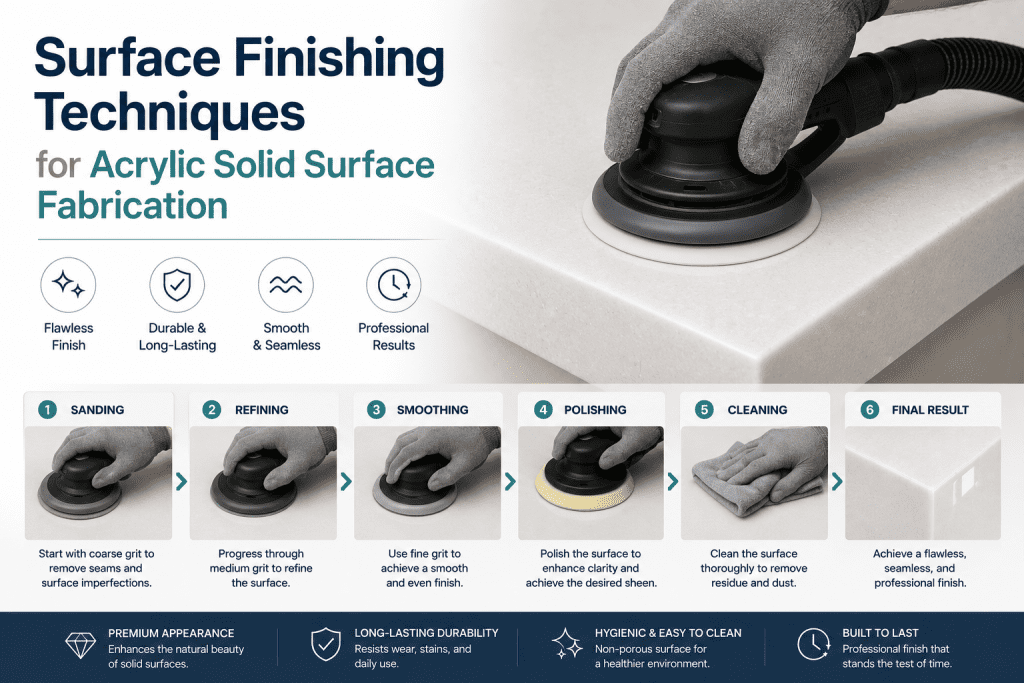
تعتبر إجراءات الصنفرة الاحترافية ضرورية لتحقيق جودة سطح متسقة وتكامل بصري سلس. عادةً ما يستخدم المصنعون أنظمة الصنفرة التقدمية لتحسين نسيج السطح وإزالة علامات التصنيع.
قد تشمل إجراءات التشطيب الاحترافية ما يلي:
- تسلسلات الصنفرة التقدمية
- تحسين نسيج السطح
- تعديل حافة التشطيب
- إزالة الغبار والتنظيف
- التحكم في تناسق اللون اللامع والساتان
- فحص الجودة البصرية النهائية
تساعد أنظمة التشطيب المناسبة في الحفاظ على اتساق السطح المعماري عبر أسطح العمل المتكاملة، والغرور، وتكسية الجدران، والمنشآت التجارية.
اتساق نسيج السطح والمظهر البصري
يعد اتساق السطح مهمًا بشكل خاص في التطبيقات المعمارية كبيرة الحجم حيث يتم دمج الألواح المتعددة في الأسطح المستمرة. تساعد أنظمة التشطيب المناسبة على تقليل تباين النسيج المرئي وتحسين الاستمرارية البصرية.
هذه الاعتبارات مهمة بشكل خاص في تطبيقات مثل:
- كونترتوب المطبخ والجزر
- أنظمة مغاسل الحمامات المتكاملة
- عدادات استقبال الضيافة
- محطات غسيل الرعاية الصحية
- بيئات عرض البيع بالتجزئة
- أنظمة تكسية الجدران التجارية
تؤثر جودة التشطيب الاحترافية بشكل مباشر على المظهر المعماري العام للمنشآت ذات الأسطح الصلبة.
قابلية الإصلاح والأداء السطحي المتجدد
واحدة من المزايا الرئيسية لأنظمة الأسطح الصلبة الأكريليكية هي قدرتها على تجديد الأسطح. على عكس العديد من المواد المطلية، غالبًا ما يمكن إصلاح الخدوش البسيطة أو تآكل السطح من خلال إجراءات الصنفرة وإعادة الصقل بدلاً من استبدال المواد بالكامل.
تساعد خاصية السطح القابلة للإصلاح هذه على تحسين كفاءة الصيانة على المدى الطويل والحفاظ على الاتساق البصري في البيئات التجارية والسكنية عالية الاستخدام.
يعد أداء الأسطح المتجددة ذا قيمة خاصة في تطبيقات الضيافة والرعاية الصحية وتجارة التجزئة والتطبيقات الداخلية التجارية المعرضة للاستخدام التشغيلي المستمر.
الصيانة والعناية بالأسطح على المدى الطويل
قد تتطلب الأنسجة السطحية المختلفة إجراءات صيانة مختلفة اعتمادًا على بيئة المشروع وظروف التشغيل. تساعد أنظمة التنظيف والصيانة الاحترافية في الحفاظ على جودة المظهر واتساق السطح على المدى الطويل.
قد تشمل اعتبارات الصيانة المناسبة ما يلي:
- تنظيف السطح بشكل روتيني
- إجراءات الصيانة غير الكاشطة
- الحفاظ على نسيج السطح
- إعادة طلاء الخدوش الطفيفة
- إدارة اتساق التشطيب على المدى الطويل
- تخطيط الصيانة التجارية
تساعد إجراءات الصيانة الاحترافية على تمديد المظهر والأداء على المدى الطويل لأنظمة الأسطح الصلبة المصنوعة من الأكريليك.
تطبيقات في المطبخ والضيافة والمشاريع التجارية
تُستخدم أنظمة تشطيب الأسطح الاحترافية على نطاق واسع في البيئات السكنية والضيافة والرعاية الصحية وتجارة التجزئة والبيئات التجارية لأنها تجمع بين المرونة المعمارية والتحسين البصري وقابلية الصيانة على المدى الطويل.
- كونترتوب المطبخ والجزر
- أنظمة مغاسل الحمامات المتكاملة
- عدادات استقبال الضيافة
- محطات غسيل الرعاية الصحية
- بيئات عرض البيع بالتجزئة
- أنظمة تكسية الجدران التجارية
- التركيبات الداخلية المعمارية
حلول تشطيب الأسطح من أكريون
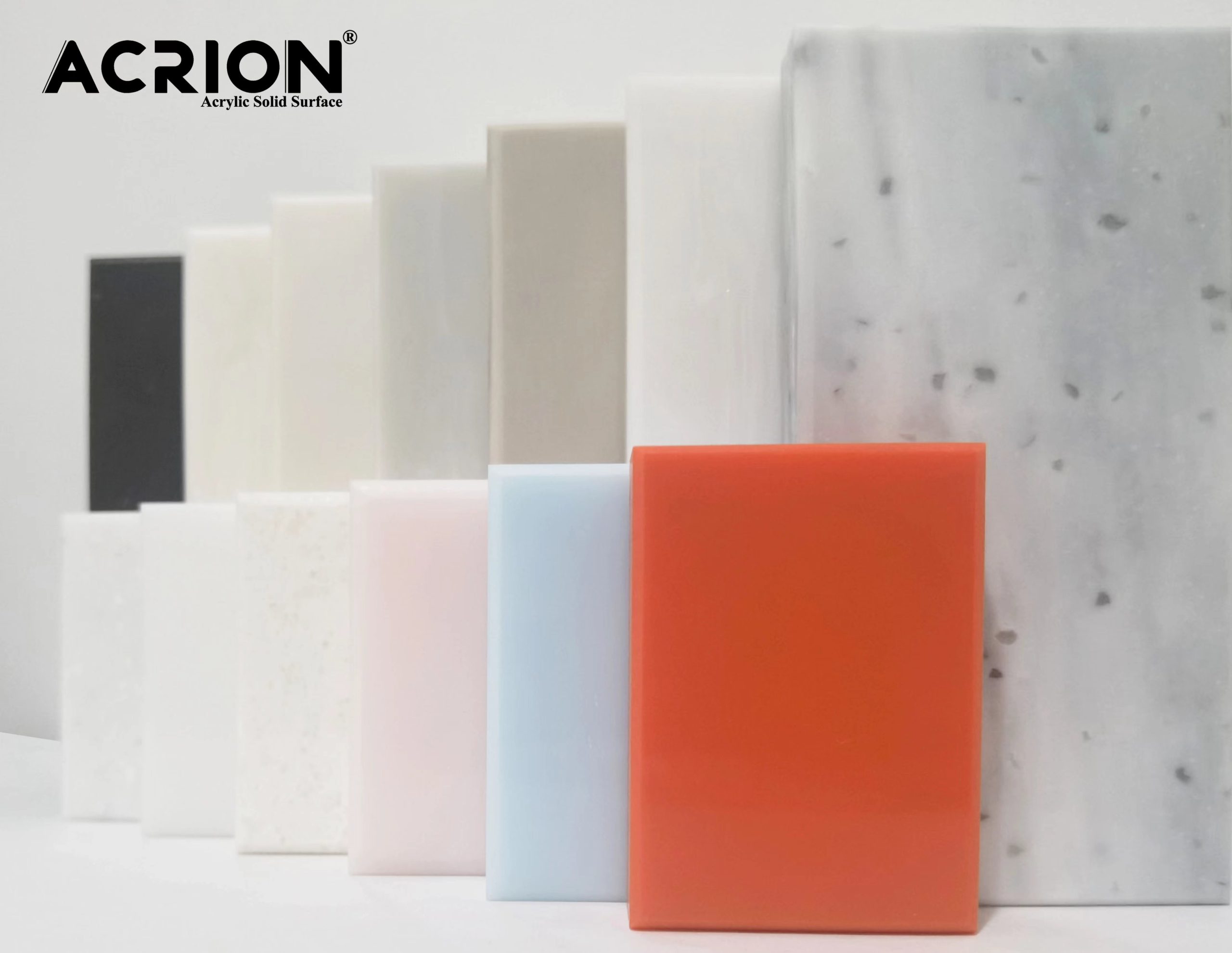
توفر ACRION مواد الأسطح الصلبة المعمارية للتصميمات الداخلية للضيافة، ومرافق الرعاية الصحية، والمشاريع السكنية، وبيئات البيع بالتجزئة، وتطبيقات التصنيع التجارية. تم تصميم أنظمتنا للأسطح الصلبة المصنوعة من الأكريليك من أجل التصنيع السلس، وأداء الأسطح المتجدد، واتساق التشطيب الاحترافي، والمتانة المعمارية على المدى الطويل.
نحن نعمل مع المهندسين المعماريين والمصنعين والمقاولين والموزعين وفرق المشروع في جميع أنحاء العالم لدعم أنظمة الأسطح المعمارية الحديثة وتطبيقات التصنيع الاحترافية.