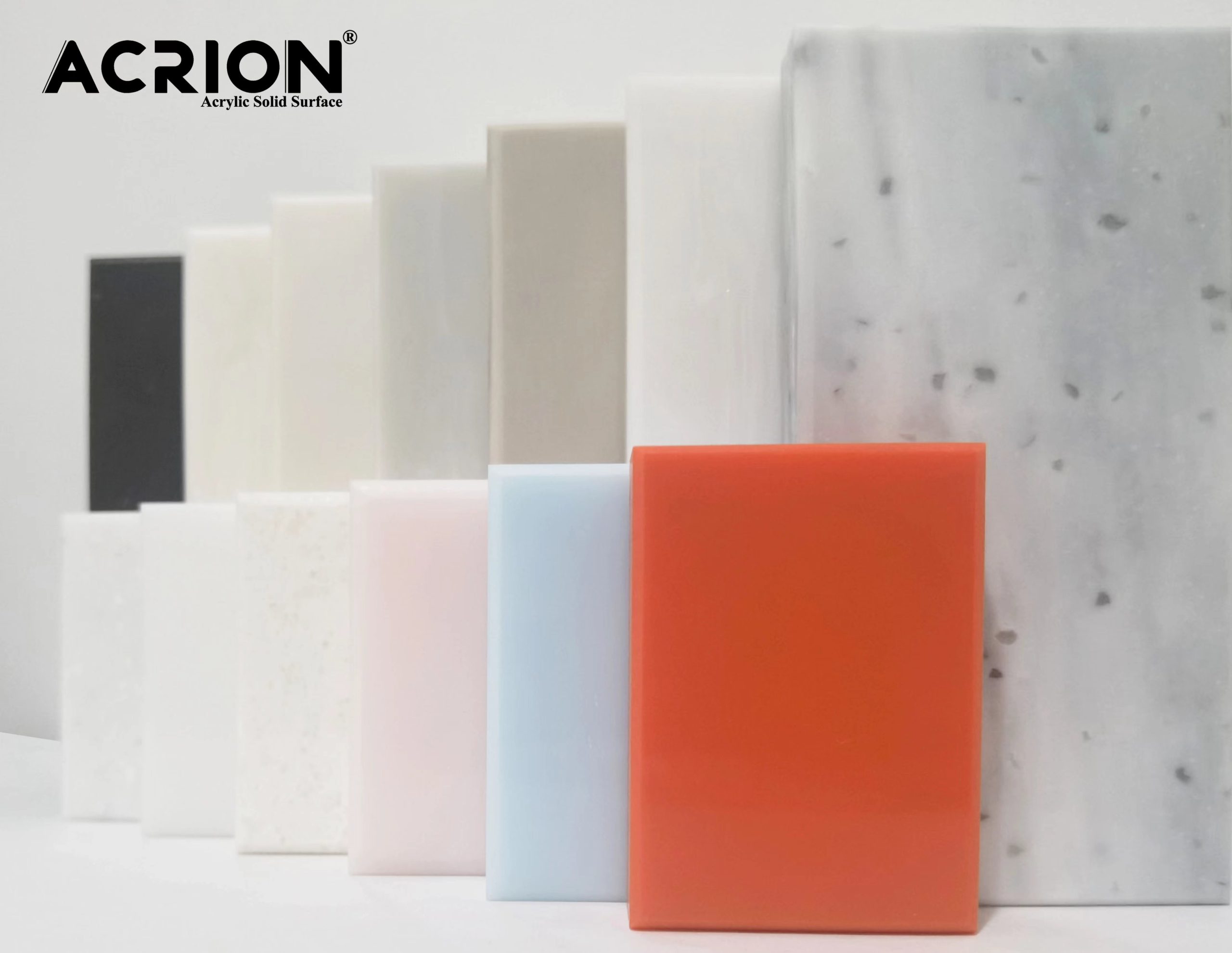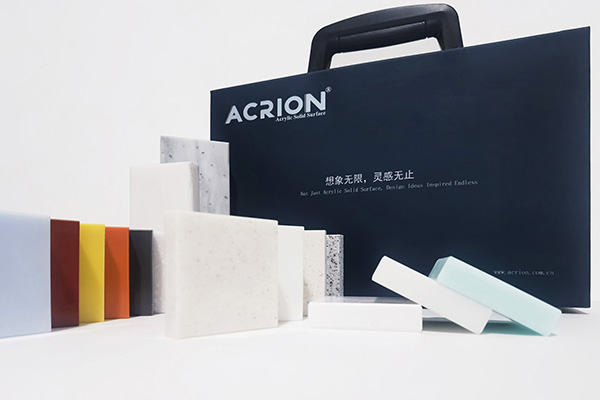
Acrylic solid surface is widely used in healthcare facilities, hospitality interiors, retail environments, commercial projects, and residential applications because of its seamless appearance, renewable surface characteristics, and long-term repairability.
Over time, continuous operational use, cleaning procedures, abrasion, and environmental exposure may gradually affect the original surface finish consistency of the material. Surface dullness, gloss inconsistency, light abrasion marks, and localized sheen variation are common conditions in high-use architectural environments.
One of the major advantages of acrylic solid surface is that its renewable structure allows professional refinishing and surface finish restoration procedures that help restore long-term visual consistency without requiring complete replacement.
Understanding Surface Finish Types
Acrylic solid surface can be fabricated with different surface finish levels depending on project requirements, application environments, and design preferences.
- Acabamento fosco: low reflectivity with easy maintenance and refinishing
- Acabamento acetinado: balanced appearance and long-term commercial performance
- Semi-gloss finish: increased visual depth and enhanced reflection
- Acabamento brilhante: highly reflective appearance with greater sensitivity to visible scratches and polishing inconsistency
Different finish levels naturally require different maintenance approaches and refinishing procedures over the lifecycle of the installation. :contentReference[oaicite:1]{index=1}
Why Surface Finish Consistency Matters
In commercial architectural environments, long-term surface appearance consistency is an important part of operational maintenance and visual quality management.
Surface finish consistency is especially important for:
- Hospitality interiors
- Luxury retail environments
- Commercial reception counters
- Healthcare workstations
- Public washroom systems
- High-visibility architectural installations
Uneven gloss levels, abrasion marks, and localized dullness may affect the overall visual continuity of seamless acrylic solid surface applications.
Common Causes of Surface Dullness and Gloss Loss
Surface finish changes may occur gradually as part of normal operational use or as a result of improper maintenance practices.
- Daily abrasive wear
- Improper cleaning products
- Hard water residue accumulation
- Cleaning film buildup
- Surface scratches and abrasion
- Inconsistent polishing procedures
- Heavy operational traffic
Darker colors and higher gloss finishes generally require more attention because surface scratches and sheen variation become more visually noticeable. :contentReference[oaicite:2]{index=2}
Professional Surface Refinishing Methods
Professional refinishing procedures help restore surface consistency while maintaining the seamless appearance of acrylic solid surface installations.
Professional restoration methods may include:
- Progressive abrasive sanding
- Orbital surface refinishing
- Surface texture balancing
- Localized sheen blending
- Polishing compound application
- Final finish correction and restoration
Proper refinishing procedures require controlled abrasive sequences and consistent surface treatment patterns to maintain uniform visual appearance. :contentReference[oaicite:3]{index=3}
Matte, Satin, and Gloss Finish Restoration Considerations
Different finish levels require different refinishing complexity and maintenance expectations.
- Matte finishes: easiest to restore and maintain
- Satin finishes: balanced restoration complexity and visual consistency
- Semi-gloss finishes: require more controlled polishing procedures
- Gloss finishes: require advanced professional refinishing techniques to maintain uniform reflection and surface consistency
For high-traffic commercial architectural projects, matte and satin finishes are often preferred because they provide better long-term maintenance flexibility and easier renewable surface restoration. :contentReference[oaicite:4]{index=4}
Commercial Surface Finish Management
Different commercial environments may require different surface finish maintenance priorities depending on operational intensity and design expectations.
- Hospitality interiors: guest-facing appearance consistency
- Retail environments: visual presentation and reflection management
- Healthcare facilities: hygienic maintenance compatibility
- Reception counters: high-contact surface restoration
- Public interiors: long-term wear management
Periodic refinishing planning helps maintain professional appearance standards while reducing long-term replacement frequency.
Renewable Surface Advantages of Acrylic Solid Surface
Acrylic solid surface features a homogeneous full-body material structure rather than a thin decorative coating. Because of this renewable composition, many forms of surface wear, scratches, gloss inconsistency, and localized dullness can often be restored through professional refinishing procedures.
This renewable surface capability is one of the major advantages of acrylic solid surface compared with many decorative materials that cannot easily restore their original surface finish once damaged. :contentReference[oaicite:5]{index=5}
Preventive Maintenance for Long-Term Finish Performance
Preventive maintenance practices help preserve long-term finish consistency and reduce excessive surface wear.
- Use non-abrasive cleaning products when appropriate
- Prevent cleaning residue buildup
- Dry surfaces after cleaning to reduce film accumulation
- Avoid dragging abrasive objects across the surface
- Perform periodic surface inspections in high-traffic environments
- Schedule professional refinishing when necessary
Consistent preventive maintenance planning supports long-term visual continuity and operational performance in commercial architectural projects. :contentReference[oaicite:6]{index=6}
Why Acrylic Solid Surface Supports Long-Term Surface Finish Restoration
In modern architectural interiors, long-term appearance management and lifecycle maintenance flexibility have become increasingly important considerations for architects, developers, hospitality operators, and facility managers.
The seamless, renewable, repairable, and refinishable characteristics of acrylic solid surface help support long-term visual consistency while reducing replacement frequency and operational disruption.
Unlike many decorative materials that require complete replacement after visible finish deterioration occurs, acrylic solid surface often allows professional surface restoration while preserving seamless design continuity.
Architectural Solid Surface Designed for Renewable Finish Performance
From hospitality interiors and luxury retail environments to healthcare facilities and commercial reception systems, acrylic solid surface continues to provide architects and commercial operators with a renewable, maintainable, and visually consistent surfacing solution for long-term architectural applications.
At ACRION, we focus on developing architectural solid surface materials engineered for seamless fabrication, renewable surface performance, and long-term commercial interior applications worldwide.