พื้นผิวอะคริลิกแข็งถูกนำมาใช้กันอย่างแพร่หลายในสถานพยาบาล การตกแต่งภายในโรงแรม ห้องปฏิบัติการ ระบบห้องน้ำสาธารณะ สภาพแวดล้อมการค้าปลีก และโครงการสถาปัตยกรรมเชิงพาณิชย์ เนื่องจากมีลักษณะที่ไร้รอยต่อ โครงสร้างที่ไม่มีรูพรุน คุณลักษณะด้านสุขอนามัย และประสิทธิภาพของพื้นผิวที่หมุนเวียนได้
ในการตกแต่งภายในด้วยสถาปัตยกรรมสมัยใหม่ ประสิทธิภาพพื้นผิวที่ทำความสะอาดง่ายมีความสำคัญมากขึ้นสำหรับผู้ปฏิบัติงานด้านการดูแลสุขภาพ สถาปนิก กลุ่มการบริการ นักพัฒนาเชิงพาณิชย์ และผู้จัดการสิ่งอำนวยความสะดวก ขั้นตอนการทำความสะอาดและสุขอนามัยที่มีประสิทธิภาพช่วยสนับสนุนสภาพแวดล้อมที่ถูกสุขลักษณะในขณะที่ลดความท้าทายในการบำรุงรักษาการปฏิบัติงานในระยะยาว
ต่างจากวัสดุที่มีรอยต่อหนาแน่นหรือมีรูพรุน การติดตั้งพื้นผิวอะคริลิกแข็งที่ประดิษฐ์อย่างมืออาชีพจะให้โครงสร้างพื้นผิวที่เรียบและต่อเนื่อง ซึ่งช่วยให้การทำความสะอาดตามปกติและขั้นตอนการบำรุงรักษาที่ถูกสุขลักษณะทำได้ง่ายขึ้น
ทำความเข้าใจความแตกต่างระหว่างพื้นผิวที่ทำความสะอาดตัวเองและพื้นผิวที่ทำความสะอาดง่าย
ในวัสดุทางสถาปัตยกรรม "การทำความสะอาดตัวเอง" และ "ทำความสะอาดง่าย" ไม่ใช่แนวคิดเดียวกัน
พื้นผิวที่ทำความสะอาดตัวเองได้อย่างแท้จริงมักอาศัยเทคโนโลยีเฉพาะทาง เช่น การเคลือบด้วยโฟโตคะตาไลติกหรือระบบวิศวกรรมนาโนขั้นสูง วัสดุพื้นผิวแข็งอะคริลิกมาตรฐานโดยทั่วไปไม่จัดเป็นวัสดุทำความสะอาดตัวเองด้วยแสงด้วยแสง
อย่างไรก็ตาม พื้นผิวแข็งอะคริลิกได้รับการยอมรับอย่างกว้างขวางว่าเป็นวัสดุที่ถูกสุขอนามัยที่ทำความสะอาดง่าย เนื่องจากมีโครงสร้างที่ไม่มีรูพรุน ความสามารถในการผลิตที่ไร้รอยต่อ และความต้านทานต่อการซึมผ่านของความชื้นและการสะสมของสารตกค้าง
ความแตกต่างนี้มีความสำคัญต่อการรักษาความถูกต้องทางเทคนิคและความน่าเชื่อถือของข้อกำหนดทางสถาปัตยกรรมในระยะยาว
ทำไมพื้นผิวอะคริลิกแข็งจึงทำความสะอาดง่าย
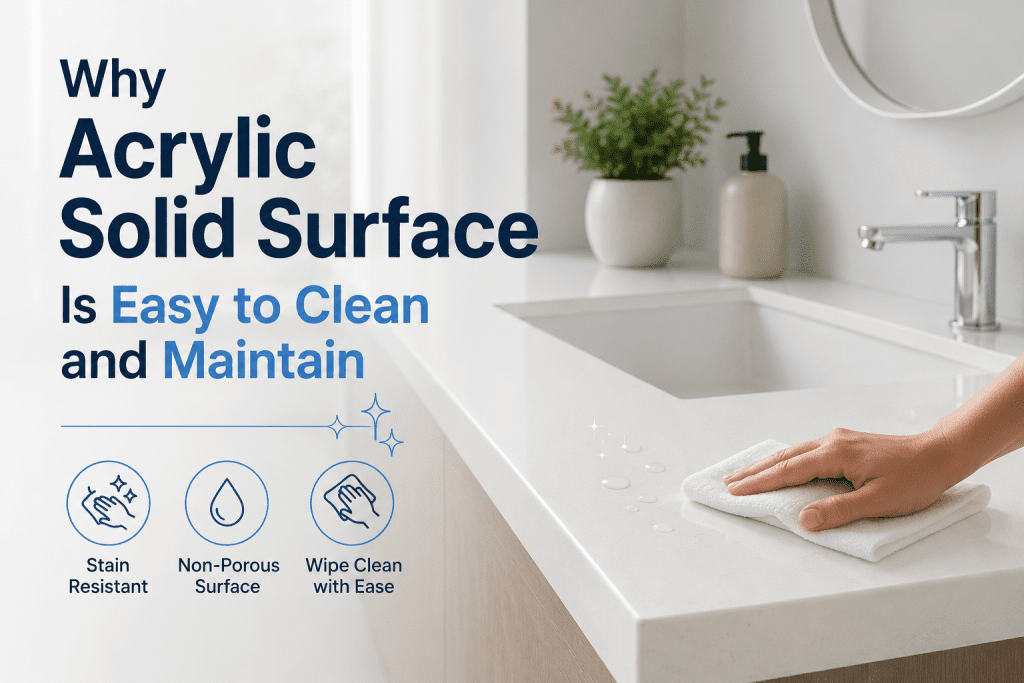
พื้นผิวอะคริลิกแข็งมีโครงสร้างหนาแน่นและไม่มีรูพรุน ช่วยป้องกันของเหลว สิ่งสกปรก และคราบสกปรกไม่ให้เจาะพื้นผิววัสดุ สารตกค้างส่วนใหญ่ยังคงอยู่บนพื้นผิวและสามารถกำจัดออกได้โดยขั้นตอนการทำความสะอาดมาตรฐาน :contentReference[oaicite:1]{index=1}
เมื่อประดิษฐ์ด้วยข้อต่อไร้รอยต่อ พื้นผิวแข็งอะคริลิกยังช่วยลดช่องว่างและรอยแยกที่อาจมีสิ่งปนเปื้อน ความชื้น หรือสารตกค้างสะสมอยู่ โครงสร้างที่ไร้รอยต่อนี้ช่วยลดความยุ่งยากในการทำความสะอาดตามปกติ การสุขาภิบาล และการบำรุงรักษาด้านสุขอนามัยในระยะยาว :contentReference[oaicite:2]{index=2}
ข้อดีไม่มีรูพรุนและไร้รอยต่อด้านสุขอนามัย
ข้อดีด้านสุขอนามัยของพื้นผิวอะคริลิกแข็งมีความสัมพันธ์อย่างใกล้ชิดกับโครงสร้างที่ไร้รอยต่อและไม่มีรูพรุน
- ลดการซึมผ่านของความชื้น
- พื้นที่สะสมสิ่งสกปรกน้อยลง
- ขั้นตอนการสุขาภิบาลที่ง่ายขึ้น
- เช็ดทำความสะอาดพื้นผิวได้ง่าย
- ลดการกักเก็บสารตกค้าง
- ปรับปรุงประสิทธิภาพการบำรุงรักษาด้านสุขอนามัยในระยะยาว
ลักษณะเหล่านี้คือสาเหตุหนึ่งที่ทำให้พื้นผิวอะคริลิกแข็งถูกระบุอย่างกว้างขวางสำหรับสถานพยาบาล ห้องปฏิบัติการ การตกแต่งภายในโรงแรม ห้องน้ำเชิงพาณิชย์ และสภาพแวดล้อมด้านบริการอาหาร :contentReference[oaicite:3]{index=3}
การใช้งานสถาปัตยกรรมเชิงพาณิชย์ที่ต้องการพื้นผิวที่ถูกสุขลักษณะ
พื้นผิวที่ถูกสุขอนามัยที่ทำความสะอาดง่ายมีความสำคัญอย่างยิ่งในสภาพแวดล้อมเชิงพาณิชย์ที่มีการโต้ตอบสาธารณะและการใช้งานในการปฏิบัติงานอย่างต่อเนื่อง
- สถานีงานด้านการดูแลสุขภาพและสถานีพยาบาล
- พื้นผิวการทำงานของห้องปฏิบัติการ
- ระบบโต๊ะเครื่องแป้งการต้อนรับ
- เคาน์เตอร์บริการร้านอาหาร
- ระบบห้องน้ำสาธารณะ
- เคาน์เตอร์ต้อนรับเชิงพาณิชย์
- สภาพแวดล้อมภายในสาธารณะที่มีการสัมผัสสูง
ในสภาพแวดล้อมเหล่านี้ ขั้นตอนการทำความสะอาดและสุขอนามัยที่เรียบง่ายช่วยปรับปรุงประสิทธิภาพการบำรุงรักษา ในขณะเดียวกันก็สนับสนุนประสิทธิภาพด้านสุขอนามัยในระยะยาว
การทำความสะอาดตามปกติและการดูแลพื้นผิว
ขั้นตอนการบำรุงรักษาตามปกติช่วยรักษาความสม่ำเสมอของรูปลักษณ์ในระยะยาวและสภาพพื้นผิวที่ถูกสุขลักษณะ
- ใช้ผ้าไมโครไฟเบอร์หรือฟองน้ำนุ่มๆ ในการทำความสะอาดเป็นประจำ
- ใช้ผลิตภัณฑ์ทำความสะอาดที่มีค่า pH เป็นกลางอย่างอ่อนตามความเหมาะสม
- ขจัดสิ่งที่หกออกทันทีเพื่อลดการสะสมของสารตกค้าง
- ล้างพื้นผิวให้สะอาดหลังจากทำความสะอาด
- พื้นผิวที่แห้งเพื่อลดการสะสมและการจำแนกฟิล์ม
เนื่องจากพื้นผิวอะคริลิกแข็งไม่มีรูพรุน คราบและสารตกค้างที่พบบ่อยที่สุดจึงยังคงอยู่บนพื้นผิว และโดยทั่วไปสามารถทำความสะอาดได้โดยไม่ต้องเจาะวัสดุ :contentReference[oaicite:4]{index=4}
ความเข้ากันได้ของการทำความสะอาดและการฆ่าเชื้ออย่างล้ำลึก
ในสถานพยาบาลและสภาพแวดล้อมเชิงพาณิชย์ที่มีการสัมผัสบ่อย การทำความสะอาดเป็นประจำมักรวมกับขั้นตอนการทำความสะอาดแบบล้ำลึกและการฆ่าเชื้อเป็นระยะ
ลักษณะเฉพาะของพื้นผิวอะคริลิกที่ไร้รอยต่อและไม่มีรูพรุนช่วยลดความซับซ้อน:
- ขั้นตอนการสุขาภิบาลพื้นผิว
- ระเบียบการทำความสะอาดด้านการดูแลสุขภาพ
- การกำจัดสารตกค้าง
- การจัดการความชื้น
- การบำรุงรักษาพื้นผิวสัมผัสสูง
โดยทั่วไปขั้นตอนการทำความสะอาดและฆ่าเชื้อที่เหมาะสมมีความสำคัญต่อการรักษาสภาพแวดล้อมที่ถูกสุขลักษณะมากกว่าการอาศัยคำกล่าวอ้างทางการตลาดแบบ "ทำความสะอาดตัวเอง" ทั่วไปเพียงอย่างเดียว :contentReference[oaicite:5]{index=5}
ข้อดีการบำรุงรักษาพื้นผิวทดแทน
ข้อดีประการหนึ่งที่สำคัญในระยะยาวของพื้นผิวอะคริลิกแข็งคือโครงสร้างพื้นผิวที่หมุนเวียนได้ ในสภาพแวดล้อมเชิงพาณิชย์ที่มีการทำความสะอาดและการใช้งานอย่างต่อเนื่อง พื้นผิวอาจค่อยๆ เกิดรอยขีดข่วน รอยถลอก ความเงาไม่สม่ำเสมอ หรือการสึกหรอเฉพาะจุด
ช่างประกอบมืออาชีพอาจดำเนินการ:
- การขัดสีแบบก้าวหน้า
- การแก้ไขพื้นผิว
- ขั้นตอนการฟื้นฟูที่มีการแปลเป็นภาษาท้องถิ่น
- การต่ออายุผิวด้านและซาติน
- การซ่อมแซมเฉพาะที่อย่างราบรื่น
ความสามารถของพื้นผิวที่หมุนเวียนได้นี้ช่วยยืดอายุการใช้งานของการติดตั้งพื้นผิวอะคริลิกที่เป็นของแข็ง ในขณะเดียวกันก็รักษาความต่อเนื่องของการมองเห็นที่ไร้รอยต่อ :contentReference[oaicite:6]{index=6}
ข้อควรพิจารณาการตกแต่งพื้นผิวเพื่อการบำรุงรักษาง่าย
ระดับการตกแต่งที่แตกต่างกันย่อมต้องการความคาดหวังในการบำรุงรักษาที่แตกต่างกัน
- ผิวด้าน: ง่ายที่สุดในการบำรุงรักษาและตกแต่งใหม่
- ผิวซาติน: รูปลักษณ์ที่สมดุลและความยืดหยุ่นในการบำรุงรักษา
- เคลือบเงา: สะท้อนแสงได้มากขึ้นแต่ไวต่อรอยขีดข่วนที่มองเห็นได้และการขัดที่ไม่สอดคล้องกัน
สำหรับสภาพแวดล้อมทางสถาปัตยกรรมที่มีผู้คนสัญจรไปมาสูง พื้นผิวด้านและซาตินมักนิยมใช้ เนื่องจากให้การบำรุงรักษาในระยะยาวได้ง่ายขึ้นและการฟื้นฟูพื้นผิวที่หมุนเวียนได้
เหตุใดพื้นผิวอะคริลิกแข็งจึงรองรับสภาพแวดล้อมทางสถาปัตยกรรมที่ถูกสุขลักษณะ
ในการตกแต่งภายในด้วยสถาปัตยกรรมสมัยใหม่ ประสิทธิภาพด้านสุขอนามัยที่ทำความสะอาดง่ายและประสิทธิภาพการบำรุงรักษาในระยะยาว มีความสำคัญมากขึ้นสำหรับสถาปนิก ผู้ปฏิบัติงานด้านการดูแลสุขภาพ กลุ่มการบริการ และผู้จัดการสิ่งอำนวยความสะดวก
คุณลักษณะที่ไร้รอยต่อ ไม่มีรูพรุน หมุนเวียน และซ่อมแซมได้ของพื้นผิวอะคริลิกแข็ง ช่วยสนับสนุนขั้นตอนการทำความสะอาดและสุขอนามัยที่มีประสิทธิภาพ ขณะเดียวกันก็ลดความท้าทายในการบำรุงรักษาในระยะยาว :contentReference[oaicite:7]{index=7}
ต่างจากวัสดุที่มีรอยต่อหรือมีรูพรุนจำนวนมาก การติดตั้งพื้นผิวอะคริลิกแข็งทำให้ขั้นตอนการทำความสะอาดง่ายขึ้น ในขณะเดียวกันก็รองรับสภาพแวดล้อมทางสถาปัตยกรรมที่ถูกสุขลักษณะในระยะยาว
พื้นผิวแข็งทางสถาปัตยกรรมที่ออกแบบมาเพื่อการใช้งานเชิงพาณิชย์ที่ถูกสุขลักษณะ
ตั้งแต่สิ่งอำนวยความสะดวกด้านการดูแลสุขภาพและการตกแต่งภายในโรงแรมไปจนถึงห้องปฏิบัติการและระบบห้องน้ำสาธารณะ พื้นผิวอะคริลิกแข็งยังคงช่วยให้สถาปนิกและผู้ปฏิบัติงานเชิงพาณิชย์ได้รับโซลูชันพื้นผิวที่ถูกสุขลักษณะ หมุนเวียนได้ บำรุงรักษาง่าย และมีอายุการใช้งานยาวนาน
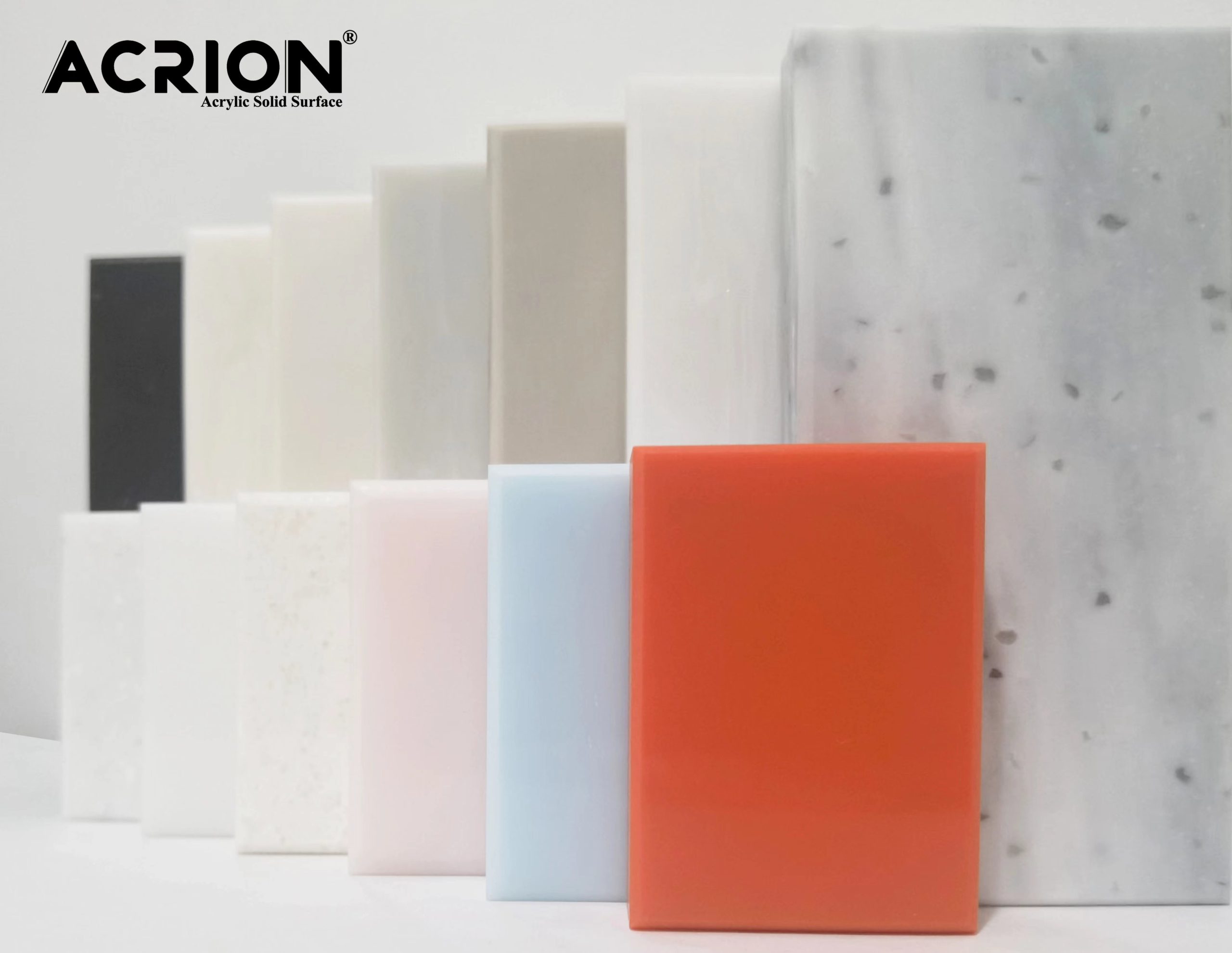
ที่ ACRION เรามุ่งเน้นการพัฒนาวัสดุพื้นผิวแข็งทางสถาปัตยกรรมที่ได้รับการออกแบบมาเพื่อการผลิตที่ไร้รอยต่อ ประสิทธิภาพการบำรุงรักษาที่ถูกสุขลักษณะ และการใช้งานสถาปัตยกรรมเชิงพาณิชย์ในระยะยาวทั่วโลก