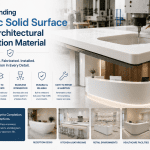
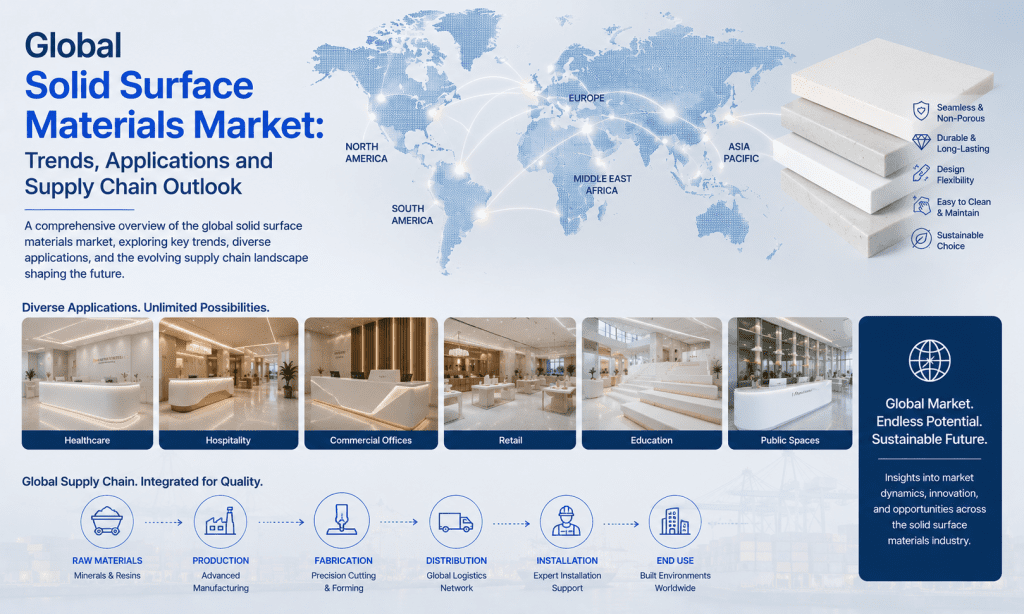
The global solid surface materials market continues to evolve as architects, fabricators, contractors, and project owners look for surface materials that combine seamless fabrication, hygienic performance, design flexibility, and long-term maintenance efficiency.
Solid surface materials are no longer used only for residential countertops. They are increasingly applied in healthcare facilities, hospitality interiors, public buildings, retail environments, commercial reception systems, wall cladding, bathroom systems, and customized architectural furniture.
This shift is changing the way the solid surface industry is understood. The market is moving from simple countertop supply toward integrated architectural surface systems.
Global Solid Surface Market Overview
Solid surface materials have been widely used in global interior and architectural projects for decades. International brands such as Corian, HI-MACS, Staron, Hanex, Wilsonart, and other surface material systems helped establish solid surface as a recognized material category for commercial and residential applications.
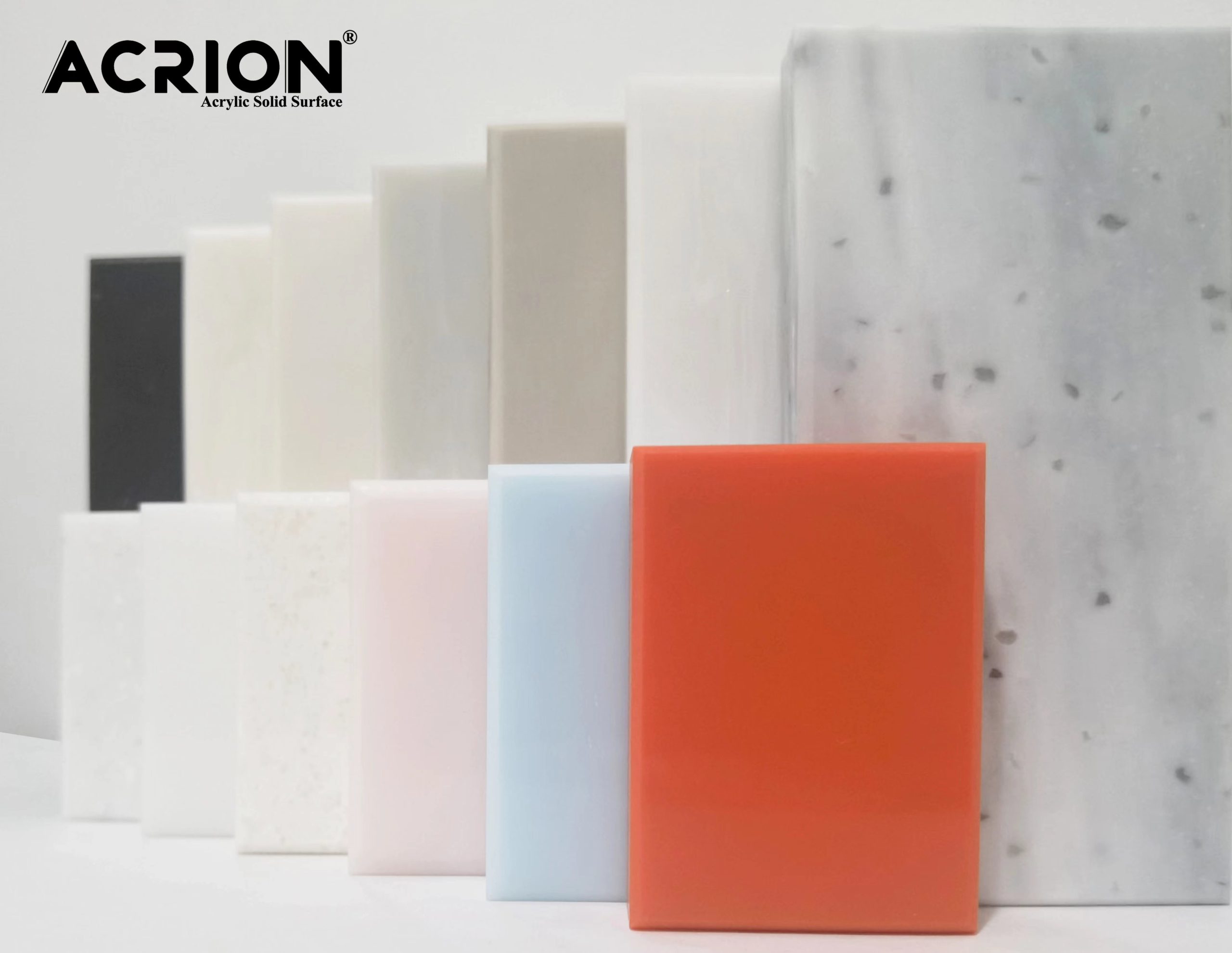
Today, the market includes several material types, including pure acrylic solid surface, modified acrylic solid surface, polyester solid surface, veined solid surface, translucent solid surface, fabricated solid surface furniture, and solid surface sanitary ware.
As project requirements become more complex, buyers are paying closer attention not only to sheet price, but also to material formulation, fabrication support, color consistency, testing documentation, project lead time, and long-term supplier reliability.
Why Demand for Solid Surface Materials Continues to Grow
Demand for solid surface materials continues to grow because modern architectural interiors increasingly require materials that can support seamless surfaces, integrated detailing, and low-maintenance operation.
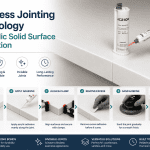
Unlike many rigid slab materials, acrylic solid surface can be seamlessly joined, thermoformed, CNC processed, integrated with sinks, repaired, and refinished. These characteristics make it especially suitable for projects where fabrication flexibility is more important than decorative surface appearance alone.
Key demand drivers include:
- Growth of healthcare and hygienic interior applications
- Expansion of hospitality and commercial fit-out projects
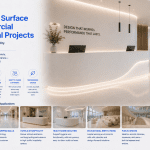
- Demand for seamless reception and service counters
- Interest in thermoformed and curved architectural surfaces
- More use of integrated sinks and wash stations
- Rising demand for repairable and renewable surface systems
- Growth of customized commercial interiors and OEM supply
From Countertops to Architectural Surface Systems
One of the most important changes in the global solid surface market is the transition from basic countertop use to broader architectural surface systems.
In earlier market stages, solid surface was mainly associated with kitchen countertops, bathroom vanities, and simple worktops. Today, it is increasingly used for reception counters, wall cladding, integrated furniture, healthcare wash stations, hospitality bars, laboratory surfaces, public washrooms, and customized commercial installations.
This evolution gives manufacturers with strong fabrication knowledge a greater advantage. The future of solid surface is not only about producing sheets. It is about supporting architectural applications through material consistency, fabrication guidance, technical documentation, and project coordination.
Key Applications in the Global Market
The global solid surface market is supported by several important application sectors. Each sector has different performance priorities and fabrication requirements.
| Application Sector | Why Solid Surface Is Used |
|---|---|
| Healthcare | Seamless, non-porous, hygienic surface systems |
| Hospitality | Reception counters, bar systems, spa surfaces, and feature walls |
| Public Interiors | Durable and repairable surfaces for high-traffic environments |
| Retail | Customized counters, branded display systems, and cashier areas |
| Residential Kitchens | Seamless countertops, integrated sinks, and waterfall islands |
| Bathrooms | Vanities, basins, bathtubs, wall cladding, and wet-area systems |
| Education | Laboratory worktops, library counters, wash stations, and student workspaces |
| Commercial Furniture | Custom tables, reception desks, shelving, and integrated surface systems |
Material Segments: Acrylic, Modified Acrylic and Polyester Solid Surface
The solid surface market includes different material systems. International buyers should understand these differences before selecting a supplier or specifying a product for a project.
| Material Type | Main Characteristics | Typical Applications |
|---|---|---|
| Pure Acrylic Solid Surface | Better thermoforming performance, stronger fabrication flexibility, more suitable for demanding architectural applications | Healthcare, hospitality, commercial interiors, thermoformed surfaces, premium countertops |
| Modified Acrylic Solid Surface | Combination of acrylic and polyester resin systems, usually more cost-effective | General countertops, commercial surfaces, price-sensitive projects |
| Polyester Solid Surface | Lower-cost material system, often used for decorative and basic countertop applications | Domestic projects, furniture surfaces, lower-budget applications |
For commercial architectural projects, pure acrylic solid surface is generally preferred when seamless fabrication, thermoforming, color stability, and long-term fabrication performance are important.
Competitive Landscape: Global Brands and Chinese Manufacturers
The global solid surface market includes established international specification brands, regional surface material brands, and project-oriented manufacturers from Asia, Europe, North America, and China.
Corian remains one of the most recognized names in the acrylic solid surface industry, with strong brand awareness and long-term specification history. Korean brands such as HI-MACS, Staron, and Hanex are also widely known in international architectural and fabrication markets.
Chinese manufacturers play an increasingly important role in global supply because they can often provide flexible production, OEM support, customized colors, private label cooperation, fabricated products, and container-based project supply.
The most competitive Chinese manufacturers are no longer positioned only as low-cost suppliers. They are moving toward project-oriented architectural material supply, fabrication support, and customized commercial applications.
Regional Market Trends
Different regions evaluate solid surface materials through different project requirements, market habits, and specification standards.
North America
North America has a mature solid surface market with strong awareness of established brands, fabrication standards, healthcare applications, and commercial specification systems. Buyers often pay attention to documentation, certifications, fabrication networks, and long-term product reliability.
Europe
European markets tend to focus on technical documentation, environmental requirements, product consistency, and project specification credibility. Commercial interiors, healthcare, public projects, and design-led residential spaces remain important application areas.
Middle East
The Middle East market has strong demand for hospitality, villas, commercial interiors, healthcare, and large-scale project supply. Buyers often value color matching, project coordination, fast response, container-based supply, and the ability to support customized specifications.
Asia-Pacific
Asia-Pacific continues to show demand across residential renovation, commercial interiors, healthcare, education, retail, and public infrastructure. The region also includes strong manufacturing bases and highly competitive material alternatives such as quartz and sintered stone.
Latin America and Africa
In many emerging markets, buyers often focus on stable supply, competitive pricing, distributor support, sample systems, product training, and reliable logistics. For solid surface manufacturers, these markets may offer strong opportunities when supported by proper technical education and fabrication guidance.
Market Challenges: Quartz, Sintered Stone and Price Competition
The global solid surface market also faces strong competition from quartz, sintered stone, porcelain slabs, compact surfaces, laminate materials, and natural stone.
Quartz remains strong in residential kitchen markets because of its scratch resistance and engineered stone appearance. Sintered stone is growing in high-end kitchens, furniture, wall cladding, exterior applications, and large-format architectural surfaces because of its heat resistance, UV stability, and stone-like visual impact.
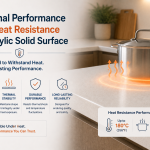
For acrylic solid surface, the strongest competitive advantage is not hardness alone. Its real value is seamless fabrication, thermoforming, repairability, integrated sinks, curved geometry, and hygienic commercial applications.
Therefore, the future of solid surface depends on positioning the material correctly: not simply as another countertop option, but as a fabrication-oriented architectural surface system.
China’s Role in the Global Solid Surface Supply Chain
China has become an important manufacturing base for acrylic solid surface materials, modified solid surface, polyester solid surface, fabricated products, sanitary ware, sample systems, and customized project supply.
Manufacturing regions such as Guangdong benefit from strong supply chains in building materials, furniture, sanitary ware, adhesives, packaging, hardware, CNC processing, and export logistics. This ecosystem allows Chinese manufacturers to support both standard sheet supply and more customized project requirements.
For international buyers, China’s advantage is not only production cost. It also includes flexible manufacturing, faster sample preparation, OEM support, color development, project coordination, and container-based supply capability.
What International Buyers Should Evaluate
When selecting a solid surface supplier, buyers should not evaluate price alone. The most important factors are material reliability, consistency, technical support, and project coordination capability.
| Evaluation Area | What Buyers Should Check |
|---|---|
| Material Type | Pure acrylic, modified acrylic, or polyester solid surface |
| Color Stability | Batch consistency and long-term color control |
| Fabrication Support | Seamless jointing, thermoforming, CNC, sink integration guidance |
| Testing and Documentation | Relevant certificates, test reports, and technical data |
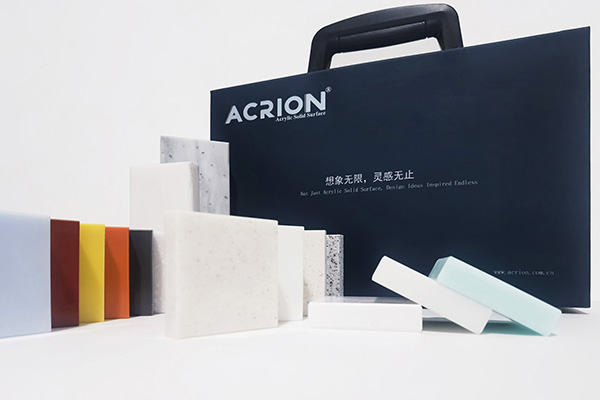
| Sample System | Sample boxes, cut samples, project approval samples |
| OEM Capability | Private label, packaging, catalog, and distributor support |
| Lead Time | Production planning and realistic delivery schedule |
| Project Communication | Professional response and coordination ability |
ACRION’s Perspective on the Global Market
From ACRION’s perspective, the global solid surface market is moving toward more specialized architectural applications. The future of the industry will not be defined only by countertop supply, but by the ability to support integrated surface systems for commercial and residential projects.
ACRION is positioned as an architectural solid surface manufacturer from China, focusing on acrylic solid surface materials for hospitality, healthcare, public interiors, retail, commercial reception systems, residential spaces, and customized fabrication projects.
Our direction is to support international designers, fabricators, distributors, and project buyers with acrylic solid surface materials designed for seamless fabrication, thermoforming, integrated surfaces, and modern architectural applications.
Frequently Asked Questions
What is driving demand in the global solid surface market?
Demand is driven by healthcare, hospitality, public interiors, residential renovation, seamless fabrication needs, hygienic surface systems, and customized commercial applications.
Is solid surface still relevant compared with quartz and sintered stone?
Yes. Quartz and sintered stone are strong in specific applications, but acrylic solid surface remains highly relevant where seamless fabrication, thermoforming, integrated sinks, repairability, and hygienic commercial applications are required.
What are the main applications of acrylic solid surface?
Main applications include healthcare counters, hospitality reception systems, kitchen countertops, bathroom vanities, public wash stations, wall cladding, retail counters, and customized architectural furniture.
Why do international buyers source solid surface from China?
International buyers often source from China because of flexible manufacturing, competitive project supply, OEM support, color customization, sample preparation, and strong supply chain integration.
What should buyers check before choosing a solid surface supplier?
Buyers should check material type, color consistency, quality control, fabrication support, testing documentation, sample capability, packaging, lead time, and communication reliability.
Conclusion
The global solid surface materials market is shifting from basic countertop supply toward integrated architectural surface systems. Healthcare, hospitality, public interiors, retail, commercial furniture, and residential design continue to create demand for seamless, repairable, and fabrication-oriented surface materials.
As quartz and sintered stone continue to grow in certain market segments, acrylic solid surface remains important because of its seamless fabrication capability, thermoforming flexibility, hygienic applications, and integrated design possibilities.
For international buyers, the key is to work with manufacturers that understand both material production and architectural application logic. ACRION aims to support this market direction as an architectural solid surface manufacturer from China.