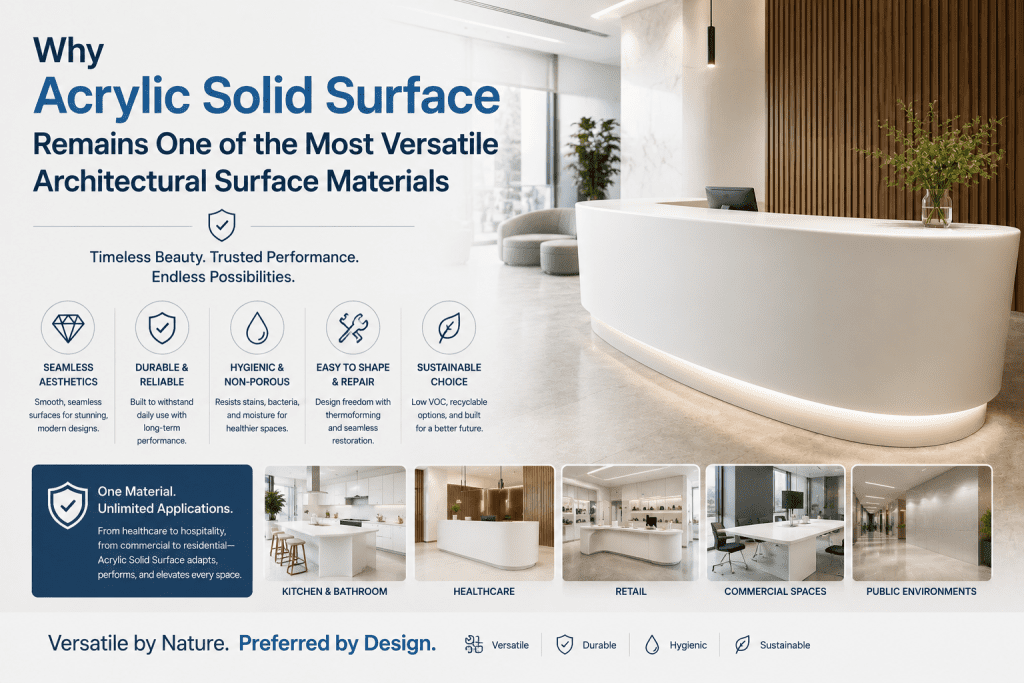
Acrylic solid surface remains one of the most versatile architectural surface materials used in healthcare, hospitality, retail, commercial interiors, and residential applications worldwide.
As a professional acrylic solid surface manufacturer with more than 20 years of fabrication and project experience, ACRION understands that the true value of solid surface materials is not limited to simple countertop applications. Its real strength comes from the combination of seamless fabrication, thermoforming flexibility, renewable surface technology, and integrated architectural design capability.
This article explains why acrylic solid surface continues to be widely specified in modern interior architecture and commercial fabrication projects.
Seamless Fabrication Capability
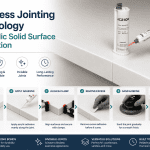
One of the most important advantages of acrylic solid surface is its seamless fabrication capability.
Using color-matched adhesive systems and professional fabrication techniques, multiple sheets can be visually integrated into large continuous surfaces with minimal visible joints.
This capability provides major advantages in:
- Healthcare environments
- Commercial reception counters
- Hospitality interiors
- Integrated washroom systems
- Large custom architectural surfaces
Seamless fabrication also contributes to easier cleaning, improved appearance continuity, and modern monolithic interior design aesthetics.
Thermoforming and Design Flexibility
Unlike many rigid architectural surface materials, acrylic solid surface can be thermoformed into curved and customized shapes under controlled fabrication conditions.
This fabrication flexibility allows designers and fabricators to create:
- Curved reception desks
- Integrated wall systems
- Custom healthcare counters
- Organic retail fixtures
- Backlit architectural elements
- Integrated sink solutions
The ability to combine machining, thermoforming, and seamless joining gives acrylic solid surface unique advantages in custom architectural fabrication.
Renewable Surface Technology
Acrylic solid surface is a homogeneous material, meaning the color and structure remain relatively consistent throughout the material thickness.
This homogeneous structure allows minor surface damage to often be repaired through:
- Professional sanding
- Surface refinishing
- Polishing procedures
- Maintenance restoration
Unlike some layered or coated materials, the renewable surface capability helps extend the service life and maintain long-term appearance consistency in commercial environments.
Non-Porous and Hygienic Surface Properties
Acrylic solid surface is widely recognized for its non-porous and easy-to-clean surface characteristics.
Its non-porous structure helps reduce liquid penetration and supports easier maintenance under normal use conditions.
Combined with seamless fabrication, this makes acrylic solid surface highly suitable for:
- Hospitals and clinics
- Laboratories
- Commercial washrooms
- Hospitality bathrooms
- Food preparation areas
Its hygienic performance is mainly related to cleanability and surface continuity rather than active antibacterial chemistry.
Integrated Sink and Wash Basin Solutions
Acrylic solid surface supports integrated sink and basin fabrication, creating visually continuous surfaces without exposed transition gaps.
This capability improves:
- Visual consistency
- Ease of cleaning
- Maintenance efficiency
- Architectural integration
- Modern minimalist design aesthetics
Integrated fabrication is one reason acrylic solid surface remains popular in hospitality and healthcare projects.
Wide Range of Design Applications
Acrylic solid surface is no longer limited to traditional countertops.
Today, it is widely used in:
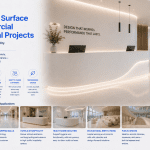
- Reception counters
- Wall cladding systems
- Retail display fixtures
- Healthcare worktops
- Commercial vanity systems
- Restaurant interiors
- Public architectural installations
- Backlit feature walls
Its fabrication flexibility allows designers to create customized interior systems with complex geometry and integrated functionality.
Comparison With Other Surface Materials
Different architectural materials offer different performance advantages depending on the application.
| Material | Main Advantage |
|---|---|
| Acrylic Solid Surface | Fabrication flexibility and seamless integration |
| Quartz Stone | Higher surface hardness |
| Sintered Stone | Excellent heat and UV resistance |
| Stainless Steel | High chemical and heat resistance |
| Laminate | Lower initial cost |
The unique advantage of acrylic solid surface lies in its balance between design flexibility, repairability, seamless fabrication, and architectural customization.
Important Considerations and Limitations
Like all architectural materials, acrylic solid surface also has application limitations that should be properly understood.
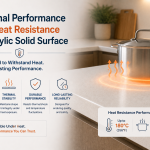
- Direct hot cookware should not be placed on the surface without protection
- Sharp objects may still scratch the material
- Darker colors may show scratches more visibly
- Outdoor UV exposure performance depends on formulation and environment
Proper fabrication, installation, and maintenance are important for achieving long-term performance.
Why Acrylic Solid Surface Remains Relevant
Despite increasing competition from quartz, sintered stone, and other engineered materials, acrylic solid surface continues to remain highly relevant because of its unmatched fabrication versatility.
Its ability to combine:
- Seamless joining
- Thermoforming capability
- Repairability
- Integrated fabrication
- Custom architectural flexibility
makes it one of the most adaptable materials for modern interior architectural projects.
Conclusion
Acrylic solid surface remains one of the most versatile architectural surface materials because it combines seamless fabrication, renewable surface technology, thermoforming flexibility, and hygienic performance within a single fabrication system.
Its value is not limited to countertops alone, but extends to integrated architectural interiors, healthcare environments, hospitality projects, retail systems, and customized commercial fabrication.
At ACRION, we continue to develop acrylic solid surface solutions engineered for architectural fabrication, design flexibility, and long-term commercial durability worldwide.