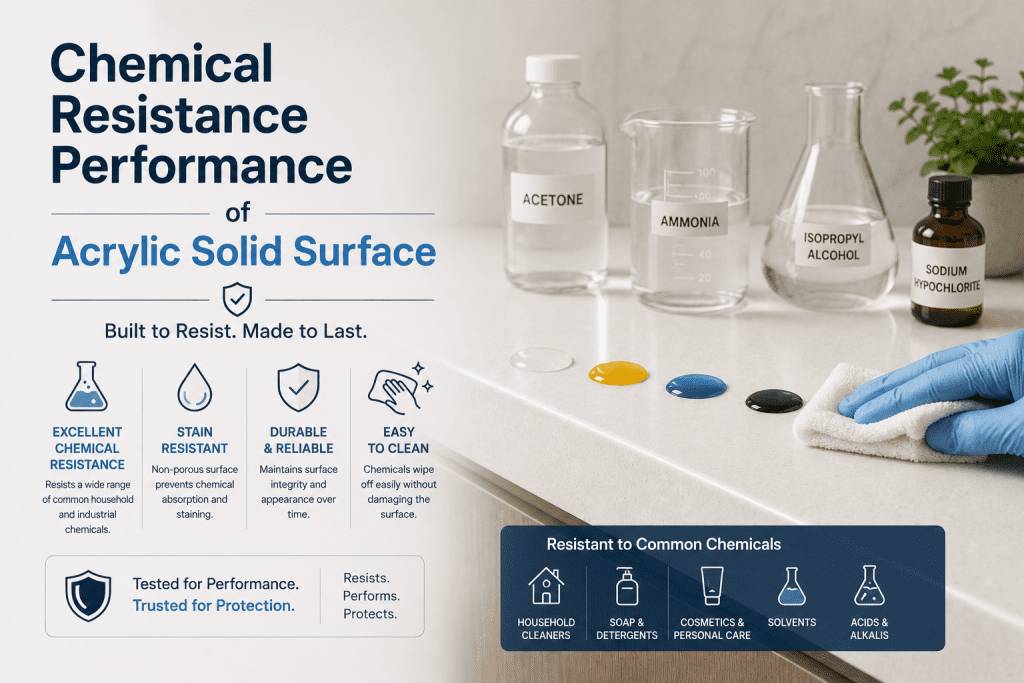
Chemical resistance is one of the important performance characteristics of acrylic solid surface in healthcare facilities, hospitality environments, laboratories, commercial interiors, and residential applications.
As a professional acrylic solid surface manufacturer with more than 20 years of fabrication and project experience, ACRION understands that chemical resistance is often misunderstood in the market. Acrylic solid surface is not a chemically indestructible material, but professionally formulated products can provide excellent resistance to many common household and commercial chemicals used in everyday environments.
This article explains how acrylic solid surface performs when exposed to common chemicals, the limitations of the material, and the importance of proper chemical compatibility in architectural and commercial applications.
What Does Chemical Resistance Mean?
Chemical resistance refers to a material’s ability to maintain its surface appearance and physical properties after contact with chemical substances.
Depending on the chemical type and exposure duration, surface materials may experience:
- Discoloration
- Surface dulling
- Gloss reduction
- Staining
- Swelling
- Chemical attack
- Surface cracking
For acrylic solid surface, resistance performance depends on resin formulation, filler composition, chemical concentration, exposure duration, and maintenance conditions.
Why Acrylic Solid Surface Performs Well Against Many Common Chemicals
High-quality acrylic solid surface materials are typically manufactured using acrylic resin systems such as PMMA (Polymethyl Methacrylate) combined with aluminum trihydrate (ATH) filler.
This formulation provides good resistance to many commonly encountered substances in commercial and residential environments.
Typical examples include:
- Soap solutions
- Household cleaners
- Diluted disinfectants
- Alcohol-based cleaners
- Coffee and tea
- Cosmetics
- Food acids such as lemon juice or vinegar
Combined with its non-porous structure, acrylic solid surface is generally easy to clean and maintain after exposure to many everyday substances.
Chemical Resistance Does Not Mean Chemical Proof
It is important to understand that chemical resistance does not mean complete immunity to all chemicals.
Like most polymer-based materials, acrylic solid surface may still be affected by aggressive chemical exposure under certain conditions.
Potentially damaging substances may include:
- Acetone
- Methylene chloride
- Strong ketone solvents
- Concentrated acids
- Highly aggressive alkaline chemicals
- Industrial solvent systems
Improper exposure to these chemicals may contribute to:
- Surface whitening
- Crazing
- Gloss loss
- Swelling
- Surface softening
- Permanent damage
For this reason, chemical compatibility should always be considered for laboratory, industrial, and specialized commercial applications.
Difference Between Staining and Chemical Attack
In practical applications, staining and chemical attack are not the same phenomenon.
| Condition | Description |
|---|---|
| Surface Staining | Temporary discoloration caused by pigment or residue on the surface |
| Chemical Attack | Actual surface damage caused by chemical interaction with the material structure |
One of the advantages of acrylic solid surface is that many surface stains can often be removed through cleaning or light refinishing due to the homogeneous material structure.
Applications Where Chemical Resistance Is Important
Chemical resistance performance is particularly important in environments such as:
- Healthcare facilities
- Laboratories
- Commercial washrooms
- Beauty salons
- Hospitality environments
- Residential kitchens and bathrooms
In these environments, surfaces are frequently exposed to cleaning agents, disinfectants, cosmetics, food acids, and other chemical substances during daily operation.
Chemical Resistance Testing Standards
Professional evaluation of chemical resistance may involve recognized laboratory testing methods such as:
- ASTM D543
- ASTM D1308
- ANSI performance evaluations
- Project-specific laboratory testing
Testing conditions may vary depending on:
- Chemical concentration
- Exposure duration
- Temperature
- Surface finish
- Cleaning procedures
For critical commercial or laboratory projects, official compatibility testing is strongly recommended before specification.
Repairability Is a Major Advantage
Compared with many other surface materials, acrylic solid surface offers excellent repairability after certain types of surface damage.
Minor stains, scratches, and localized surface dulling can often be repaired through:
- Surface refinishing
- Light sanding
- Polishing procedures
- Professional maintenance techniques
This renewable surface capability is one of the key reasons acrylic solid surface remains highly valued in commercial environments.
Important Maintenance Recommendations
To maintain long-term surface performance, it is recommended to:
- Clean spills promptly
- Avoid prolonged exposure to strong solvents
- Use approved cleaning products
- Follow manufacturer maintenance recommendations
- Test unknown chemicals before prolonged contact
Proper daily maintenance helps preserve both the appearance and structural stability of acrylic solid surface materials.
Conclusion
Acrylic solid surface provides good resistance to many common household and commercial chemicals used in everyday architectural environments.
However, chemical resistance should not be confused with complete chemical immunity. Strong solvents and aggressive industrial chemicals may still damage the material under certain conditions.
Combined with its non-porous structure, seamless fabrication capability, and renewable surface characteristics, acrylic solid surface remains one of the most practical and maintainable materials for healthcare, hospitality, laboratory, and commercial interior applications.
At ACRION, we continue to develop acrylic solid surface solutions engineered for architectural fabrication, commercial durability, and long-term material performance worldwide.