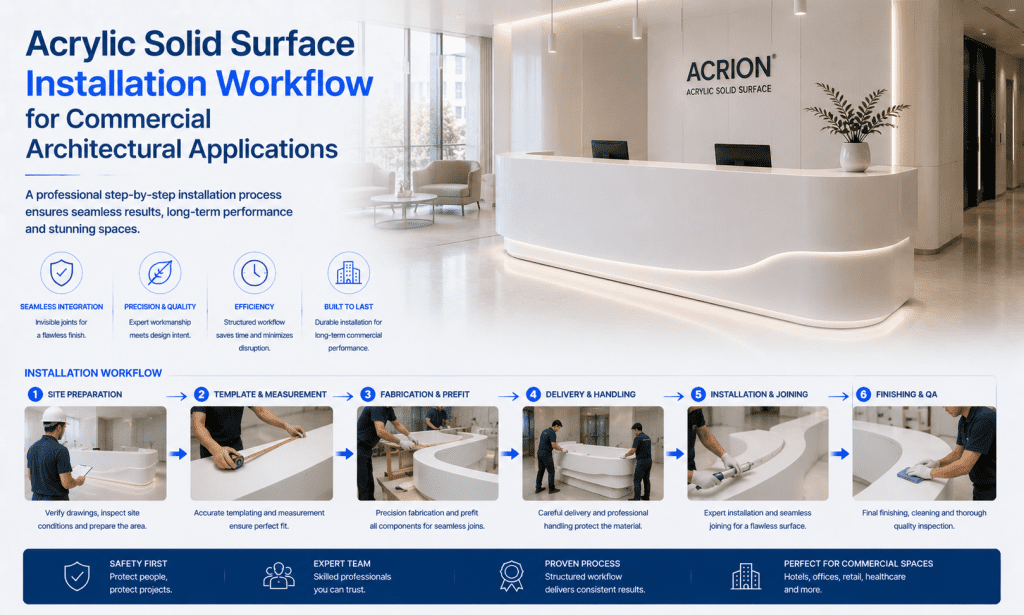
Installation quality has a direct impact on the long-term performance, visual consistency, and service life of acrylic solid surface systems.
Even high-quality fabricated components can underperform if installation is poorly executed. Misalignment, substrate irregularities, weak joint handling, and inadequate site preparation can all compromise the final result.
For architects, fabricators, contractors, and project buyers, installation should be treated as a controlled technical workflow rather than a simple site assembly task.
This guide outlines the professional installation workflow for acrylic solid surface in commercial architectural applications.
Why Installation Quality Matters
Acrylic solid surface offers seamless fabrication, precise machining, and architectural design flexibility, but final project performance depends heavily on installation execution.
Installation quality affects:
- visual alignment
- joint consistency
- surface flatness
- structural stability
- fit-up accuracy
- long-term durability
- user perception of workmanship
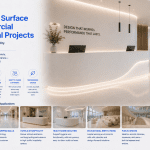
Typical Commercial Installation Applications
- reception desks
- healthcare counters
- hospitality vanity systems
- commercial washrooms
- retail service counters
- airport interiors
- custom architectural fit-outs
Step 1: Pre-Installation Site Readiness
Successful installation begins before materials arrive onsite.
Pre-installation checks should include:
- site dimensional verification
- substrate readiness
- support structure inspection
- access path review
- environmental condition assessment
- coordination with adjacent trades
Improper site readiness is one of the most common causes of installation delays and fit-up issues.
Step 2: Delivery, Handling, and Site Preparation
Fabricated components must be handled carefully to avoid unnecessary damage before installation.
- protect finished surfaces
- avoid concentrated stress during movement
- maintain clean installation environment
- confirm component identification against drawings
Step 3: Positioning and Fit-Up Alignment
Alignment is one of the most visible indicators of installation quality.
Professional fit-up control should focus on:
- levelness
- flush transitions
- edge alignment
- joint consistency
- dimensional fit accuracy
- visual continuity
Poor alignment immediately undermines perceived workmanship quality.
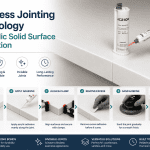
Step 4: Joint Integration and Seam Quality
Joint performance influences both aesthetics and long-term serviceability.
Installation teams should ensure:
- clean bonding preparation
- correct adhesive application
- controlled seam integration
- minimal visual interruption
- consistent finishing across joints
Where seamless integration is expected, workmanship discipline is essential.
Step 5: Surface Finish Quality Verification
Finished installations should be visually inspected for:
- surface scratches
- finish inconsistency
- visible adhesive residue
- edge defects
- cosmetic damage
- uneven sheen
Step 6: Final Quality Acceptance
Installation should conclude with structured acceptance review.
Acceptance checkpoints may include:
- dimensional compliance
- alignment tolerance review
- joint appearance inspection
- surface finish quality
- installation completeness
- visual handover verification
Common Installation Mistakes
- poor substrate preparation
- misalignment during fit-up
- inconsistent joint finishing
- site measurement assumptions
- surface damage during handling
- weak installation sequencing coordination
Installation Workflow vs Project Timeline
Installation execution is only one part of total project delivery.
Fabrication scheduling, transport, site readiness, and trade coordination all influence installation timing.
FAQ
Why is professional installation important for acrylic solid surface?
Because installation quality directly affects visual finish, seam quality, dimensional fit, and long-term performance.
What is the most common installation issue?
Alignment and fit-up inconsistency are among the most visible workmanship problems.
Does installation quality affect lifecycle performance?
Yes. Poor installation often leads to premature cosmetic or functional issues.
Talk to ACRION About Architectural Solid Surface Project Support
ACRION supports architects, distributors, fabricators, and commercial project buyers with architectural acrylic solid surface solutions engineered for reliable fabrication and installation performance.