Seamless joint fabrication is one of the defining technical advantages of acrylic solid surface systems. Unlike many traditional surface materials, acrylic solid surface allows multiple panels to be integrated into visually continuous architectural surfaces with minimal visible joint transitions. This seamless fabrication capability makes acrylic solid surface widely used in hospitality interiors, healthcare environments, residential kitchens, retail systems, and commercial architectural applications.
Professional seamless fabrication requires proper adhesive bonding systems, accurate joint preparation, controlled sanding procedures, structural support planning, and high-quality finishing techniques. These fabrication processes directly affect visual consistency, long-term structural stability, and overall project performance.
Why Seamless Fabrication Is Important in Solid Surface Systems
One of the major advantages of acrylic solid surface is its ability to create large-format seamless architectural surfaces. Through professional fabrication and color-matched adhesive bonding, individual panels can be integrated into continuous surface systems with minimal visible seams.
This seamless fabrication capability is especially important in applications such as:
- Kitchen countertops and islands
- Integrated bathroom vanity systems
- Hospitality reception counters
- Healthcare wash stations
- Retail display installations
- Commercial wall cladding systems
Compared with mechanically joined materials or tiled systems, seamless solid surface fabrication creates cleaner visual continuity and more refined architectural detailing.
Homogeneous Material Structure and Visual Continuity
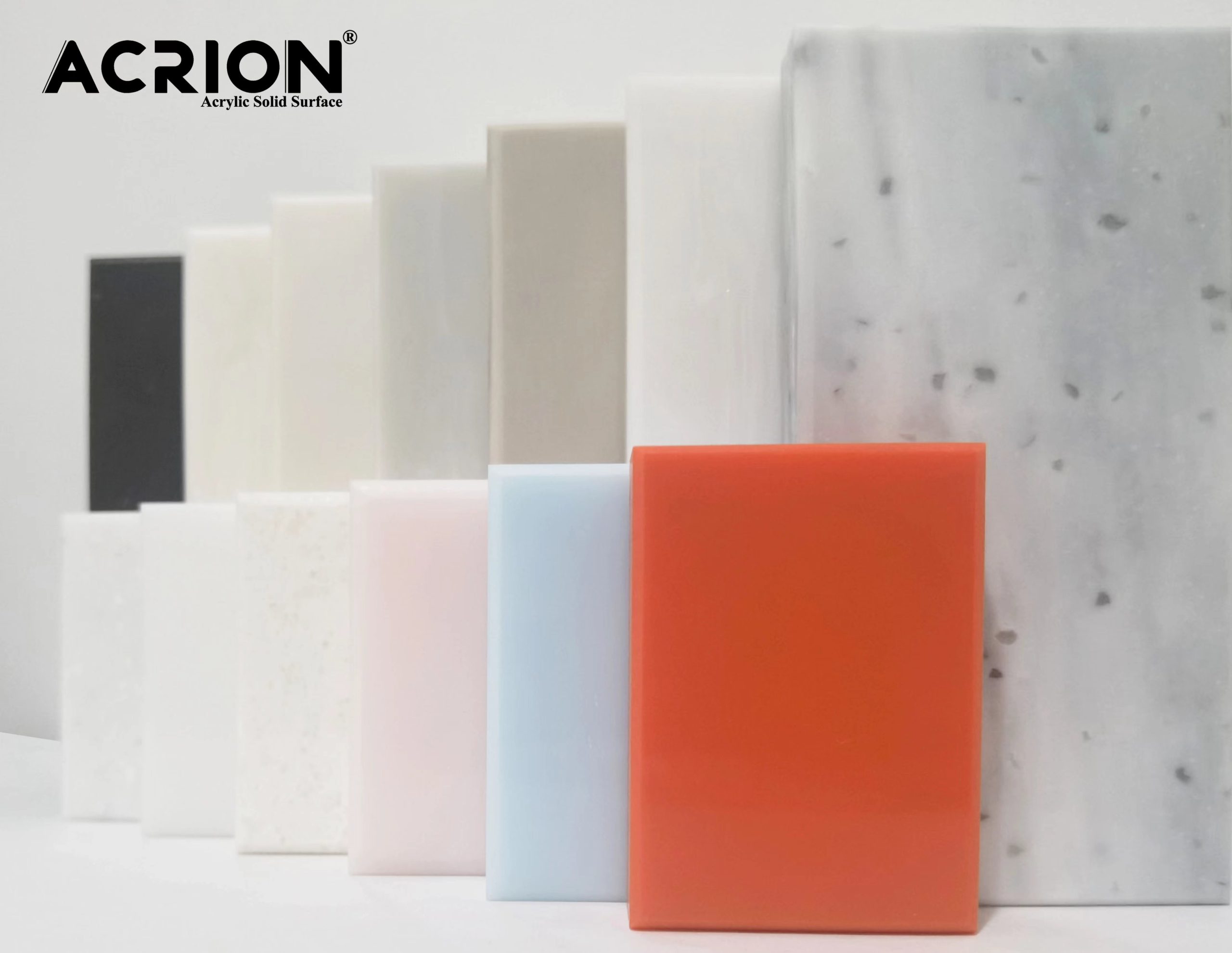
Acrylic solid surface materials provide a homogeneous composition throughout the sheet thickness. Unlike some layered or surface-coated materials, solid surface maintains consistent material structure and color continuity after fabrication and sanding.
This homogeneous structure allows fabricators to create smoother joint transitions and more visually integrated architectural surfaces. Proper sanding and finishing procedures further help blend seam areas into the surrounding surface.
The ability to maintain visual continuity across large installations is one of the core technical advantages of acrylic solid surface systems.
Color-Matched Adhesive Bonding Systems
Professional acrylic solid surface fabrication typically uses color-matched adhesive systems designed to create visually integrated seam connections. Proper adhesive selection is important for both structural stability and appearance consistency.
Important fabrication considerations often include:
- Color consistency between sheet and adhesive
- Proper adhesive mixing procedures
- Controlled application quantity
- Clean bonding surfaces
- Accurate panel alignment
- Suitable curing conditions
Professional adhesive bonding systems help maintain long-term seam performance and architectural surface continuity.
Joint Preparation and Fabrication Accuracy
Fabrication precision directly affects seam quality and long-term installation performance. Proper joint preparation helps reduce visible gaps, stress concentration, and surface instability.
Professional fabrication preparation may include:
- Accurate CNC cutting and trimming
- Flat and clean joint edges
- Dust-free bonding preparation
- Controlled fabrication tolerances
- Proper panel alignment systems
- Suitable substrate support preparation
Even minor fabrication inaccuracies may affect final seam appearance and structural consistency in large-format installations.
Sanding and Surface Finishing Procedures
Professional sanding and finishing procedures are essential for achieving seamless visual integration. The finishing process helps blend the joint area into the surrounding surface and maintain consistent surface texture.
Professional finishing systems may include:
- Progressive sanding sequences
- Surface texture consistency control
- Matte or satin finish refinement
- Edge detailing adjustment
- Dust removal and cleaning
- Final surface quality inspection
Proper sanding and finishing procedures are critical for achieving professional seamless solid surface installations.
Thermal Expansion and Structural Support Considerations
Large-format solid surface installations may be exposed to temperature variation, environmental movement, and operational stress. Professional fabrication systems should therefore consider thermal expansion allowances and structural support requirements.
Important considerations may include:
- Support spacing for long spans
- Expansion allowance planning
- Substrate stability
- Stress reduction around joints
- Wall transition detailing
- Large-format installation support systems
Proper support systems help maintain long-term structural stability and reduce seam-related stress risks in commercial and architectural applications.
Applications in Kitchen, Hospitality, and Healthcare Projects
Seamless acrylic solid surface systems are widely used across residential, hospitality, healthcare, retail, and commercial environments because they combine architectural flexibility, integrated detailing, and long-term maintainability.
- Kitchen countertops and islands
- Integrated bathroom vanity systems
- Hospitality reception counters
- Healthcare wash stations
- Retail display environments
- Commercial wall cladding systems
- Architectural interior installations
ACRION Fabrication Surface Solutions
ACRION provides architectural solid surface materials for hospitality interiors, healthcare facilities, residential projects, retail environments, and commercial fabrication applications. Our acrylic solid surface systems are designed for seamless fabrication, integrated architectural detailing, long-term structural stability, and professional fabrication performance.
We work with architects, fabricators, contractors, distributors, and project teams worldwide to support modern seamless surface systems and project-oriented fabrication applications.