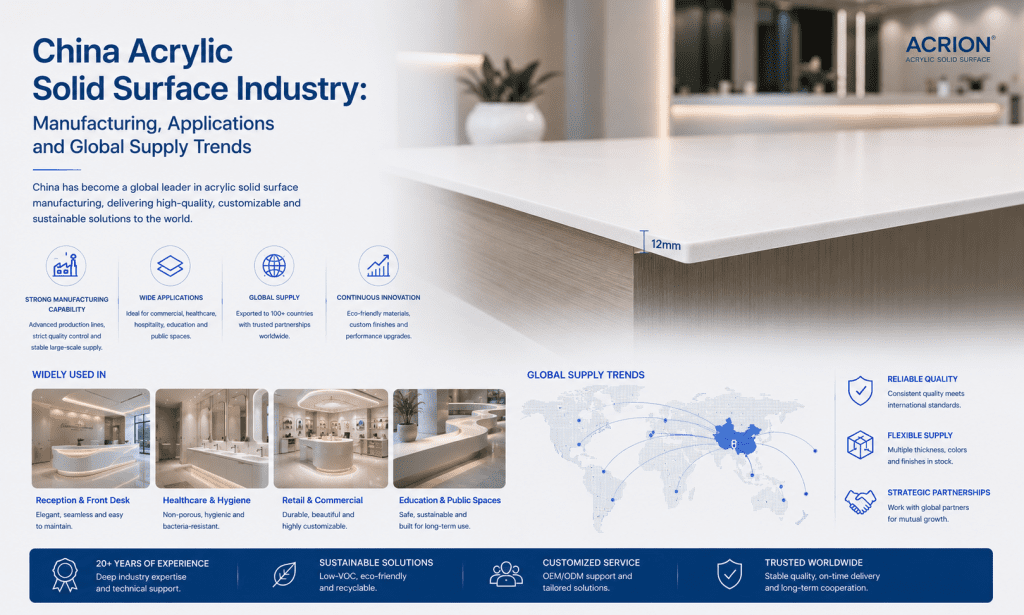
China has become one of the most important manufacturing bases for acrylic solid surface materials in the global architectural and interior surfacing industry. From standard sheet production to customized fabrication, color development, OEM cooperation, and project-based supply, China’s solid surface industry now supports a wide range of residential, commercial, hospitality, healthcare, and public interior applications.
For international buyers, architects, fabricators, and distributors, understanding China’s acrylic solid surface industry is no longer only about comparing prices. It is about understanding material systems, manufacturing capability, fabrication support, quality control, application trends, and long-term project supply reliability.
This article explains how China’s solid surface industry developed, what types of materials are commonly produced, where the main manufacturing advantages come from, and how Chinese manufacturers are moving from basic countertop supply toward architectural solid surface applications.
China’s Role in the Global Solid Surface Industry
Solid surface materials were first widely recognized through international brands such as Corian, HI-MACS, Staron, Hanex, and other global surfacing systems. Over time, China developed a strong manufacturing base for acrylic solid surface, modified acrylic solid surface, polyester solid surface, veined designs, translucent materials, sanitary ware, and fabricated commercial products.
Today, Chinese solid surface manufacturers serve multiple market segments, including distributors, countertop fabricators, furniture manufacturers, hospitality contractors, healthcare projects, commercial interior companies, and OEM brand partners.
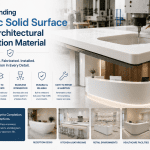
The industry has gradually moved from simple sheet manufacturing toward more project-oriented architectural applications, including reception counters, wash stations, wall cladding systems, thermoformed surfaces, commercial furniture, integrated sinks, and customized interior installations.
How China’s Solid Surface Industry Developed
In its early stage, China’s solid surface industry was mainly focused on residential countertops and cost-effective surfacing materials for domestic interior projects. Many factories produced polyester-based or modified acrylic materials for kitchen countertops, bathroom vanities, and furniture surfaces.
As the market matured, manufacturers began developing higher-performance acrylic solid surface materials, more stable color systems, improved veined designs, better fabrication support, and customized project solutions for overseas markets.
In recent years, the industry has become more diversified. Some factories continue to focus on low-cost domestic supply, while more specialized manufacturers are moving toward pure acrylic solid surface, commercial architectural applications, customized OEM programs, and project-based international supply.
Main Manufacturing and Supply Chain Regions
China’s solid surface industry benefits from a strong building materials and interior manufacturing ecosystem. Guangdong, especially Foshan and surrounding areas, plays an important role because of its mature supply chain for furniture, sanitary ware, stone fabrication, interior construction, hardware, adhesives, packaging, and export logistics.
Foshan is particularly important for architectural surface materials because it connects multiple related industries, including building materials, bathroom products, furniture manufacturing, commercial fit-out production, and customized interior fabrication.
This supply chain environment allows solid surface manufacturers to respond more flexibly to project requirements, including customized colors, special dimensions, fabricated products, sample boxes, glue systems, packaging, and container-based project supply.
Pure Acrylic, Modified Acrylic and Polyester Solid Surface
One of the most important aspects of China’s solid surface industry is material differentiation. Not all solid surface materials are the same. International buyers should clearly understand the difference between pure acrylic solid surface, modified acrylic solid surface, and polyester solid surface.
| Material Type | Main Characteristics | Typical Applications |
|---|---|---|
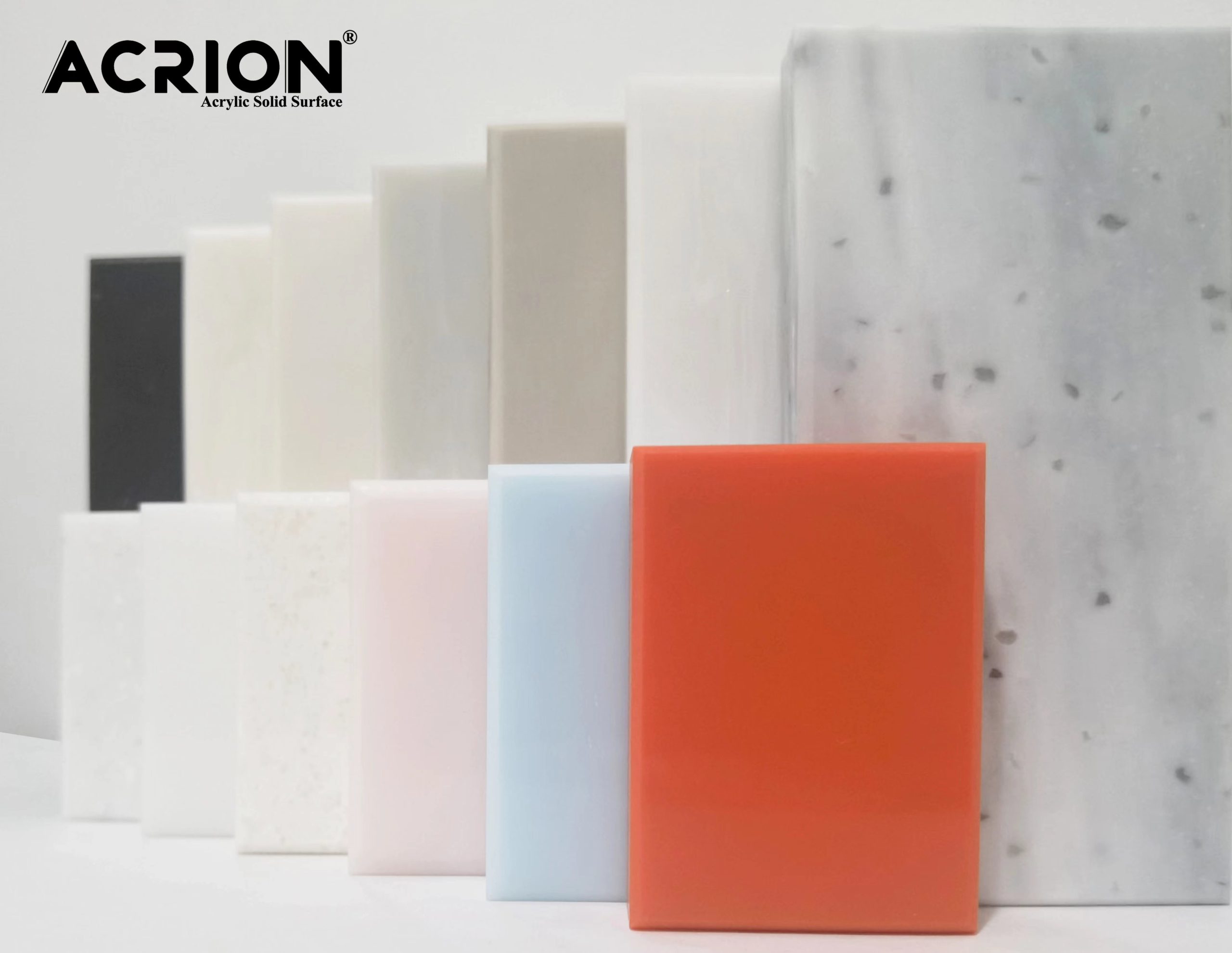
| Pure Acrylic Solid Surface | Better thermoforming performance, stronger fabrication flexibility, more suitable for architectural applications | Healthcare, hospitality, commercial interiors, thermoformed surfaces, premium countertops |
| Modified Acrylic Solid Surface | Combination of acrylic and polyester resin systems, usually more cost-effective | General countertops, commercial surfaces, price-sensitive projects |
| Polyester Solid Surface | Lower-cost material system, often used for decorative or basic countertop applications | Domestic projects, furniture surfaces, lower-budget applications |
For commercial and architectural projects, pure acrylic solid surface is generally preferred when thermoforming, seamless fabrication, long-term appearance, and more demanding fabrication performance are required.
China’s Fabrication and Project Supply Capabilities
China’s solid surface industry is not limited to sheet production. One of its growing advantages is the ability to combine material manufacturing with fabrication support and project supply coordination.
Many international buyers now require more than standard sheets. They may need customized colors, cut-to-size panels, integrated sinks, fabricated reception counters, sample kits, adhesive systems, project packaging, private label support, or container-based mixed product supply.
Chinese manufacturers with strong production and fabrication coordination can support these project requirements more flexibly than suppliers focused only on standard sheet sales.
Common fabrication-related capabilities include:
- Standard acrylic solid surface sheet production
- Customized colors and project-specific color matching
- Veined and particle design development
- CNC cutting and shaping support
- Thermoforming for curved architectural surfaces
- Integrated sink and basin fabrication
- Commercial reception counter production
- Bathroom and sanitary ware products
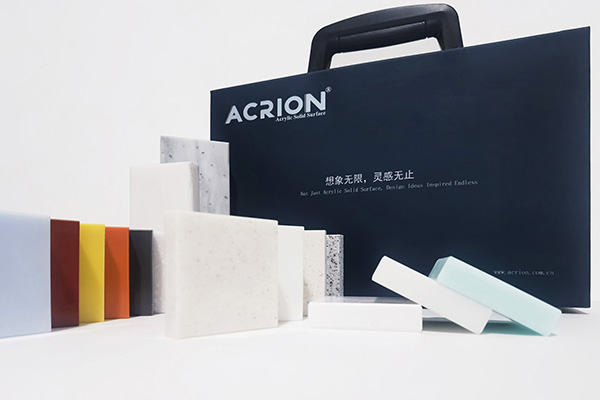
- Sample box and display kit preparation
- OEM and private label packaging support
Application Trends: From Countertops to Architectural Systems
The solid surface market is no longer limited to kitchen countertops. Around the world, acrylic solid surface is increasingly used as an architectural fabrication material for commercial and public interior environments.
This shift is especially important for Chinese manufacturers because it creates new opportunities beyond traditional countertop supply. Instead of competing only on price, manufacturers can compete through fabrication knowledge, project support, material consistency, and architectural application capability.
Major application trends include:
| Application Area | Why Acrylic Solid Surface Is Used |
|---|---|
| Healthcare | Seamless, non-porous, hygienic surface systems |
| Hospitality | Reception counters, bar systems, spa surfaces, wall features |
| Commercial Interiors | Custom counters, branded surfaces, integrated furniture |
| Public Spaces | Durable and repairable surfaces for high-traffic environments |
| Residential Kitchens | Seamless countertops, integrated sinks, waterfall islands |
| Bathrooms | Vanities, basins, bathtubs, wall cladding, wet-area systems |
| Retail | Display counters, cashier systems, customized brand environments |
Export Markets and International Buyer Expectations
International buyers do not evaluate Chinese solid surface manufacturers only by price. Professional buyers increasingly consider material composition, batch consistency, technical support, color stability, documentation, certifications, production lead time, packaging reliability, and after-sales communication.
For distributors and fabricators, the most important questions often include:
- Is the material pure acrylic or modified acrylic?
- Can the supplier maintain stable color consistency?
- Can the supplier support mixed container orders?
- Are sample boxes and color tools available?
- Can the supplier support private label or OEM cooperation?
- Can the factory provide technical documentation?
- Does the supplier understand fabrication and installation requirements?
- Can the supplier support commercial project timelines?
These expectations are pushing Chinese solid surface manufacturers toward more professional, transparent, and project-oriented supply models.
Strengths of Chinese Solid Surface Manufacturers
China’s solid surface industry has several practical advantages in the global supply chain. These advantages are not limited to lower production cost. More importantly, they include manufacturing flexibility, project responsiveness, customization capability, and integration with related interior product supply chains.
Key strengths include:
- Mature acrylic solid surface sheet production capacity
- Flexible color and pattern development
- Strong OEM and private label support
- Efficient sample preparation and project coordination
- Integrated supply chain for furniture, sanitary ware, and interior fabrication
- Competitive container-based project supply
- Ability to support both standard sheets and fabricated products
- Fast response for customized international projects
Limitations Buyers Should Also Understand
A professional industry analysis should also recognize the challenges within China’s solid surface industry. Not all factories operate at the same technical level, and not all materials are suitable for demanding architectural projects.
Common issues in the market may include inconsistent material formulation, unstable color control, limited technical documentation, weak overseas communication, lack of fabrication guidance, and overemphasis on price competition.
For this reason, buyers should not evaluate suppliers only by the lowest quotation. They should evaluate material type, quality control process, project experience, testing capability, communication efficiency, and long-term supply reliability.
What Overseas Buyers Should Evaluate Before Choosing a Supplier
When selecting a Chinese acrylic solid surface supplier, international buyers should use a structured evaluation method. This is especially important for distributors, fabricators, contractors, and project-based buyers who require stable long-term cooperation.
| Evaluation Area | What Buyers Should Check |
|---|---|
| Material Type | Pure acrylic, modified acrylic, or polyester solid surface |
| Color Stability | Batch consistency and long-term color control |
| Fabrication Support | Thermoforming, seamless jointing, CNC, sink integration guidance |
| Certifications | Relevant test reports and documentation for target markets |
| Sample System | Sample boxes, cut samples, project approval samples |
| OEM Capability | Private label, packaging, catalog, and distributor support |
| Lead Time | Production planning and realistic delivery schedule |
| Communication | Professional response and project coordination ability |
ACRION’s Position: Architectural Solid Surface from China
ACRION is positioned as an architectural solid surface manufacturer from China, focusing on acrylic solid surface materials for commercial, hospitality, healthcare, residential, retail, and customized project applications.
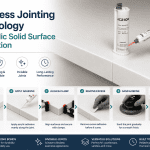
Rather than treating solid surface only as a countertop material, ACRION approaches it as a fabrication-oriented architectural surface system. This includes seamless jointing, thermoforming, integrated sinks, wall cladding, reception counters, commercial furniture, and project-based material solutions.
ACRION’s long-term direction is to support international designers, fabricators, distributors, and project buyers with reliable acrylic solid surface materials, practical fabrication knowledge, and responsive manufacturing support from China.
Frequently Asked Questions
Is China a major producer of acrylic solid surface materials?
Yes. China has become one of the major manufacturing bases for acrylic solid surface materials, modified solid surface, polyester solid surface, fabricated products, and customized architectural surface applications.
What is the difference between pure acrylic and modified acrylic solid surface?
Pure acrylic solid surface generally offers better fabrication flexibility and thermoforming performance, while modified acrylic solid surface is usually more cost-effective and suitable for general countertop applications.
Why do overseas buyers choose Chinese solid surface manufacturers?
Overseas buyers often choose Chinese manufacturers for flexible production, competitive project supply, customized colors, OEM support, sample preparation, and integrated interior material supply chain advantages.
Can Chinese solid surface manufacturers support commercial projects?
Yes. Professional manufacturers can support commercial projects through sheet supply, color customization, fabricated products, sample systems, technical documentation, and project coordination.
What should buyers check before choosing a supplier?
Buyers should evaluate material type, color stability, quality control, fabrication support, certifications, sample capability, lead time, packaging, and communication efficiency.
Conclusion
China’s acrylic solid surface industry has developed from basic countertop manufacturing into a broader architectural surface supply system. With mature production capacity, flexible customization, fabrication support, and strong project supply coordination, Chinese manufacturers now play an important role in the global solid surface market.
For international buyers, the key is not simply to find the lowest-cost supplier, but to identify a manufacturer that understands material performance, fabrication logic, project requirements, and long-term architectural applications.
As an architectural solid surface manufacturer from China, ACRION aims to support global commercial and residential projects with acrylic solid surface materials designed for fabrication, integration, and modern architectural applications.