Bề mặt rắn acrylic và mặt bàn thạch anh là hai trong số những vật liệu bề mặt được sử dụng rộng rãi nhất trong các dự án nội thất dân dụng, khách sạn, chăm sóc sức khỏe, bán lẻ và thương mại. Mặc dù cả hai vật liệu này thường được sử dụng cho mặt bàn và bề mặt kiến trúc, nhưng chúng khác nhau đáng kể về phương pháp chế tạo, đặc tính của vật liệu, tính linh hoạt trong thiết kế, khả năng sửa chữa và tính phù hợp của ứng dụng.
Bài viết này so sánh mặt bàn thạch anh và bề mặt rắn acrylic về thành phần vật liệu, chế tạo liền mạch, khả năng ép nóng, hiệu suất vệ sinh, yêu cầu bảo trì và các kịch bản ứng dụng kiến trúc.
Bề mặt rắn acrylic là gì?
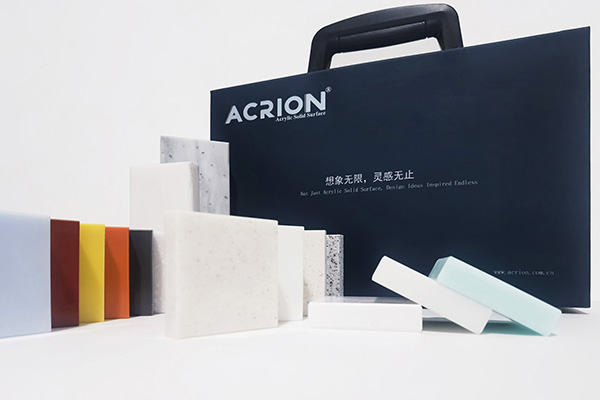
Bề mặt rắn acrylic là vật liệu bề mặt không xốp thường được sản xuất bằng nhựa acrylic và chất độn khoáng. Nó được sử dụng rộng rãi trong khách sạn, chăm sóc sức khỏe, nội thất công cộng, hệ thống tiếp tân thương mại, trạm rửa tích hợp và các ứng dụng kiến trúc tùy chỉnh.
Một trong những đặc điểm xác định của bề mặt rắn acrylic là khả năng chế tạo liền mạch, cho phép các nhà chế tạo tạo ra các hệ thống mặt bàn tích hợp, tấm ốp lưng dạng vòm, hình học định hình nhiệt và các bề mặt kiến trúc liên tục.
Mặt bàn thạch anh là gì?
Mặt bàn thạch anh là bề mặt đá được thiết kế thường được sản xuất bằng cách sử dụng các hạt thạch anh tự nhiên kết hợp với chất kết dính nhựa và bột màu. Thạch anh được sử dụng rộng rãi trong nhà bếp dân dụng, mặt bàn trang điểm và các ứng dụng trang trí nội thất.
Bề mặt thạch anh được biết đến với độ cứng cao, khả năng chống trầy xước mạnh và độ sâu thị giác giống như đá thường được ưa chuộng trong môi trường nhà bếp dân dụng.
So sánh thành phần vật liệu
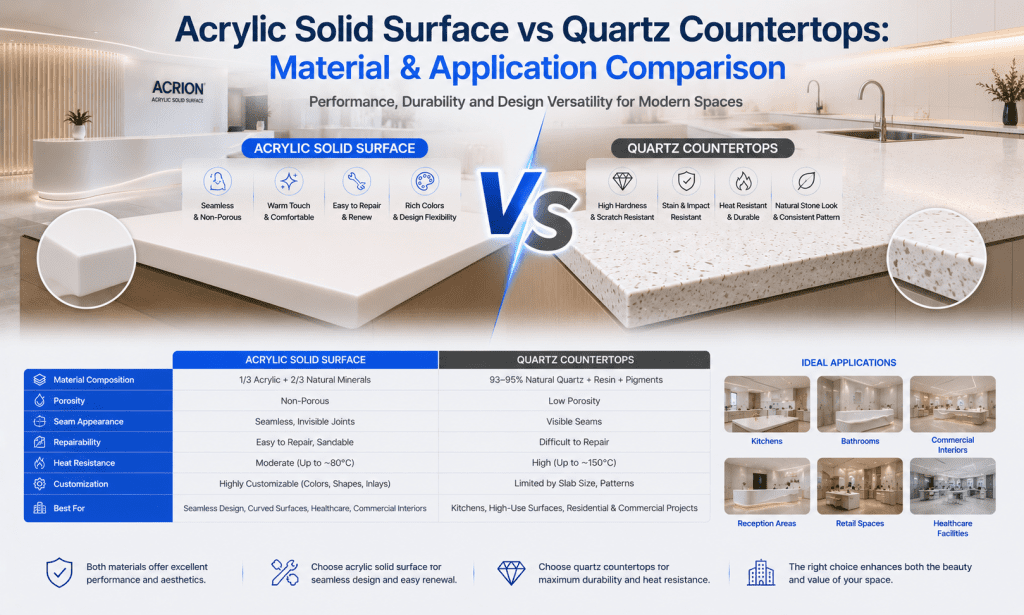
| Khu vực so sánh | Bề mặt rắn acrylic | Mặt bàn thạch anh |
|---|---|---|
| Loại vật liệu | Vật liệu bề mặt gốc acrylic | Đá thạch anh kỹ thuật |
| Chế tạo liền mạch | Xuất sắc | Đường may nhìn thấy được |
| Khả năng ép nhiệt | Đúng | KHÔNG |
| Khả năng sửa chữa | Bề mặt tái tạo | Khó sửa chữa |
| Chống trầy xước | Vừa phải | Mạnh |
| Khả năng chịu nhiệt | Vừa phải | Cao hơn |
| Khả năng chìm tích hợp | Xuất sắc | Giới hạn |
| Hình học cong | Xuất sắc | Không phù hợp |
| Bề mặt không xốp | Đúng | Đúng |
Chế tạo liền mạch và hệ thống bề mặt tích hợp
Một trong những khác biệt chính giữa bề mặt rắn acrylic và thạch anh liên quan đến khả năng chế tạo liền mạch.
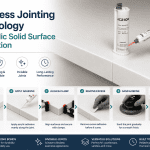
Bề mặt rắn acrylic có thể được chế tạo bằng các mối nối kín đáo, cho phép các nhà thiết kế và nhà chế tạo tạo ra các hệ thống mặt bàn tích hợp, quầy tiếp tân liền mạch, bàn làm việc chăm sóc sức khỏe, chuyển tiếp trên tường và các bề mặt kiến trúc liên tục.
Mặt bàn thạch anh thường yêu cầu các đường nối có thể nhìn thấy được giữa các tấm, đặc biệt là khi lắp đặt lớn hơn hoặc bố trí phức tạp.
Thiết kế kiến trúc uốn cong và định hình nhiệt
Bề mặt rắn acrylic hỗ trợ quá trình tạo hình nhiệt, cho phép vật liệu được nung nóng và tạo thành các dạng hình học cong và kiến trúc điêu khắc.
Khả năng này được sử dụng rộng rãi trong quầy tiếp tân khách sạn, nội thất chăm sóc sức khỏe, môi trường chăm sóc sức khỏe, hệ thống tường thương mại và lắp đặt kiến trúc công cộng tùy chỉnh.
Bề mặt thạch anh là vật liệu đá cứng và thường không thích hợp cho các ứng dụng tạo hình nhiệt hoặc chế tạo cong.
Khả năng sửa chữa và bảo trì dài hạn
Vật liệu bề mặt rắn acrylic được coi là bề mặt có thể tái tạo vì những vết xước nhỏ và mài mòn bề mặt thường có thể được sửa chữa thông qua quy trình chà nhám và hoàn thiện lại.
Khả năng sửa chữa này đặc biệt có giá trị trong môi trường thương mại có lưu lượng truy cập cao, nơi mà việc bảo trì dài hạn và hiệu suất vòng đời là những cân nhắc quan trọng.
Bề mặt thạch anh thường có khả năng chống trầy xước mạnh hơn nhưng khó sửa chữa hơn khi bị sứt mẻ hoặc hư hỏng về mặt cấu trúc.
Ứng dụng chăm sóc sức khỏe và vệ sinh
Vật liệu bề mặt rắn acrylic được chỉ định rộng rãi cho môi trường kiến trúc y tế và vệ sinh vì khả năng chế tạo liền mạch và cấu trúc không xốp.
Bồn rửa tích hợp, tấm ốp lưng có viền, bàn làm việc trong phòng thí nghiệm và quầy chăm sóc sức khỏe có thể được chế tạo với các khớp nối tối thiểu có thể nhìn thấy được, giúp đơn giản hóa quy trình làm sạch.
Bề mặt thạch anh cũng không xốp, nhưng đặc tính chế tạo cứng nhắc của vật liệu có thể hạn chế các ứng dụng chăm sóc sức khỏe tích hợp liền mạch.
Ứng dụng thương mại và dân cư
Mặt bàn thạch anh được sử dụng rộng rãi trong nhà bếp dân dụng vì khả năng chống trầy xước, bề ngoài giống như đá và sự quen thuộc trong thị trường nội thất dân dụng.
Vật liệu bề mặt rắn acrylic thường được ưa chuộng trong khách sạn, chăm sóc sức khỏe, nội thất công cộng, môi trường chăm sóc sức khỏe và các ứng dụng kiến trúc thương mại ưu tiên chế tạo liền mạch và hệ thống bề mặt tích hợp.
Cả hai vật liệu đều có thể được sử dụng trong các dự án dân cư và thương mại tùy thuộc vào mức độ ưu tiên của dự án, yêu cầu chế tạo và mục tiêu thiết kế kiến trúc.
Thiết kế kiến trúc linh hoạt
Nội thất kiến trúc hiện đại ngày càng nhấn mạnh tính liên tục của vật liệu liền mạch, hình thức điêu khắc, hệ thống chiếu sáng tích hợp và độ nhiễu hình ảnh thấp.
Bề mặt rắn acrylic hỗ trợ các hướng thiết kế này thông qua các mối nối liền mạch, khả năng ép nóng, chế tạo bồn rửa tích hợp và hình học kiến trúc tùy chỉnh.
Bề mặt thạch anh thường được lựa chọn cho các dự án ưu tiên tính thẩm mỹ bằng đá cứng và diện mạo mặt bàn nhà ở.
Tổng quan so sánh
| Loại | Bề mặt rắn acrylic | Mặt bàn thạch anh |
|---|---|---|
| Khả năng bề mặt liền mạch | Xuất sắc | Vừa phải |
| ép nhiệt | Đúng | KHÔNG |
| Khả năng sửa chữa | tái tạo | Giới hạn |
| Hình học cong | Xuất sắc | Giới hạn |
| Sử dụng bếp dân dụng | Tốt | Xuất sắc |
| Ứng dụng chăm sóc sức khỏe | Xuất sắc | Vừa phải |
| Hệ thống bồn rửa tích hợp | Xuất sắc | Giới hạn |
| Tính linh hoạt của kiến trúc thương mại | Xuất sắc | Vừa phải |
| Chống trầy xước | Vừa phải | Mạnh |
| Khả năng chịu nhiệt | Vừa phải | Cao hơn |
Vật liệu nào phù hợp với các loại dự án khác nhau?
Lựa chọn vật liệu phải luôn xem xét các ưu tiên của dự án, yêu cầu chế tạo, mục đích thiết kế, kỳ vọng bảo trì và điều kiện ứng dụng lâu dài.
Mặt bàn thạch anh có thể phù hợp tốt với các dự án nhà bếp dân dụng ưu tiên tính thẩm mỹ bằng đá cứng, khả năng chống trầy xước và hình thức bằng đá nhân tạo.
Vật liệu bề mặt rắn acrylic có thể mang lại lợi thế cho các dự án yêu cầu chế tạo liền mạch, hệ thống bồn rửa tích hợp, hình học định hình nhiệt, ứng dụng chăm sóc sức khỏe, nội thất khách sạn và lắp đặt kiến trúc thương mại tùy chỉnh.
Câu hỏi thường gặp
Sự khác biệt giữa bề mặt rắn acrylic và mặt bàn thạch anh là gì?
Bề mặt rắn acrylic nhấn mạnh đến khả năng chế tạo liền mạch, tạo hình nhiệt và khả năng sửa chữa, trong khi mặt bàn thạch anh được biết đến với khả năng chống trầy xước mạnh hơn và tính thẩm mỹ giống như đá.
Bề mặt rắn acrylic có thể được định hình bằng nhiệt không?
Đúng. Bề mặt rắn acrylic có thể được nung nóng và tạo thành hình học cong và các dạng kiến trúc điêu khắc.
Vật liệu nào tốt hơn cho mặt bàn liền mạch?
Bề mặt rắn acrylic thường phù hợp hơn cho việc chế tạo mặt bàn liền mạch và các hệ thống bề mặt kiến trúc tích hợp.
Thạch anh có chống xước tốt hơn bề mặt rắn acrylic không?
Đúng. Mặt bàn thạch anh thường có khả năng chống trầy xước mạnh hơn do thành phần đá được chế tạo của chúng.
Vật liệu nào tốt hơn cho các dự án chăm sóc sức khỏe và khách sạn?
Bề mặt rắn acrylic được sử dụng rộng rãi trong môi trường chăm sóc sức khỏe và khách sạn nhờ khả năng chế tạo liền mạch và hệ thống bề mặt vệ sinh tích hợp.
Phần kết luận
Bề mặt rắn acrylic và mặt bàn thạch anh đều là những vật liệu bề mặt kiến trúc được sử dụng rộng rãi, nhưng chúng phục vụ các ưu tiên thiết kế và yêu cầu ứng dụng khác nhau.
Bề mặt thạch anh thường được ưu tiên cho các dự án nhà bếp dân dụng ưu tiên tính thẩm mỹ của đá và khả năng chống trầy xước, trong khi vật liệu bề mặt rắn acrylic mang lại lợi thế trong chế tạo liền mạch, tính linh hoạt khi định hình nhiệt, ứng dụng chăm sóc sức khỏe và môi trường kiến trúc thương mại tùy chỉnh.
Khi kiến trúc hiện đại ngày càng nhấn mạnh tính liên tục của vật liệu tích hợp và hệ thống bề mặt liền mạch, bề mặt rắn acrylic tiếp tục đóng một vai trò quan trọng trong các ứng dụng kiến trúc khách sạn, chăm sóc sức khỏe, công cộng và thương mại.