Vật liệu bề mặt rắn acrylic được sử dụng rộng rãi trong nội thất thương mại, dự án khách sạn, môi trường chăm sóc sức khỏe, không gian bán lẻ và kiến trúc nhà ở trên khắp thế giới.
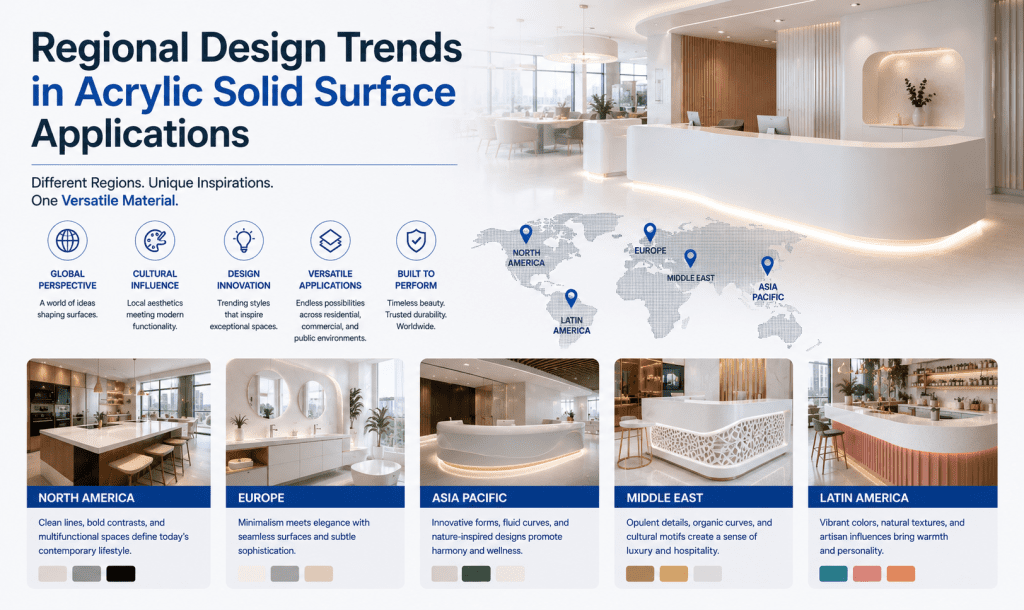
Mặc dù lợi thế về hiệu suất cốt lõi của bề mặt rắn acrylic vẫn nhất quán trên toàn cầu, thị trường kiến trúc khu vực thường thể hiện những sở thích khác nhau trong việc lựa chọn màu sắc, hoàn thiện bề mặt, phong cách chế tạo, thẩm mỹ không gian và tích hợp chức năng.
Là nhà sản xuất bề mặt rắn chuyên nghiệp với hơn 20 năm kinh nghiệm chế tạo và dự án quốc tế, ACRION nhận thấy rằng xu hướng thiết kế hiện đại ngày càng được định hình bởi các yêu cầu nội thất thương mại, lối sống kiến trúc và chức năng của dự án thay vì các khuôn mẫu văn hóa đơn giản hóa.
Bài viết này tìm hiểu xem các ứng dụng bề mặt rắn acrylic khác nhau như thế nào giữa các thị trường toàn cầu khác nhau và lý do tại sao vật liệu này vẫn có khả năng thích ứng cao cho thiết kế kiến trúc hiện đại.
Tại sao sở thích thiết kế khu vực lại quan trọng
Các thị trường kiến trúc khác nhau ưu tiên các mục tiêu thiết kế khác nhau dựa trên:
- Kịch bản ứng dụng thương mại
- Xu hướng thiết kế nội thất
- Điều kiện khí hậu và môi trường
- Kỳ vọng về sự hiếu khách
- Tiêu chuẩn chăm sóc sức khỏe
- Yêu cầu bảo trì
- Khả năng chế tạo
- Quy hoạch không gian và lối sống
Bề mặt rắn acrylic rất phù hợp cho các dự án quốc tế vì nó hỗ trợ chế tạo liền mạch, ép nóng, màu sắc tùy chỉnh và chi tiết kiến trúc dành riêng cho dự án.
Xu hướng khách sạn và thương mại sang trọng ở Trung Đông
Trong nội thất thương mại Trung Đông, bề mặt rắn acrylic được sử dụng rộng rãi trong môi trường khách sạn sang trọng, dự án bán lẻ cao cấp, nội thất sân bay và khu vực tiếp tân quy mô lớn.
Xu hướng khu vực hiện nay ngày càng được ưa chuộng:
- Quầy tiếp tân khổ lớn
- Tính năng chiếu sáng tích hợp
- Bảng màu trung tính ấm áp
- Đường vân lấy cảm hứng từ đá cẩm thạch
- Chế tạo cong liền mạch
- Lớp hoàn thiện mờ cao cấp
- Hình thức kiến trúc nguyên khối
Các dự án khách sạn hiện đại ở Dubai, Doha, Riyadh và Abu Dhabi ngày càng kết hợp tính thẩm mỹ sang trọng tối giản với các vật liệu thương mại hiệu suất cao. Khả năng ép nóng và chế tạo liền mạch vẫn là những lợi thế lớn cho bề mặt rắn acrylic trong các dự án này. :contentReference[oaicite:0]{index=0}
Xu hướng thiết kế thương mại tối giản châu Âu
Thị trường kiến trúc châu Âu thường ưu tiên các chi tiết hạn chế, tính đơn giản về chức năng, tính bền vững và độ bền lâu dài.
Các hướng thiết kế phổ biến bao gồm:
- Bề mặt tích hợp tối giản
- Kết cấu mờ
- Tông màu trung tính nhẹ nhàng
- Hệ thống thị giác mỏng
- Lựa chọn vật liệu bền vững
- Tính liên tục về mặt không gian chức năng
Nội thất châu Âu đương đại ngày càng kết hợp các chi tiết chính xác với vật liệu tự nhiên và hiệu quả vòng đời lâu dài. Chế tạo bề mặt rắn acrylic liền mạch hỗ trợ phương pháp này bằng cách giảm các mối nối có thể nhìn thấy và đơn giản hóa việc bảo trì. :contentReference[oaicite:1]{index=1}
Xu hướng tích hợp chức năng Bắc Mỹ
Ở Bắc Mỹ, các ứng dụng bề mặt rắn acrylic bị ảnh hưởng mạnh mẽ bởi chăm sóc sức khỏe, tu sửa khu dân cư, cơ sở giáo dục và tích hợp chức năng thương mại.
Sở thích chung của thị trường bao gồm:
- Hệ thống bồn rửa tích hợp
- Mặt bàn bếp liền mạch
- Trạm làm việc chăm sóc sức khỏe
- Bề mặt có thể sửa chữa
- Bảng màu trắng và xám trung tính
- Các ứng dụng thương mại có lưu lượng truy cập cao bền bỉ
Thị trường Bắc Mỹ đánh giá cao tính vệ sinh, hiệu quả bảo trì và khả năng sửa chữa lâu dài. Bề mặt rắn acrylic vẫn được ưa chuộng vì các vết trầy xước và hư hỏng bề mặt thường có thể được làm mới thông qua việc chà nhám và sơn lại. :contentReference[oaicite:2]{index=2}
Xu hướng nội thất đô thị châu Á - Thái Bình Dương
Ở nhiều thị trường châu Á - Thái Bình Dương, đặc biệt là môi trường đô thị mật độ cao, thiết kế nội thất ngày càng tập trung vào hiệu quả không gian, chi tiết gọn gàng và tích hợp thương mại đa chức năng.
Xu hướng thiết kế thường bao gồm:
- Mặt bàn tích hợp nhỏ gọn
- Màu sắc trung tính nhẹ nhàng
- Chi tiết tối giản cong
- Hệ thống chế tạo tiết kiệm không gian
- Bề mặt dễ lau chùi
- Vật liệu nội thất chống ẩm
Bề mặt rắn acrylic vẫn rất phù hợp cho các dự án đô thị nhỏ gọn vì nó kết hợp chế tạo liền mạch với khả năng tùy chỉnh linh hoạt.
Ưu tiên thiết kế chăm sóc sức khỏe và khách sạn
Sự khác biệt về thiết kế toàn cầu không chỉ mang tính khu vực. Họ cũng bị ảnh hưởng mạnh mẽ bởi các lĩnh vực ứng dụng.
Môi trường chăm sóc sức khỏe thường ưu tiên:
- Hiệu suất vệ sinh không xốp
- Chế tạo liền mạch
- Dễ dàng vệ sinh
- Khả năng lưu giữ vi khuẩn thấp
- Khả năng sửa chữa
Các dự án khách sạn thường ưu tiên:
- Tác động trực quan
- Bộ đếm tính năng cong
- Tích hợp ánh sáng
- Họa tiết sang trọng
- Chế tạo kiến trúc tùy chỉnh
Tính linh hoạt này trong các lĩnh vực thương mại khác nhau là một lý do khiến bề mặt rắn acrylic vẫn được sử dụng rộng rãi trong các dự án kiến trúc hiện đại trên toàn thế giới. :contentReference[oaicite:3]{index=3}
Vai trò của quá trình tạo hình nhiệt và chế tạo liền mạch
Một trong những ưu điểm quan trọng nhất của bề mặt rắn acrylic là khả năng hỗ trợ tạo hình nhiệt và chế tạo liền mạch.
Điều này cho phép các kiến trúc sư và nhà thiết kế tạo ra:
- Dạng cong hữu cơ
- Hệ thống nội thất tích hợp
- quầy liền mạch lớn
- Tấm ốp tường tùy chỉnh
- Lắp đặt thương mại phức hợp
Nhiều thị trường kiến trúc toàn cầu ngày càng ưa chuộng các dạng hình học hữu cơ mềm mại hơn thay vì các dạng truyền thống cứng nhắc, khiến khả năng ép nóng trở thành một lợi thế thiết kế quan trọng. :contentReference[oaicite:4]{index=4}
Sự hội tụ toàn cầu của thiết kế nội thất đương đại
Thiết kế nội thất thương mại hiện đại đang ngày càng trở nên toàn cầu hóa.
Nhiều dự án hiện đại trên khắp Châu Âu, Trung Đông, Châu Á và Bắc Mỹ hiện có chung những hướng thiết kế chung như:
- Bảng màu trung tính ấm áp
- Chi tiết tối giản
- Chiếu sáng tích hợp
- Kết thúc mờ
- Đường cong hữu cơ
- Lựa chọn vật liệu bền vững
- Hiệu quả bảo trì lâu dài
Việc lựa chọn vật liệu kiến trúc ngày nay ngày càng được thúc đẩy bởi hiệu suất vòng đời, khả năng thích ứng chế tạo và trải nghiệm người dùng thay vì biểu tượng trang trí thuần túy. :contentReference[oaicite:5]{index=5}
Tại sao bề mặt rắn acrylic vẫn có khả năng thích ứng toàn cầu
Bề mặt rắn acrylic vẫn có khả năng thích ứng cao trên thị trường kiến trúc toàn cầu vì nó kết hợp:
- Chế tạo liền mạch
- Tính linh hoạt của nhiệt
- Khả năng sửa chữa
- Màu sắc và kết thúc có thể tùy chỉnh
- Độ bền thương mại
- Hiệu suất không xốp hợp vệ sinh
- Hiệu quả bảo trì lâu dài
Tính linh hoạt này cho phép vật liệu hỗ trợ cả nội thất thương mại tối giản và môi trường khách sạn có tính tùy biến cao.
Phần kết luận
Xu hướng thiết kế khu vực tiếp tục phát triển khi kiến trúc toàn cầu ngày càng được kết nối thông qua công nghệ, tính bền vững và đổi mới nội thất thương mại.
Bề mặt rắn acrylic vẫn là một trong những vật liệu chế tạo kiến trúc linh hoạt nhất vì nó thích ứng với các kỳ vọng khác nhau của thị trường trong khi vẫn duy trì lợi thế hiệu suất nhất quán về vệ sinh, tích hợp liền mạch, khả năng sửa chữa và tính linh hoạt trong chế tạo.
Tại ACRION, chúng tôi tiếp tục hỗ trợ các kiến trúc sư, nhà thiết kế, nhà chế tạo và nhà phát triển trên toàn thế giới bằng các giải pháp bề mặt rắn acrylic được thiết kế cho các ứng dụng nội thất thương mại hiện đại trên các thị trường toàn cầu.