Bề mặt rắn acrylic mờ ngày càng trở nên phổ biến trong nội thất kiến trúc hiện đại, môi trường khách sạn, không gian bán lẻ thương mại và lắp đặt các tính năng được chiếu sáng. Không giống như các vật liệu mặt bàn truyền thống, bề mặt rắn mờ có thể khuếch tán ánh sáng qua thân vật liệu, tạo ra hiệu ứng chiếu sáng mềm mại và liên tục về mặt thị giác.
Là nhà sản xuất bề mặt rắn acrylic chuyên nghiệp với hơn 20 năm kinh nghiệm chế tạo và dự án, ACRION hiểu rằng hiệu suất truyền ánh sáng không chỉ đơn giản là độ trong suốt. Hiệu ứng hình ảnh của bề mặt rắn mờ phụ thuộc vào công thức vật liệu, mật độ sắc tố, độ dày tấm, thiết kế hệ thống chiếu sáng và phương pháp chế tạo.
Bề mặt rắn acrylic mờ là gì?
Bề mặt rắn acrylic mờ là một loại bề mặt rắn acrylic được thiết kế đặc biệt để cho phép khuếch tán một phần ánh sáng qua thân vật liệu.
Điều quan trọng cần làm rõ là bề mặt rắn mờ không hoàn toàn trong suốt như thủy tinh. Thay vào đó, vật liệu tạo ra hiệu ứng khuếch tán mềm mại giúp trải đều ánh sáng trên bề mặt.
Khả năng khuếch tán ánh sáng này cho phép các nhà thiết kế và chế tạo tạo ra các yếu tố kiến trúc được chiếu sáng với hình thức trực quan liền mạch và hiện đại.
Sự khuếch tán ánh sáng hoạt động như thế nào trên bề mặt rắn acrylic
Đặc tính truyền ánh sáng của bề mặt rắn acrylic chủ yếu liên quan đến sự tán xạ ánh sáng bên trong cấu trúc vật liệu.
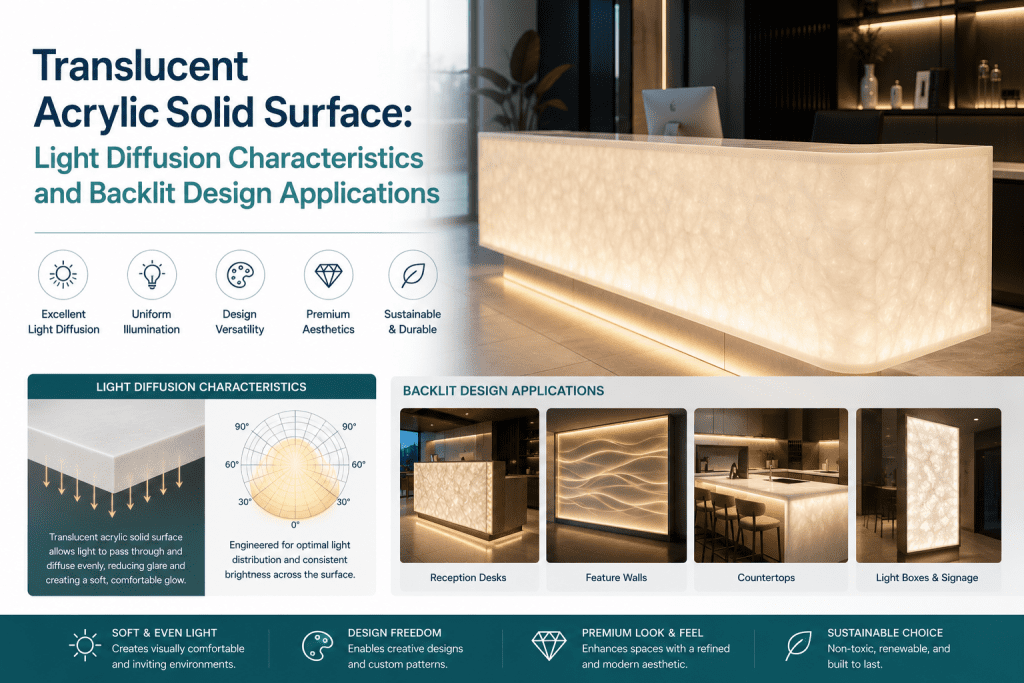
Khi hệ thống đèn LED được lắp đặt phía sau các tấm bề mặt rắn mờ, ánh sáng sẽ truyền qua vật liệu và bị khuếch tán thay vì nhìn thấy trực tiếp. Điều này tạo ra hiệu ứng chiếu sáng nhẹ nhàng và đồng đều hơn.
Chất lượng của hiệu ứng khuếch tán ánh sáng phụ thuộc vào một số yếu tố kỹ thuật, bao gồm:
- Công thức màu vật liệu
- Nồng độ sắc tố
- Tỷ lệ chất độn khoáng
- Độ dày tấm
- Khoảng cách giữa nguồn LED và bảng điều khiển
- Độ đồng đều của ánh sáng
- Kết cấu chế tạo
Không phải tất cả các màu bề mặt rắn đều mờ
Một trong những hiểu lầm phổ biến nhất trên thị trường là cho rằng tất cả các màu bề mặt rắn acrylic đều cung cấp khả năng truyền ánh sáng.
Trong thực tế, độ trong mờ thay đổi đáng kể tùy thuộc vào công thức vật liệu và kiểu trang trí.
Nói chung, các vật liệu sau đây mang lại hiệu suất khuếch tán ánh sáng tốt hơn:
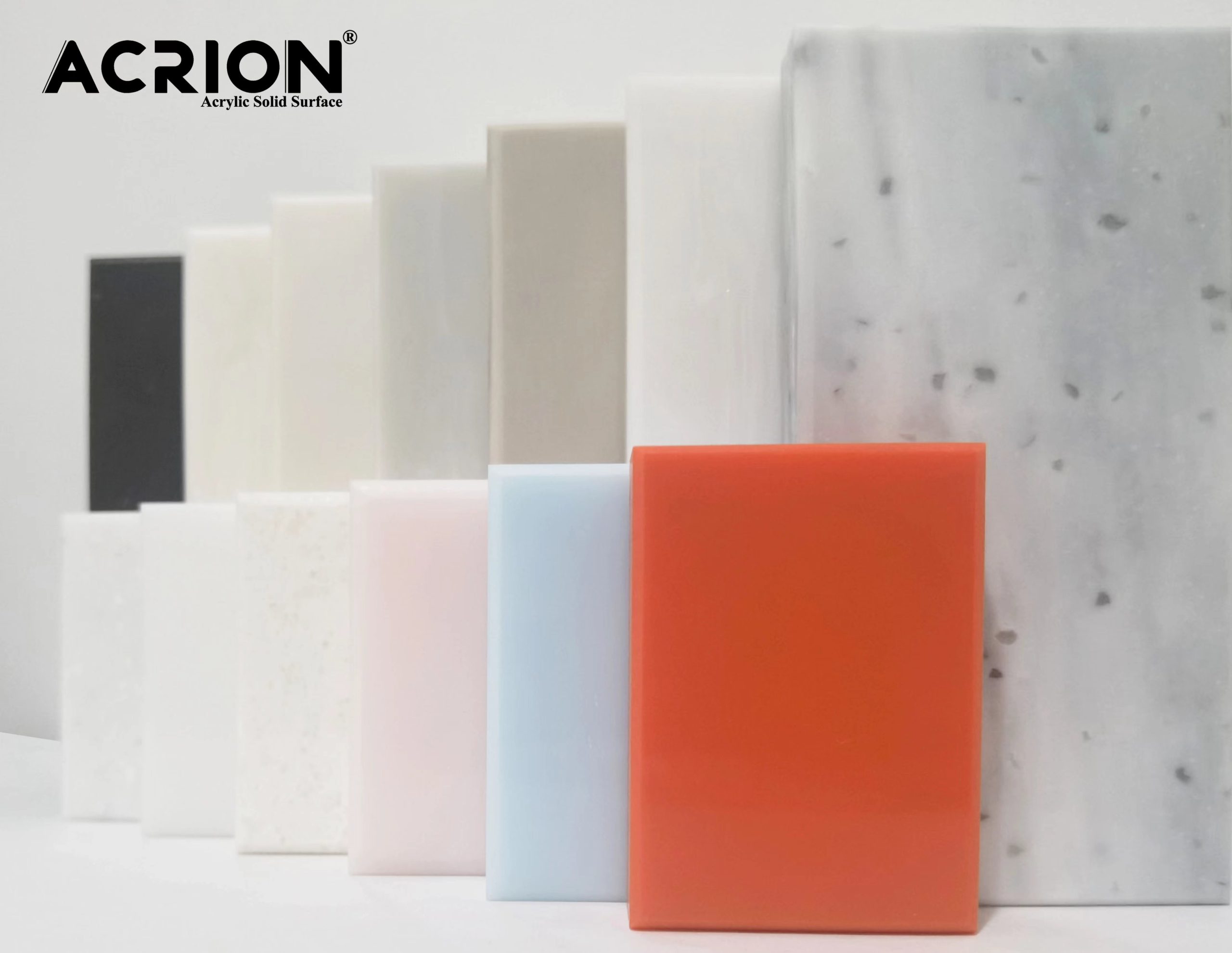
- Màu trắng tinh khiết
- Tông màu trung tính nhẹ nhàng
- Dòng mờ đặc biệt
- Công thức sắc tố thấp
Ngược lại, màu tối, hoa văn có nhiều đường gân và thiết kế hiệu ứng hạt thường có khả năng truyền ánh sáng hạn chế hoặc hầu như không nhìn thấy được.
Độ dày ảnh hưởng đến việc truyền ánh sáng như thế nào
Độ dày vật liệu đóng vai trò quan trọng trong hiệu ứng ánh sáng cuối cùng.
| Độ dày tấm | Hiệu ứng khuếch tán ánh sáng điển hình |
|---|---|
| 6mm | Truyền ánh sáng cao hơn và chiếu sáng sáng hơn |
| 12mm | Khuếch tán ánh sáng nhẹ nhàng và cân bằng hơn |
| Các cạnh tích hợp | Giảm truyền ánh sáng do tăng độ dày |
Đối với nhiều ứng dụng thương mại được chiếu sáng, các nhà chế tạo có thể giảm cục bộ độ dày mặt sau thông qua định tuyến CNC để cải thiện hiệu suất chiếu sáng trong khi vẫn duy trì độ dày hình ảnh bên ngoài.
Các ứng dụng ngược sáng phổ biến cho bề mặt rắn mờ
Bề mặt rắn acrylic mờ được sử dụng rộng rãi trong các dự án thiết kế kiến trúc và thương mại hiện đại, nơi ánh sáng và vẻ ngoài liền mạch đều quan trọng.
Bàn tiếp tân và quầy tính năng
Bàn tiếp tân có đèn nền là một trong những ứng dụng phổ biến nhất cho bề mặt rắn mờ. Vật liệu này tạo ra vẻ ngoài được chiếu sáng sạch sẽ và hiện đại trong khi vẫn duy trì khả năng chế tạo liền mạch.
Khu vực khách sạn và quán bar
Các dự án khách sạn, nhà hàng và quán bar thương mại thường xuyên sử dụng các tấm bề mặt rắn được chiếu sáng để tạo ra ánh sáng xung quanh và trải nghiệm nội thất cao cấp.
Hệ thống trưng bày bán lẻ
Các cửa hàng bán lẻ thường tích hợp bề mặt rắn mờ vào tường trưng bày, tủ trưng bày sản phẩm và các yếu tố đặc trưng của thương hiệu để cải thiện tác động trực quan và sự tương tác của khách hàng.
Tấm tường trang trí
Hệ thống tường chiếu sáng khổ lớn có thể tạo ra hiệu ứng kiến trúc ấn tượng trong khi vẫn duy trì bề mặt liền mạch và tinh tế.
Những cân nhắc khi chế tạo cho bề mặt rắn có đèn nền
Chế tạo chuyên nghiệp là điều cần thiết để đạt được hiệu suất chiếu sáng chất lượng cao trong các dự án có bề mặt rắn mờ.
Những cân nhắc chế tạo quan trọng bao gồm:
- Khoảng cách và định vị đèn LED
- Ngăn chặn các hiệu ứng điểm nóng có thể nhìn thấy
- Tản nhiệt thích hợp
- Thiết kế khung hỗ trợ ổn định
- Kết hợp màu dính liền mạch
- Định tuyến CNC mặt sau để kiểm soát độ trong suốt
- Quyền truy cập bảo trì cho hệ thống chiếu sáng
Nếu không có thiết kế hệ thống chiếu sáng phù hợp, độ sáng không đồng đều và các điểm LED nhìn thấy được có thể xuất hiện phía sau bề mặt.
Nhiệt độ LED và hiệu suất lâu dài
Hệ thống chiếu sáng sinh ra nhiệt trong quá trình hoạt động lâu dài, đặc biệt là trong các công trình kiến trúc khép kín.
Vì lý do này, các hệ thống bề mặt rắn có đèn nền chuyên nghiệp nên xem xét:
- Quản lý nhiệt LED
- Không gian thông gió
- Độ ổn định của chất kết dính
- Khả năng tiếp cận bảo trì
- Tính nhất quán màu sắc lâu dài
Kỹ thuật và chế tạo phù hợp giúp đảm bảo hiệu suất chiếu sáng ổn định theo thời gian.
Phần kết luận
Bề mặt rắn acrylic mờ không chỉ đơn giản là vật liệu trang trí có khả năng truyền ánh sáng. Nó là một hệ thống vật liệu kiến trúc có tính chuyên môn cao, kết hợp giữa chế tạo liền mạch, hiệu suất khuếch tán ánh sáng và khả năng thiết kế chiếu sáng hiện đại.
Các ứng dụng bề mặt rắn có đèn nền thành công phụ thuộc vào sự kết hợp giữa lựa chọn vật liệu, độ dày tấm, thiết kế hệ thống đèn LED, chuyên môn chế tạo và chất lượng lắp đặt.
Tại ACRION, chúng tôi tiếp tục phát triển các giải pháp bề mặt rắn acrylic được thiết kế cho chế tạo kiến trúc, các ứng dụng chiếu sáng liền mạch và các dự án nội thất thương mại cao cấp trên toàn thế giới.