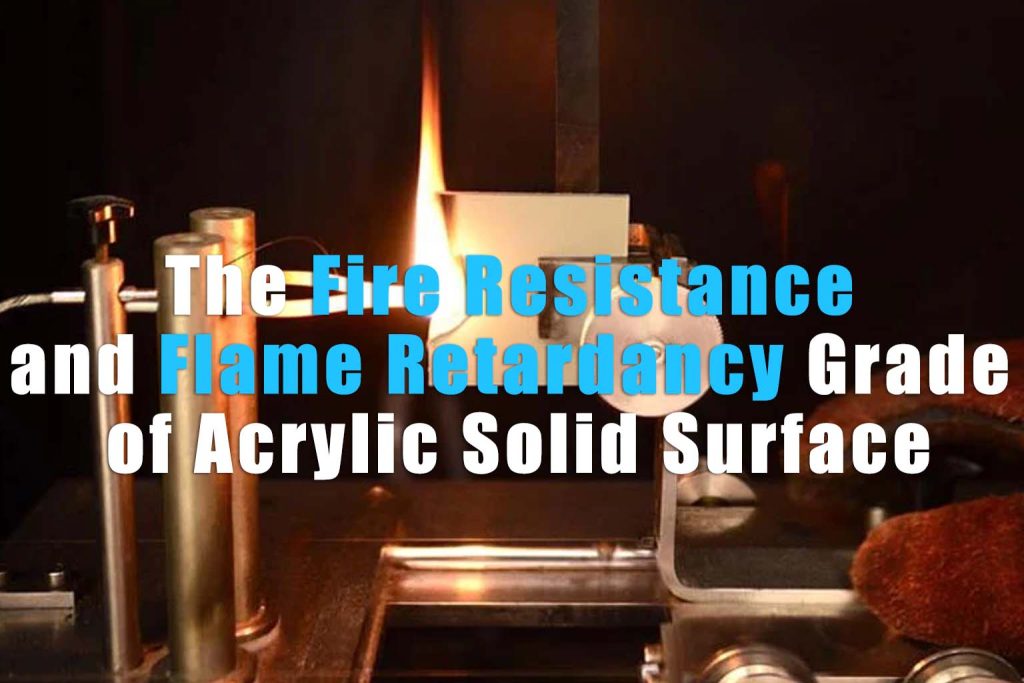
Fire performance is an important specification consideration for architects, project buyers, distributors, and commercial interior designers evaluating acrylic solid surface materials.
One common question is: Is acrylic solid surface fire resistant?
The answer requires an important technical distinction. Acrylic solid surface may achieve specific fire performance classifications depending on formulation, thickness, and test method—but it should not be generically described as “fireproof.”
This guide explains the practical fire performance of acrylic solid surface from a professional specification perspective.
Is Acrylic Solid Surface Fire Resistant?
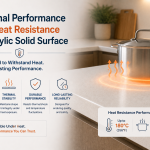
Acrylic solid surface can demonstrate controlled fire performance under recognized testing standards, but fire behavior depends on the exact product formulation and certification.
It is important to understand that acrylic solid surface is an engineered decorative surfacing material—not a non-combustible structural fire barrier.
The correct professional approach is to reference tested fire classifications rather than broad marketing claims.
Fire Resistance vs Flame Spread: What Is the Difference?
These terms are often confused, but they mean very different things.
| Term | Meaning |
|---|---|
| Fire Resistance | How long a building assembly resists fire exposure while maintaining structural integrity |
| Surface Burning / Flame Spread | How a material surface reacts when exposed to flame |
| Fire Classification | Test-based rating assigned under recognized standards |
For acrylic solid surface, project discussions usually focus on surface burning characteristics and tested fire classifications—not structural fire resistance.
ASTM E84 Explained
ASTM E84 is a commonly referenced North American fire test for decorative surfacing materials.
This test evaluates:
- flame spread behavior
- smoke developed characteristics
Typical classification includes:
- Class A
- Class B
- Class C
ASTM E84 Class A is generally considered the highest common surface burning classification in this system.
However, ASTM E84 should not be interpreted as proof that a material is “fireproof.”
EN13501 Explained
For European projects, EN13501 is often the more relevant fire classification framework.
This standard uses Euroclass ratings such as:
- A1
- A2
- B
- C
- D
Additional classifications may include:
- smoke production (s1 / s2 / s3)
- flaming droplets (d0 / d1 / d2)
European specifiers often require exact certified classification rather than general fire safety claims.
What Affects Fire Performance?
Fire performance is not identical across all acrylic solid surface products.
Performance may vary depending on:
- material formulation
- resin system
- filler composition
- sheet thickness
- installation system
- substrate configuration
- project assembly design
This is why specification decisions should rely on tested documentation rather than assumptions.
Can Acrylic Solid Surface Be Used in Commercial Projects?
Yes. Acrylic solid surface is widely used in commercial architectural interiors where tested fire performance aligns with project requirements.
Common applications include:
- healthcare interiors
- reception counters
- hospitality interiors
- commercial washroom systems
- retail fit-out applications
- architectural wall features
Project suitability depends on local code compliance and certified product performance.
Specification Considerations for Architects
When evaluating fire performance, architects and project teams should confirm:
- test standard used
- exact certified classification
- material thickness tested
- installation assembly assumptions
- local code requirements
- application environment
Technical compliance should always be project-specific.
FAQ
Is acrylic solid surface fireproof?
No. Acrylic solid surface should not be generically described as fireproof. Fire performance depends on tested classification.
What does ASTM E84 Class A mean?
It indicates strong surface burning performance under ASTM E84 testing, but does not mean structural fire resistance.
Is EN13501 required for Europe?
Many European commercial projects require EN13501 fire classification for compliance review.
Can solid surface be used in public commercial interiors?
Yes, provided the tested fire classification matches project code requirements.
Talk to ACRION About Technical Architectural Solid Surface Solutions
ACRION manufactures architectural-grade acrylic solid surface for healthcare, hospitality, retail, commercial interiors, and fabrication partnerships worldwide.
If your project requires technical fire documentation, material evaluation, or specification consultation, our team is ready to assist.