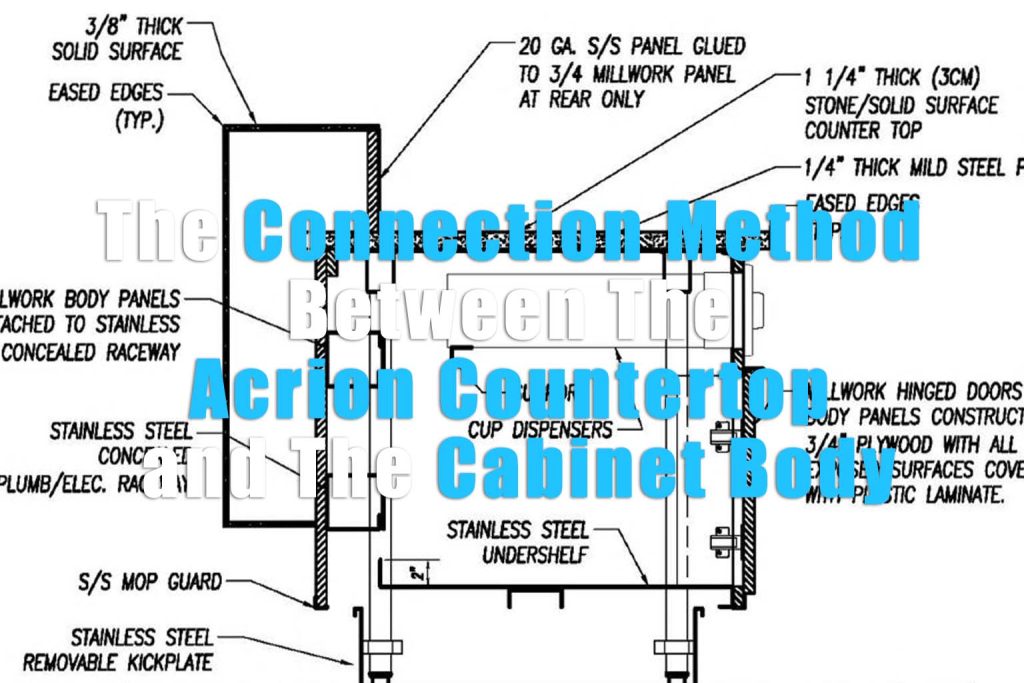
Professional acrylic solid surface installation depends on far more than simply attaching a fabricated surface to cabinetry. Successful projects require engineered support, controlled load distribution, and mounting strategies that protect long-term material performance.
Because acrylic solid surface is a fabrication material rather than a structural framing system, improper mounting design may introduce stress, visible seam failure, unsupported deflection, or cracking in sensitive zones.
Why Mounting Strategy Matters
Installation quality is heavily influenced by how the fabricated assembly is supported and integrated with surrounding cabinetry or structural substrates.
Poor mounting design may lead to:
- Stress cracking
- Visible seam movement
- Long-span deflection
- Sink cutout instability
- Uneven surface performance
- Poor installation durability
1. Support vs Attachment: Understanding the Difference
Support and attachment are not the same engineering concept.
- Support refers to structural load-bearing preparation beneath the fabricated assembly.
- Attachment refers to how the assembly is integrated or retained within the installation system.
Professional solid surface installations prioritize stable support before considering attachment methodology.
2. Cabinetry and Structural Support Preparation
Cabinetry or substrate systems should provide stable, properly aligned support for the fabricated assembly.
Inspection should verify:
- Stable structural condition
- Level support geometry
- No rocking or movement
- Consistent support contact
Solid surface should never be expected to compensate for poorly prepared support systems.
3. Load Distribution Principles
Acrylic solid surface performs best when loads are distributed consistently rather than concentrated at isolated points.
Special attention should be given to:
- Sink cutout areas
- Appliance interfaces
- Long unsupported spans
- Heavy commercial use zones
Uneven loading may create hidden stress that later becomes visible as seam or structural failure.
4. Sink Cutout Support Considerations
Sink openings reduce material continuity and create one of the most structurally sensitive parts of a fabricated solid surface installation.
Installation planning should address:
- Proper load transfer
- Support continuity
- Stress minimization
- Long-term wet-area stability
Poor support in sink zones is a common cause of service failures.
5. Long-Span Structural Planning
Reception counters, service counters, and custom fabricated assemblies often require long-span support engineering.
Potential risks include:
- Visual deflection
- Seam fatigue
- Surface movement
- Mounting instability
Support strategy should be part of fabrication engineering rather than an installation improvisation.
6. Movement Accommodation
Different materials and structures may respond differently to temperature, loading, or building movement.
Mounting systems should avoid introducing rigid stress where controlled movement accommodation is required.
7. Concealed Mounting Considerations
In commercial and architectural applications, clean visual integration often requires concealed mounting strategies that preserve aesthetics while maintaining structural reliability.
Design should balance:
- Appearance quality
- Support reliability
- Service accessibility where required
- Long-term performance stability
8. Installation Quality Inspection
Final installation QA should evaluate:
- Support stability
- Surface alignment
- Seam condition
- Load-bearing confidence
- Visual finish quality
Quick Mounting QA Checklist
| Inspection Area | Quality Focus |
|---|---|
| Support structure | Stable load-bearing preparation |
| Cabinet integration | Consistent support geometry |
| Sink zones | Stress-sensitive support control |
| Long spans | Deflection prevention |
| Mounting system | Appropriate installation methodology |
| Final QA | Visual and structural confidence |
Applications Where Mounting Strategy Matters Most
- Reception counters
- Healthcare worktops
- Hotel vanity systems
- Integrated sink assemblies
- Retail service counters
- Architectural fabricated installations
FAQ
Can acrylic solid surface simply be mechanically fastened like wood panels?
No. Solid surface requires engineered support and appropriate installation methodology to avoid stress concentration and long-term failure risk.
Why are sink zones structurally sensitive?
Cutouts reduce structural continuity, making support design especially important.
Why is support more important than simple attachment?
Because long-term performance depends primarily on load distribution and structural stability, not just physical retention.
Final Thoughts
Professional acrylic solid surface installations depend on engineered support, disciplined mounting strategy, and fabrication-aware installation planning—not simplified fixing methods.
ACRION develops architectural solid surface materials engineered for fabrication reliability, seamless integration, and demanding commercial applications.