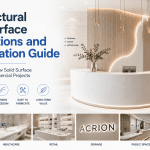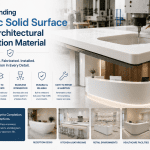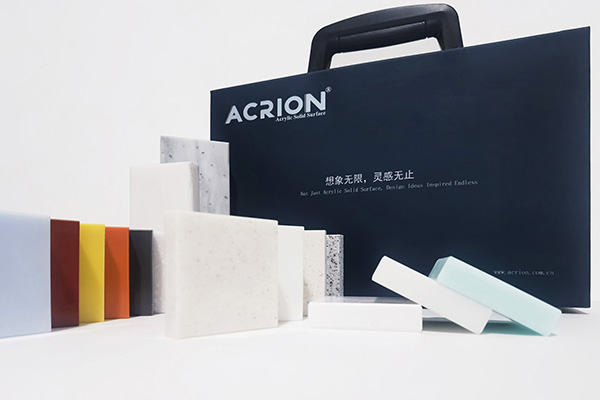
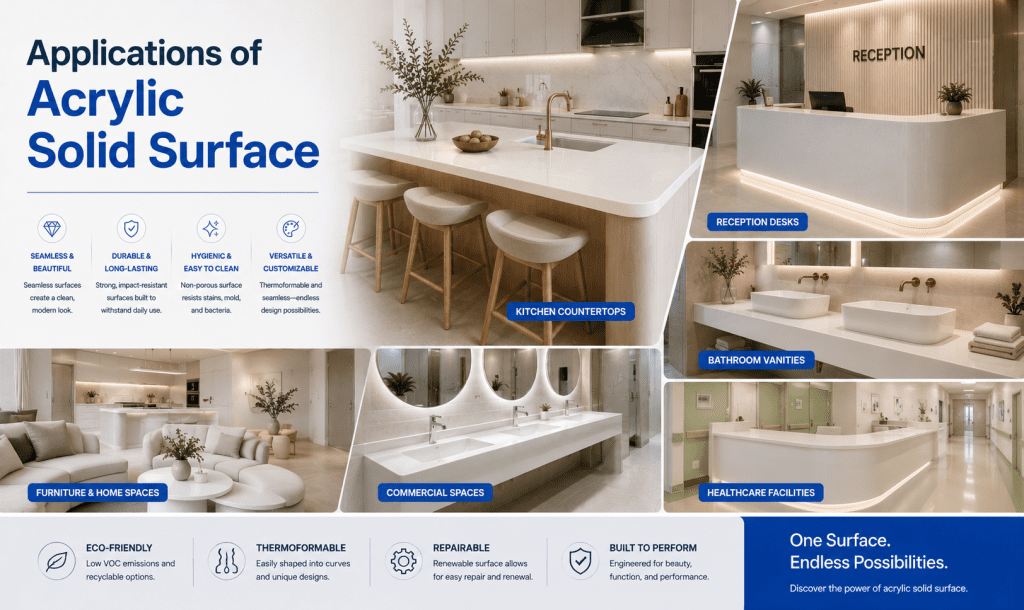
Acrylic solid surface is one of the most versatile architectural surfacing materials used in modern interior and commercial projects. Because of its seamless fabrication capability, non-porous structure, thermoforming flexibility, and renewable surface performance, acrylic solid surface is widely applied across healthcare, hospitality, residential, retail, and commercial environments.
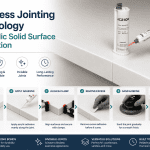
Unlike many traditional countertop and surfacing materials, acrylic solid surface is not only a material product, but also a complete fabrication system. It can be seamlessly joined, CNC processed, thermoformed, integrated with sinks and lighting systems, and fabricated into customized architectural forms for both residential and commercial applications.
From large seamless kitchen islands to healthcare wash stations and reception counters, acrylic solid surface supports modern architectural projects that require both functional performance and visual continuity.
What Is Acrylic Solid Surface?
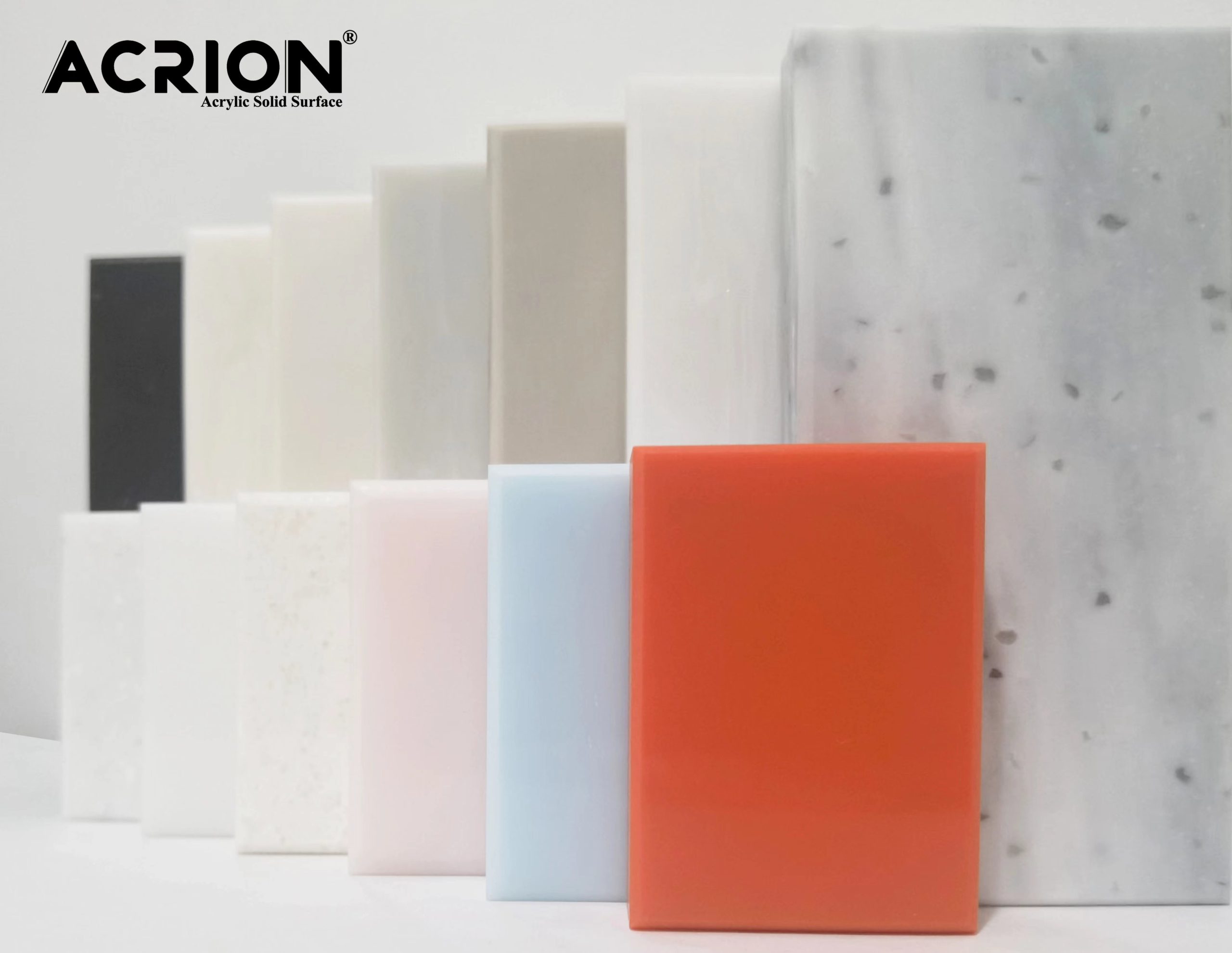
Acrylic solid surface is a non-porous surfacing material commonly manufactured using acrylic resin and aluminum hydroxide fillers. The material is widely used for countertops, wall cladding, integrated sinks, commercial counters, and customized interior fabrication projects.
Its seamless fabrication capability and thermoforming flexibility allow designers and fabricators to create continuous surfaces, curved geometries, integrated sink systems, and customized architectural details that are difficult to achieve using many traditional materials.
Core Advantages of Acrylic Solid Surface
- Seamless joint fabrication
- Non-porous surface structure
- Thermoforming flexibility
- Integrated sink fabrication
- Renewable and repairable surfaces
- CNC fabrication compatibility
- Custom edge detailing possibilities
- Large-format continuous surfaces
- Matte and low-gloss finish options
- Architectural design flexibility
Healthcare and Hygienic Applications
Healthcare environments require surfacing materials that support hygienic maintenance, seamless fabrication, and long-term durability. Acrylic solid surface is widely used in hospitals, clinics, laboratories, wash stations, pharmacies, and medical reception areas because of its non-porous structure and integrated fabrication possibilities.
Integrated sinks, coved backsplashes, and seamless countertop transitions help simplify routine cleaning procedures while reducing visible joints and moisture-prone gaps. These characteristics make acrylic solid surface suitable for many healthcare interior applications that require cleaner visual continuity and easier maintenance.
Common healthcare applications include:
- Hospital reception counters
- Nurse stations
- Integrated medical sinks
- Laboratory worktops
- Healthcare wash stations
- Cleanroom support surfaces
- Clinical countertops
Hospitality and Commercial Interior Applications
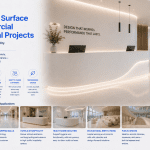
Hotels, cafés, restaurants, bars, beauty salons, and commercial reception spaces increasingly use acrylic solid surface for customized countertop systems and integrated architectural interiors.
Because the material supports seamless fabrication and thermoforming, designers can create curved reception desks, integrated bar counters, hospitality worktops, and continuous service surfaces with cleaner visual consistency.
Matte finishes, integrated lighting systems, and custom edge fabrication help support modern hospitality interiors that prioritize minimalist material palettes and architectural continuity.
Common hospitality applications include:
- Hotel reception counters
- Restaurant worktops
- Bar countertops
- Café counters
- Beauty salon wash stations
- Retail cashier counters
- Commercial service counters
Kitchen and Residential Countertop Applications
Acrylic solid surface is widely used in residential kitchens because of its seamless appearance, renewable surface performance, and customized fabrication flexibility.
Modern kitchens increasingly favor large kitchen islands, integrated sink systems, waterfall edge countertops, and open-plan layouts that require cleaner visual continuity across multiple living areas.
Seamless joint fabrication helps reduce visual interruption while supporting minimalist residential interiors with lower visual noise and more continuous surface transitions.
Common residential applications include:
- Kitchen island countertops
- Integrated kitchen sinks
- Compact apartment worktops
- Laundry room countertops
- Breakfast counters
- Dining countertop systems
- Floating countertop layouts
Bathroom and Wet Area Applications
Bathrooms and utility areas require countertop materials that support moisture resistance, seamless sink integration, and simplified maintenance procedures.
Acrylic solid surface is commonly used in bathroom vanities, integrated basins, utility room countertops, shower wall systems, and wash areas because of its non-porous surface structure and customized fabrication possibilities.
Integrated basin fabrication and seamless backsplash systems help create cleaner transitions in wet-area environments while supporting modern minimalist bathroom design.
Common bathroom applications include:
- Bathroom vanity tops
- Integrated wash basins
- Utility room countertops
- Shower wall cladding
- Hotel bathroom surfaces
- Laundry room worktops
Retail and Reception Counter Systems
Retail environments often require customized counters, display systems, integrated branding elements, and customer interaction surfaces. Acrylic solid surface supports CNC fabrication, thermoforming, integrated lighting systems, and customized commercial detailing.
Its fabrication flexibility allows retail designers and fabricators to create curved counters, seamless cashier stations, branded reception desks, and customized display systems for modern commercial interiors.
Common retail applications include:
- Reception desks
- Retail cashier counters
- Display systems
- Brand experience counters
- Commercial information desks
- Exhibition surfaces
Wall Cladding and Architectural Feature Applications
Acrylic solid surface is increasingly incorporated into wall cladding systems, architectural feature walls, integrated furniture systems, and customized interior detailing.
Thermoforming capability allows the material to be fabricated into curved wall systems and continuous architectural surfaces that support more sculptural and integrated interior environments.
Seamless installation possibilities also help maintain visual continuity across large-format architectural surfaces.
Common architectural applications include:
- Feature walls
- Wall cladding systems
- Integrated furniture elements
- Architectural column cladding
- Curved wall systems
- Backlit feature installations
Custom Furniture and Integrated Design Solutions
Custom furniture fabrication has become an increasingly important application area for acrylic solid surface. The material supports customized geometry, integrated fabrication details, seamless edge transitions, and continuous surface systems.
Tables, floating shelves, custom benches, integrated seating systems, and sculptural furniture elements can all be fabricated using acrylic solid surface fabrication techniques.
Its combination of fabrication flexibility and renewable surface performance makes it suitable for customized architectural furniture projects.
Why Designers and Fabricators Choose Acrylic Solid Surface
Compared with many traditional surfacing materials, acrylic solid surface offers greater fabrication flexibility for customized architectural and interior projects.
The material can be:
- CNC processed
- Thermoformed into curved geometry
- Seamlessly joined
- Sanded and refinished
- Integrated with sinks and lighting systems
- Fabricated into large continuous surfaces
- Customized with complex edge detailing
This flexibility allows designers and fabricators to create cleaner architectural surfaces, integrated spatial systems, and customized commercial interiors with greater design freedom.
Acrylic Solid Surface vs Traditional Surface Materials
Compared with tile systems, acrylic solid surface offers fewer visible joints and more continuous surface transitions. Compared with natural stone, the material provides greater thermoforming flexibility and easier seamless integration.
Quartz surfaces may offer stronger scratch resistance in certain applications, while acrylic solid surface provides better seamless fabrication capability and renewable repair possibilities for integrated architectural systems.
Material selection should always consider project conditions, fabrication requirements, maintenance expectations, and design objectives.
Frequently Asked Questions
What are the main applications of acrylic solid surface?
Acrylic solid surface is widely used in healthcare, hospitality, residential kitchens, bathrooms, retail counters, wall cladding systems, and customized commercial interiors.
Why is acrylic solid surface widely used in commercial interiors?
Its seamless fabrication capability, non-porous structure, thermoforming flexibility, and custom fabrication possibilities make it suitable for many commercial architectural applications.
Can acrylic solid surface be thermoformed?
Yes. Acrylic solid surface can be thermoformed into curved shapes and customized geometry using professional fabrication techniques.
Is acrylic solid surface suitable for integrated sinks?
Yes. One of the major advantages of acrylic solid surface is seamless sink integration for kitchens, bathrooms, healthcare, and commercial applications.
Can acrylic solid surface be repaired?
Minor scratches and surface wear can often be repaired through sanding and refinishing procedures, depending on the project condition and fabrication standards.
Conclusion
Acrylic solid surface combines seamless fabrication, hygienic performance, thermoforming flexibility, renewable surface capability, and architectural customization possibilities, making it one of the most versatile surfacing materials for modern interior and commercial applications.
From healthcare environments and hospitality interiors to luxury residential kitchens and integrated architectural surfaces, acrylic solid surface continues to support contemporary projects that require both performance and architectural consistency.