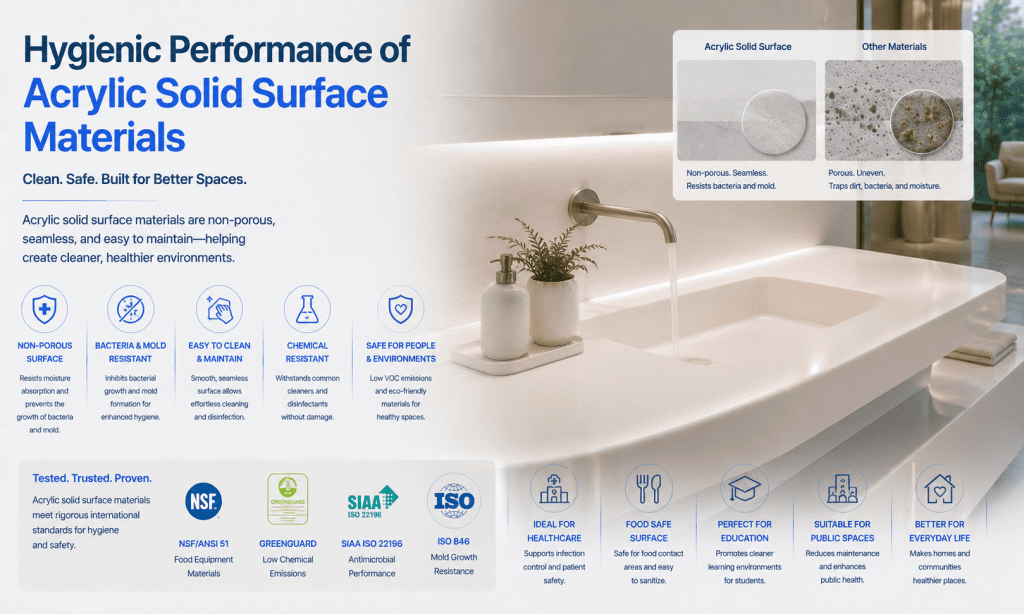
In commercial interiors, hygiene is not simply a maintenance preference—it is a material performance requirement.
Healthcare environments, hospitality projects, retail counters, washroom systems, reception desks, and public-facing interiors all require surfaces that are easy to maintain, visually durable, and suitable for frequent cleaning.
This is why acrylic solid surface is widely specified in hygiene-sensitive architectural applications.
But what actually makes a surfacing material hygienic? Is it antibacterial chemistry? Surface structure? Ease of cleaning? Or long-term maintenance performance?
In this guide, we explain the real hygienic performance characteristics of acrylic solid surface from a professional specification perspective.
What Does Hygienic Performance Mean in Surfacing Materials?
Hygienic performance is often misunderstood as “antibacterial” performance. In professional architectural material selection, the concept is broader.
A hygienic surfacing material should support cleaner, safer, easier-to-maintain environments through:
- Low surface porosity
- Ease of cleaning
- Resistance to staining
- Compatibility with routine cleaning protocols
- Minimal dirt accumulation at joints
- Long-term surface integrity
- Repairability when damaged
For commercial projects, hygienic performance is therefore a combination of material design and practical maintenance behavior.
Why Acrylic Solid Surface Performs Well in Hygienic Applications
1. Non-Porous Surface Structure
One of the most important reasons acrylic solid surface is selected for hygiene-sensitive applications is its dense, non-porous surface structure.
Unlike porous decorative materials that may trap moisture, residues, or contaminants within microvoids, properly manufactured acrylic solid surface presents a cleanable engineered surface.
This helps support easier sanitation and cleaner long-term use environments.
2. Seamless Fabrication Capability
Material hygiene is not only about chemistry—it is also about fabrication.
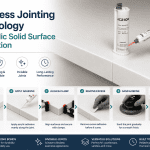
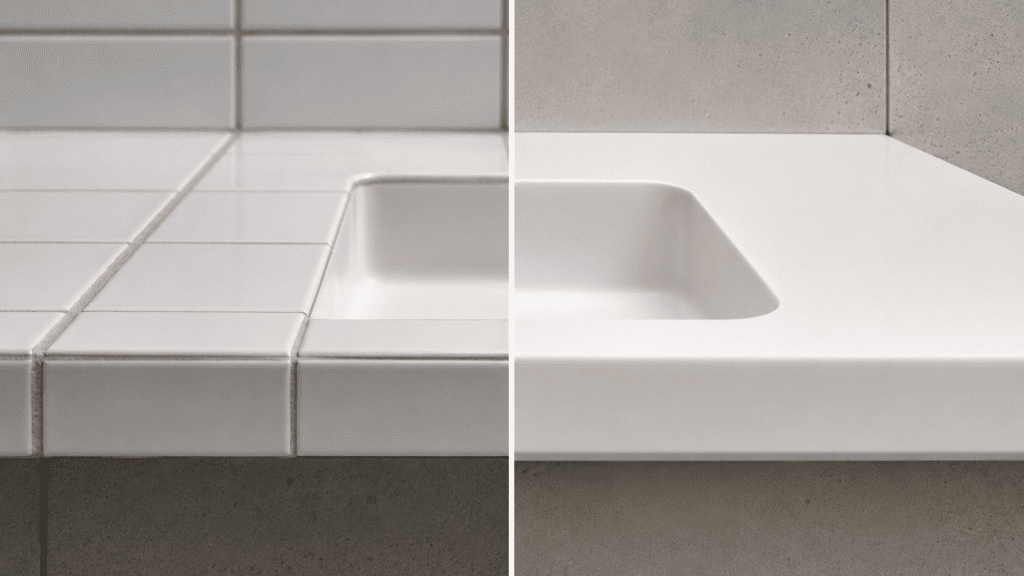
Acrylic solid surface can be fabricated with seamless joints, reducing visible gaps where dirt, moisture, and debris can accumulate.
This makes it especially valuable for:
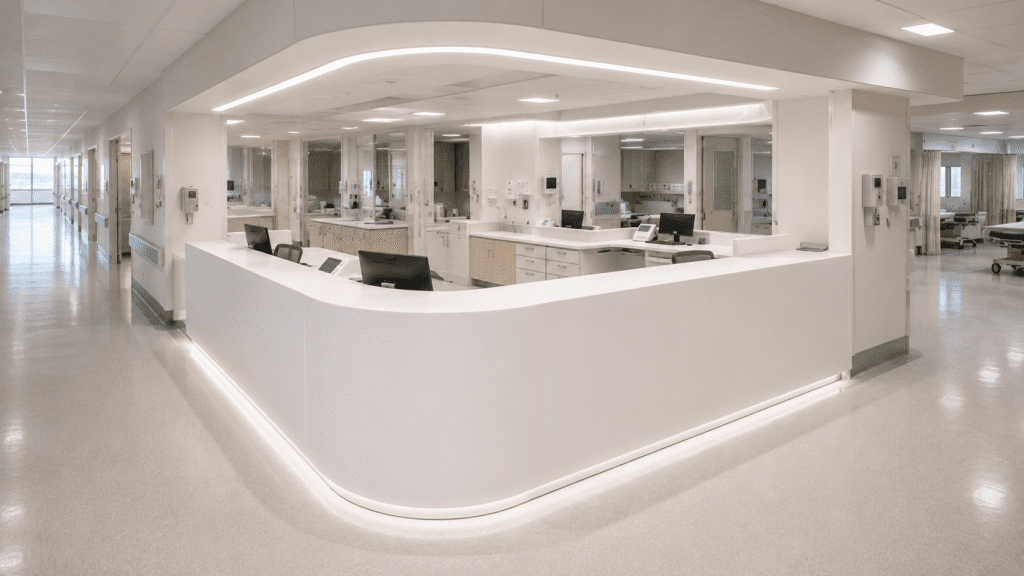
- Healthcare counters
- Reception desks
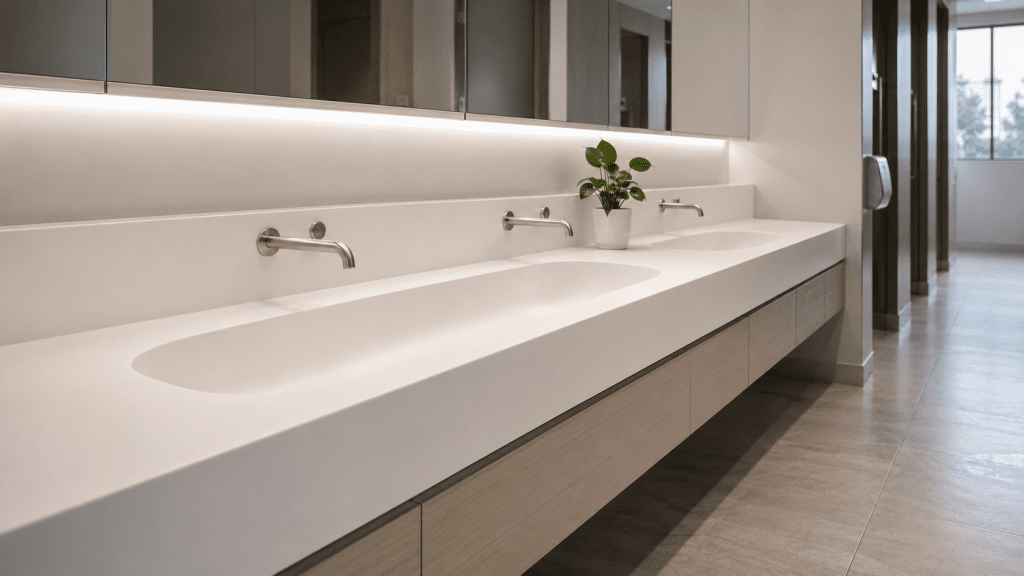
- Washroom vanities
- Commercial service counters
- Hospitality interiors
3. Easy Routine Cleaning
In real commercial environments, hygiene depends heavily on whether staff can clean surfaces efficiently and consistently.
Acrylic solid surface is valued because routine cleaning is straightforward with appropriate cleaning practices.
This is particularly important in high-frequency use spaces.
4. Resistance to Common Staining and Surface Contamination
Commercial surfaces frequently encounter:
- coffee
- tea
- soap residues
- food spills
- cosmetic residues
- routine cleaning chemicals
Material selection should consider how easily contamination can be removed without permanent visual degradation.
Hygiene vs “Antibacterial” Claims
Professional specifiers should distinguish between hygienic material performance and simplistic antibacterial marketing claims.
A surface may support hygienic maintenance because it is non-porous, cleanable, and seamlessly fabricated—not because it actively kills bacteria.
This distinction matters in serious commercial specification work.
Why Long-Term Surface Integrity Matters
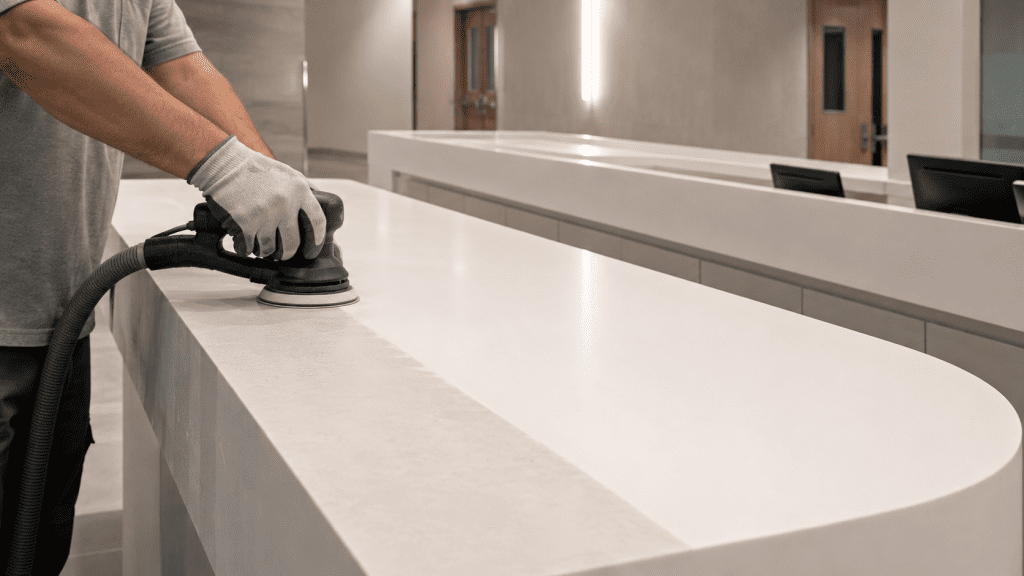
A hygienic material must remain hygienic after years of use—not only when newly installed.
Long-term surface degradation, cracks, failed joints, or damage can compromise cleanability.
This is where acrylic solid surface offers lifecycle advantages.
Repairability
Because the material is homogeneous throughout its thickness, many superficial damages can be repaired or refinished professionally.
This helps maintain long-term hygiene performance in demanding commercial applications.
Recommended Hygienic Applications
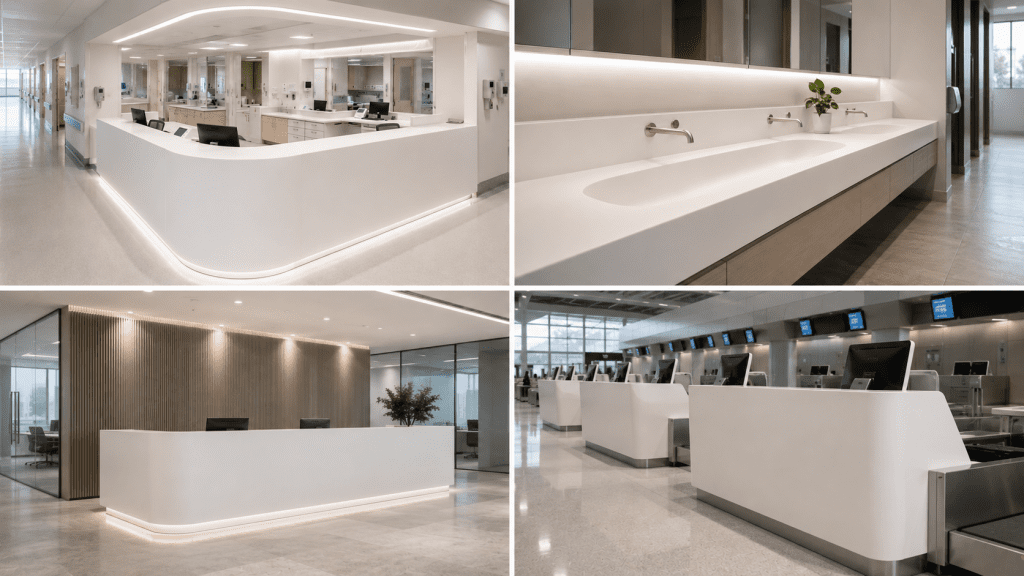
- Healthcare worktops
- Hospital wash stations
- Clinic counters
- Hospitality vanity systems
- Commercial washrooms
- Retail service counters
- Reception desks
- Airport interiors
- Public-facing commercial interiors
Why Architects Specify Acrylic Solid Surface
- Non-porous surface performance
- Seamless fabrication
- Easy maintenance
- Repairability
- Commercial durability
- Clean architectural appearance
- Custom fabrication flexibility
FAQ
Is acrylic solid surface hygienic?
Yes. Acrylic solid surface is widely specified in hygiene-sensitive commercial interiors because of its non-porous structure, seamless fabrication capability, and ease of maintenance.
Is acrylic solid surface antibacterial?
Hygienic performance should not be confused with simplistic antibacterial marketing claims. Practical hygiene depends on cleanability, maintenance, and surface integrity.
Where is acrylic solid surface commonly used for hygiene reasons?
Healthcare, hospitality, commercial washrooms, reception areas, retail service counters, and public interiors.
Talk to ACRION About Hygienic Architectural Surface Solutions
ACRION develops architectural acrylic solid surface solutions for commercial interiors where hygiene, cleanability, and long-term performance matter.