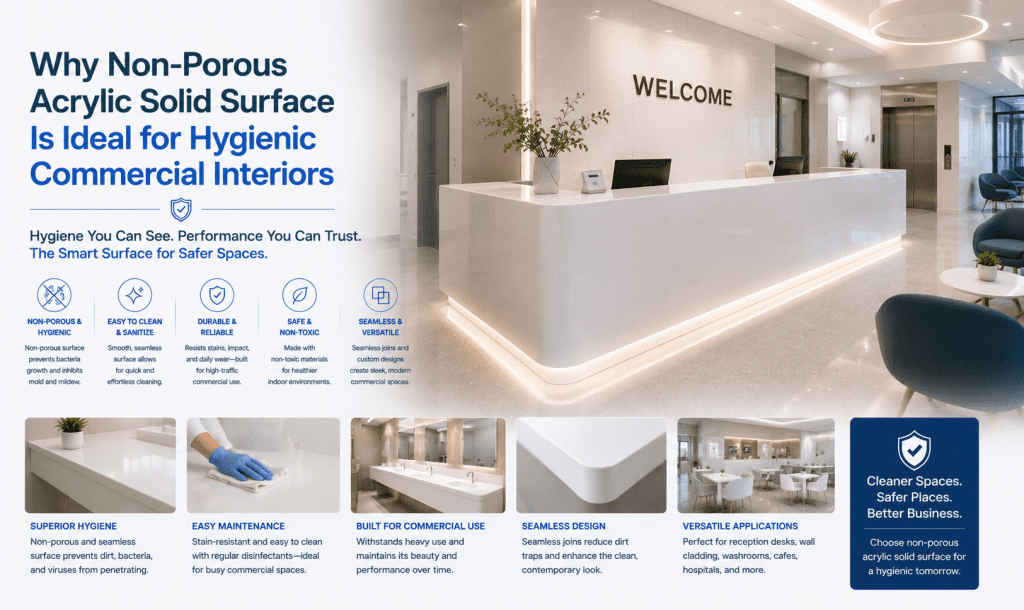
La surface solide acrylique est largement reconnue dans l’industrie intérieure architecturale et commerciale pour ses caractéristiques de surface non poreuses et sans couture. Dans les secteurs de la santé, de l’hôtellerie, de la vente au détail, de la restauration et des applications intérieures publiques, les performances hygiéniques sont souvent l’un des facteurs les plus importants dans le choix des matériaux.
Contrairement à de nombreux matériaux de surface traditionnels avec des joints visibles, des lignes de coulis ou des pores ouverts, la surface solide acrylique permet une fabrication sans couture et des systèmes de construction intégrés qui aident à réduire l'absorption d'humidité, la pénétration des taches et l'accumulation de bactéries.
Que signifie non poreux dans les matériaux à surface solide
Les matériaux non poreux ne contiennent pas de pores de surface ouverts qui permettent aux liquides, à l'humidité, aux huiles ou aux contaminants de pénétrer dans la structure du matériau. Dans les systèmes de surfaces solides en acrylique, la composition dense et homogène du matériau contribue à créer une surface lisse et scellée adaptée aux applications intérieures commerciales.
Cette structure matérielle offre plusieurs avantages pratiques :
- Absorption de liquide réduite
- Résistance améliorée aux taches
- Nettoyage et entretien quotidiens plus faciles
- Meilleures performances hygiéniques
- Risque réduit d’accumulation bactérienne
- Consistance de la surface à long terme
Pourquoi la fabrication sans couture améliore l'hygiène
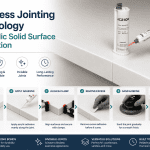
L’un des plus grands avantages de la surface solide acrylique réside non seulement dans le matériau non poreux lui-même, mais également dans la possibilité de créer des systèmes de fabrication sans soudure. Grâce à un collage adhésif de couleurs assorties et à des techniques de fabrication professionnelles, plusieurs panneaux peuvent être assemblés avec des transitions visuellement homogènes.
Contrairement aux systèmes de carrelage ou aux comptoirs en pierre avec des joints et des lignes de coulis visibles, la fabrication de surfaces solides sans couture permet de minimiser les zones où l'humidité, la saleté, la moisissure ou les bactéries peuvent s'accumuler au fil du temps.
Ceci est particulièrement important dans les environnements commerciaux qui exigent des normes d’hygiène plus élevées.
Applications dans les intérieurs de soins de santé et d’hôtellerie
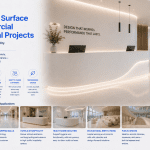
En raison de ses caractéristiques de surface hygiéniques, la surface solide acrylique est largement utilisée dans les projets de soins de santé et d'hôtellerie où la propreté, la maintenabilité et la stabilité de l'apparence à long terme sont essentielles.
- Comptoirs d'accueil des hôpitaux
- Plans de travail médicaux et postes d'infirmières
- Lavabos intégrés
- Systèmes de vanité de toilettes commerciales
- Comptoirs de salle de bains d'hôtel
- Comptoirs de service pour restaurants et cafés
- Surfaces de préparation des aliments
- Comptoirs de services de vente au détail
Dans ces environnements, les surfaces sans joints et non poreuses contribuent à simplifier les procédures de nettoyage et à améliorer l’efficacité de la maintenance à long terme.
Systèmes d'évier et de lavabo intégrés
La surface solide en acrylique prend également en charge la fabrication d'éviers intégrés, permettant aux éviers et aux comptoirs d'être assemblés en un système de surface continu et sans couture. Cela élimine les joints exposés autour des ouvertures de l’évier où l’eau, les résidus de savon et les contaminants peuvent s’accumuler.
Les systèmes d'évier intégrés sont largement utilisés dans les hôpitaux, les laboratoires, les hôtels, les toilettes publiques et les vanités commerciales car ils combinent hygiène, nettoyabilité et esthétique architecturale moderne.
Résistance aux taches et entretien quotidien
La structure non poreuse de la surface solide acrylique contribue également à améliorer la résistance aux taches domestiques et commerciales courantes. Dans des conditions normales d’utilisation intérieure, des substances telles que le café, le thé, les jus de fruits, le savon et les cosmétiques peuvent généralement être nettoyées de la surface sans pénétration permanente.
Un autre avantage de la surface solide acrylique est sa capacité de surface renouvelable. Les rayures mineures ou l'usure de la surface peuvent souvent être réparées grâce à des processus de ponçage et de finition, aidant ainsi à maintenir la cohérence de l'apparence à long terme.
Normes matérielles et performances hygiéniques
Les projets commerciaux professionnels évaluent souvent les matériaux de surface en fonction des normes d'hygiène, de nettoyabilité et de sécurité. En fonction des exigences du projet et de la portée de la certification, les matériaux acryliques à surface solide peuvent être testés conformément aux normes liées à la résistance aux taches, à l'aptitude au contact alimentaire et à la performance environnementale.
Les normes de référence courantes de l’industrie peuvent inclure les systèmes de certification NSF, les évaluations de résistance aux taches et les tests de performance des matériaux intérieurs commerciaux.
Solutions architecturales de surfaces solides ACRION
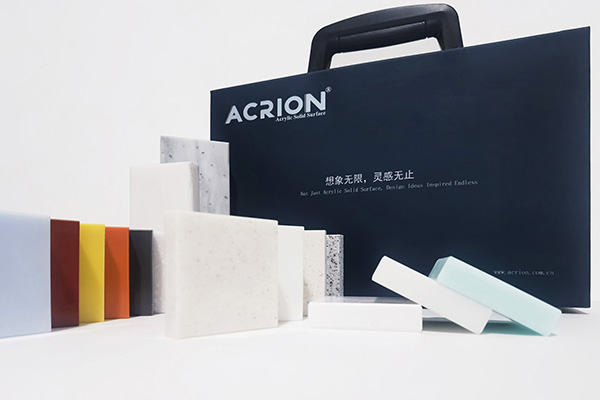
ACRION fournit des matériaux architecturaux à surface solide pour les applications de soins de santé, d'hôtellerie, de vente au détail, d'intérieur commercial et de fabrication sur mesure. Nos produits en acrylique à surface solide sont conçus pour une fabrication sans couture, des performances hygiéniques, une flexibilité de thermoformage et des environnements architecturaux modernes.
Forte d'une expérience dans la production commerciale de surfaces solides et d'un support matériel orienté projet, ACRION travaille avec des architectes, des fabricants, des entrepreneurs et des marques d'intérieur du monde entier.