La surface solide acrylique reste l'un des matériaux de fabrication les plus polyvalents utilisés dans l'architecture intérieure commerciale moderne, les établissements de santé, les projets d'hôtellerie, les systèmes de vente au détail et les applications architecturales personnalisées dans le monde entier.
En tant que fabricant professionnel de surfaces solides en acrylique avec plus de 20 ans d'expérience en fabrication et en projets, ACRION comprend que la valeur réelle des surfaces solides en acrylique s'étend bien au-delà des applications de comptoirs traditionnelles.
Son importance dans l'architecture moderne vient de la combinaison d'une capacité de fabrication sans couture, d'une flexibilité de thermoformage, d'une technologie de surface renouvelable et d'un potentiel de fabrication personnalisé intégré.
Cet article explique pourquoi la surface solide acrylique continue de rester très pertinente dans les systèmes de design d'intérieur commercial et de fabrication architecturale.
Qu'est-ce qu'une surface solide en acrylique ?
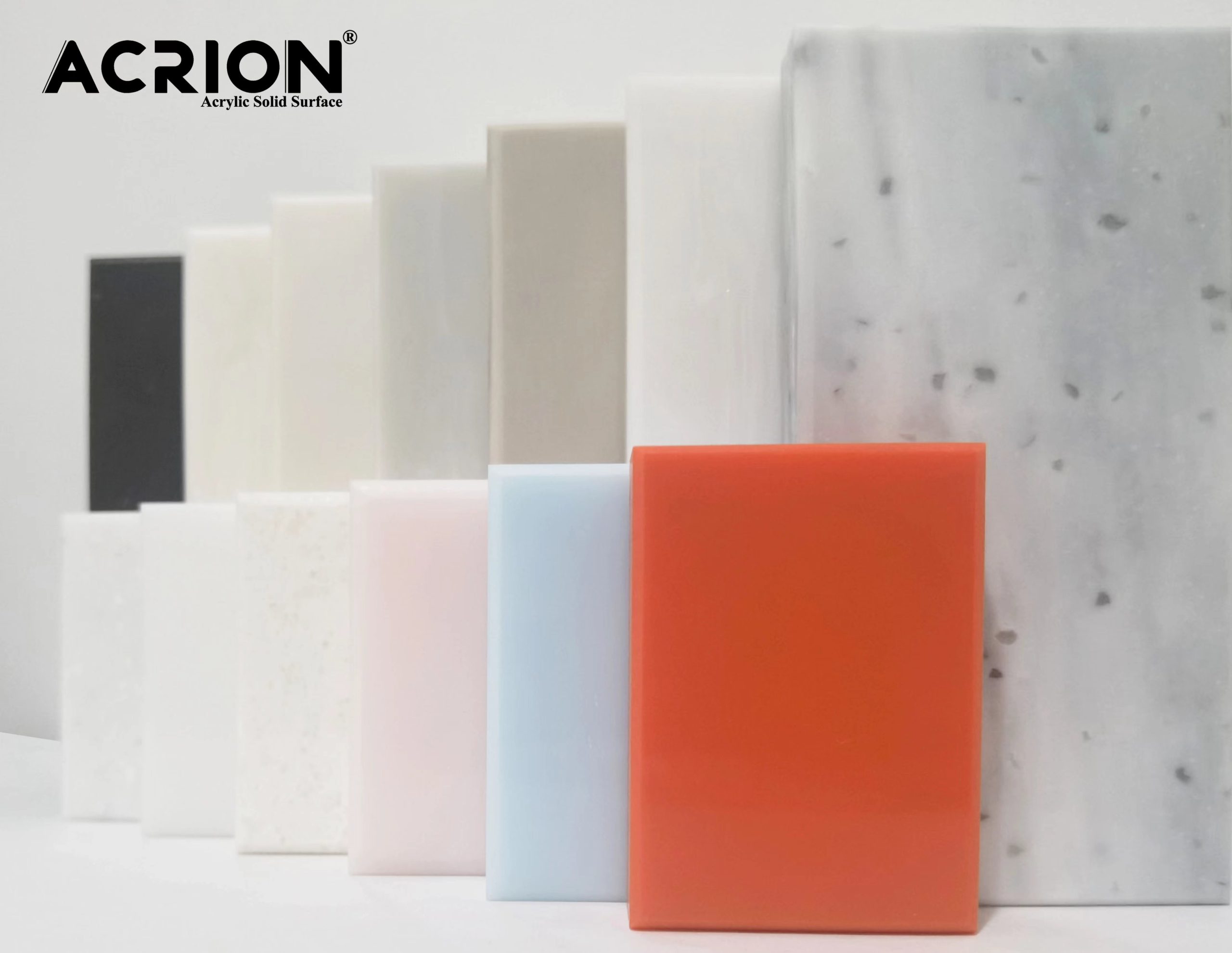
La surface solide acrylique est un matériau technique homogène généralement fabriqué à partir de systèmes de résine acrylique combinés à des charges minérales et à des pigments.
Contrairement aux matériaux décoratifs en couches, la surface solide acrylique conserve une structure et une couleur relativement cohérentes sur toute l’épaisseur du matériau.
Cette structure homogène supporte :
- Fabrication sans couture
- Renouvellement des surfaces
- Capacité de thermoformage
- Solutions de fabrication intégrées
- Flexibilité de maintenance à long terme
Pourquoi la surface solide acrylique est différente du quartz et de la pierre
Différents matériaux architecturaux offrent différents avantages en termes de performances selon l'application.
| Matériel | Force principale |
|---|---|
| Surface solide acrylique | Flexibilité de fabrication et intégration transparente |
| Surface de quartz | Dureté de surface plus élevée |
| Pierre frittée | Excellente résistance à la chaleur et aux UV |
| Pierre Naturelle | Variation visuelle naturelle |
| Stratifié | Coût initial inférieur |
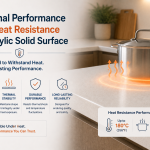
L’avantage unique de la surface solide acrylique n’est pas une dureté extrême ou une résistance à la chaleur ultra-élevée, mais sa capacité à prendre en charge une fabrication personnalisée et une conception architecturale intégrée.
Capacité de fabrication transparente
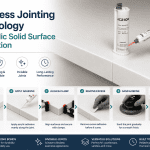
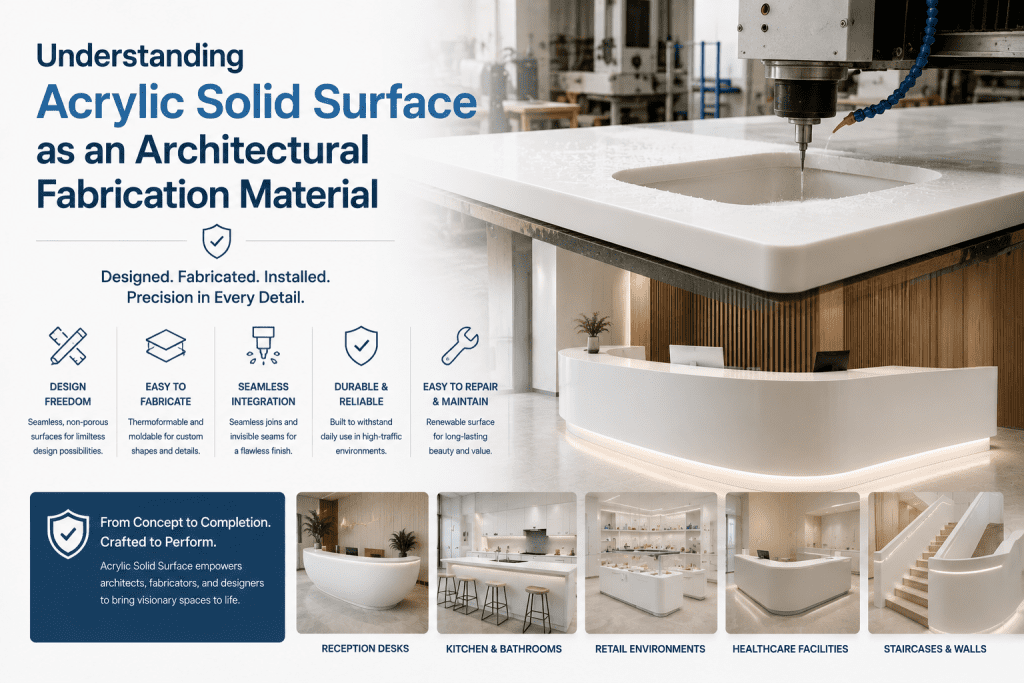
L’une des caractéristiques déterminantes de la surface solide acrylique est sa capacité de fabrication sans couture.
Grâce à des méthodes de fabrication professionnelles et à des systèmes adhésifs de couleurs assorties, plusieurs feuilles peuvent être visuellement intégrées dans des surfaces architecturales continues avec un minimum de joints visibles.
Cette capacité est particulièrement précieuse dans :
- Environnements de soins de santé
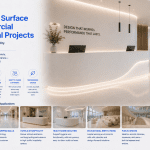
- Comptoirs d'accueil commerciaux
- Intérieurs d'hôtellerie
- Systèmes de vanité intégrés
- Luminaires architecturaux de vente au détail
- Projets d'intérieur public
La fabrication sans couture améliore la continuité visuelle, simplifie le nettoyage et prend en charge l'esthétique architecturale minimaliste moderne.
Flexibilité du thermoformage et de la conception incurvée
Contrairement à de nombreux matériaux de surface architecturale rigides, la surface solide acrylique peut être thermoformée en courbes personnalisées et en géométries complexes dans des conditions de fabrication contrôlées.
Cela permet aux fabricants et aux concepteurs de créer :
- Banques d'accueil courbes
- Comptoirs commerciaux bio
- Systèmes muraux intégrés
- Postes de travail de santé sur mesure
- Systèmes d'affichage pour la vente au détail
- Éléments architecturaux rétroéclairés
La combinaison du thermoformage et de l’assemblage sans couture confère à la surface solide acrylique une flexibilité de conception significative pour les intérieurs architecturaux personnalisés.
Technologie de surface renouvelable
La surface solide acrylique étant un matériau homogène, les dommages mineurs à la surface peuvent souvent être réparés grâce à des procédures de finition.
Les méthodes typiques de restauration de maintenance peuvent inclure :
- Ponçage professionnel
- Finition de surface
- Procédures de polissage
- Travaux de réparation localisés
Cette capacité de surface renouvelable permet de prolonger la durée de vie et de maintenir une apparence uniforme à long terme dans les environnements commerciaux.
Fabrication d'éviers et de lavabos intégrés
La surface solide en acrylique prend en charge les systèmes de fabrication d'éviers et de lavabos intégrés qui créent des surfaces visuellement continues sans espaces de transition exposés.
Cette approche de fabrication intégrée améliore :
- Continuité visuelle
- Facilité de nettoyage
- Efficacité de la maintenance
- Intégration du design d'intérieur
- Aspect architectural moderne
La fabrication intégrée est largement utilisée dans les applications d’hôtellerie, de soins de santé et de toilettes commerciales.
Caractéristiques des surfaces non poreuses et hygiéniques
La surface solide acrylique est largement reconnue pour ses caractéristiques de surface non poreuses et faciles à nettoyer.
Sa structure non poreuse aide à réduire la pénétration des liquides et facilite l'entretien dans des conditions normales d'utilisation.
Combiné avec une capacité de fabrication sans couture, cela rend la surface solide acrylique parfaitement adaptée pour :
- Hôpitaux et cliniques
- Toilettes commerciales
- Intérieurs d'hôtellerie
- Zones de préparation des repas
- Environnements de vente au détail
Ses avantages hygiéniques sont principalement liés à la nettoyabilité et à l’ingénierie des surfaces sans joints plutôt qu’à la chimie antibactérienne active.
Applications au-delà des comptoirs traditionnels
Aujourd'hui, la surface solide acrylique est largement utilisée dans une large gamme d'applications de fabrication architecturale et commerciale au-delà des comptoirs traditionnels.
- Comptoirs d'accueil
- Systèmes de revêtement mural
- Luminaires de vente au détail
- Plans de travail pour le secteur médical
- Systèmes de vanités commerciales
- Intérieurs de restaurants
- Installations architecturales publiques
- Systèmes décoratifs rétroéclairés
Sa flexibilité de fabrication permet aux concepteurs de créer des systèmes intérieurs personnalisés avec des fonctionnalités intégrées et une géométrie complexe.
Considérations importantes et limites
Comme tous les matériaux architecturaux, la surface solide acrylique présente également des limites d’application qui doivent être bien comprises.
- Les ustensiles de cuisine chauds directement ne doivent pas être placés sur la surface sans protection
- Les objets pointus peuvent rayer le matériau
- Les couleurs plus foncées peuvent montrer des rayures plus visibles
- L'exposition à long terme aux UV en extérieur dépend de la formulation et des conditions climatiques
Une fabrication, une installation et une maintenance appropriées restent importantes pour les performances à long terme.
Pourquoi la surface solide acrylique continue de rester pertinente
Malgré la concurrence croissante du quartz, de la porcelaine et d’autres matériaux techniques, la surface solide acrylique continue de rester très pertinente en raison de sa polyvalence de fabrication inégalée.
Sa capacité à combiner :
- Adhésion transparente
- Flexibilité du thermoformage
- Réparabilité
- Fabrication intégrée
- Personnalisation architecturale
en fait l’un des matériaux les plus adaptables à l’architecture intérieure commerciale moderne.
Conclusion
La surface solide acrylique reste l'un des matériaux de fabrication architecturale les plus polyvalents car elle combine une fabrication sans couture, une flexibilité de thermoformage, une technologie de surface renouvelable et des performances de surface hygiéniques au sein d'un seul système de fabrication intégré.
Sa valeur s'étend bien au-delà des applications de comptoirs traditionnelles dans les soins de santé, l'hôtellerie, la vente au détail, les intérieurs commerciaux et les environnements architecturaux personnalisés.
Chez ACRION, nous continuons à développer des solutions de surfaces solides en acrylique conçues pour la fabrication architecturale, la flexibilité de conception et la durabilité commerciale à long terme dans le monde entier.