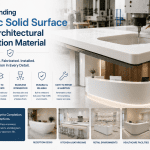
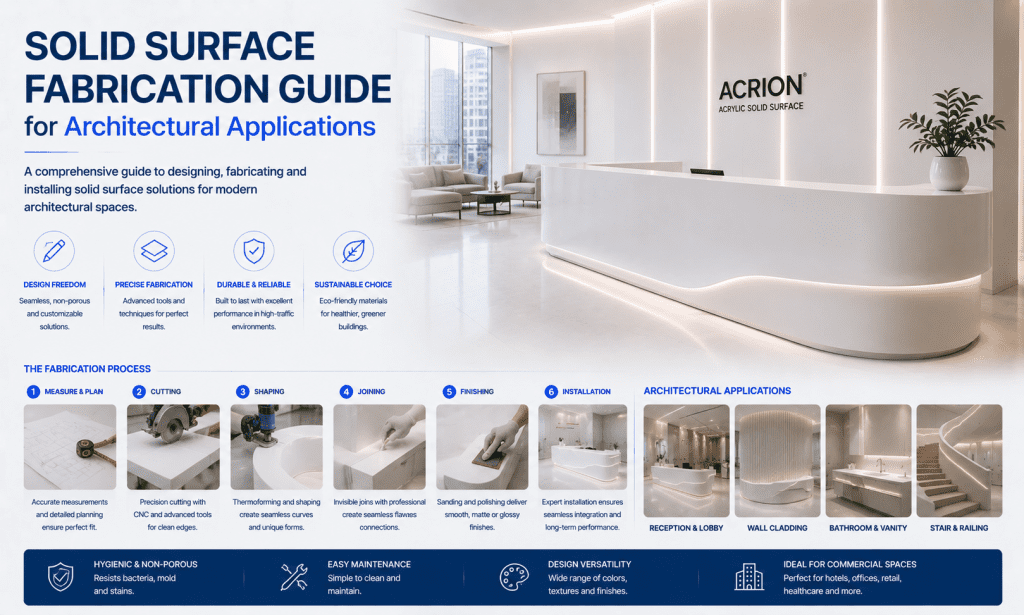
La fabrication est l’un des avantages déterminants de la surface solide acrylique en tant que matériau architectural.
Contrairement à de nombreux matériaux décoratifs rigides qui imposent des limites de conception, la surface solide en acrylique peut être découpée, usinée, thermoformée, assemblée sans couture, finie et raffinée pour former des formes architecturales hautement personnalisées.
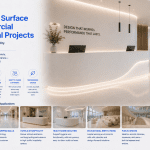
Cette flexibilité de fabrication est l'une des raisons pour lesquelles les surfaces solides restent largement utilisées dans les intérieurs d'hôtellerie, les environnements de soins de santé, les systèmes de vente au détail, les comptoirs de réception, les toilettes publiques, les intérieurs commerciaux et les projets d'aménagement architectural personnalisés.
Ce guide fournit un aperçu professionnel de la façon dont les surfaces solides acryliques sont fabriquées dans des applications commerciales réelles.
Pourquoi la capacité de fabrication est importante dans la sélection des matériaux architecturaux
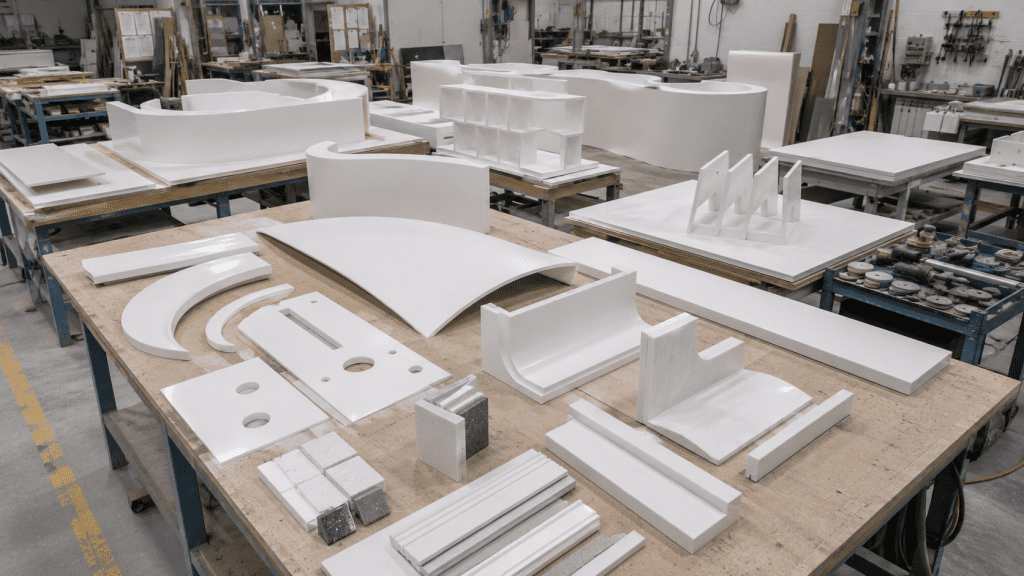
La performance des matériaux ne se définit pas uniquement par les fiches techniques. Cela dépend également de l’efficacité avec laquelle le matériau peut être transformé en solutions architecturales fonctionnelles.
Les architectes, les fabricants et les équipes de projet ont souvent besoin de matériaux capables de prendre en charge :
- dimensions personnalisées
- détails intégrés
- géométries courbes
- surfaces visuellement continues
- usinage CNC précis
- construction de joints hygiénique
- solutions d'aménagement intérieur complexes
La surface solide en acrylique est conçue spécifiquement pour ces exigences de fabrication.
Avantages clés de la fabrication de la surface solide acrylique
- excellente usinabilité
- thermoformabilité pour formes courbes
- capacité de collage sans couture
- finition de surface renouvelable
- compatibilité CNC précise
- flexibilité de fabrication intégrée
Ces caractéristiques de fabrication rendent la surface solide acrylique parfaitement adaptée à la personnalisation architecturale.
1. Fabrication de découpe et de découpe
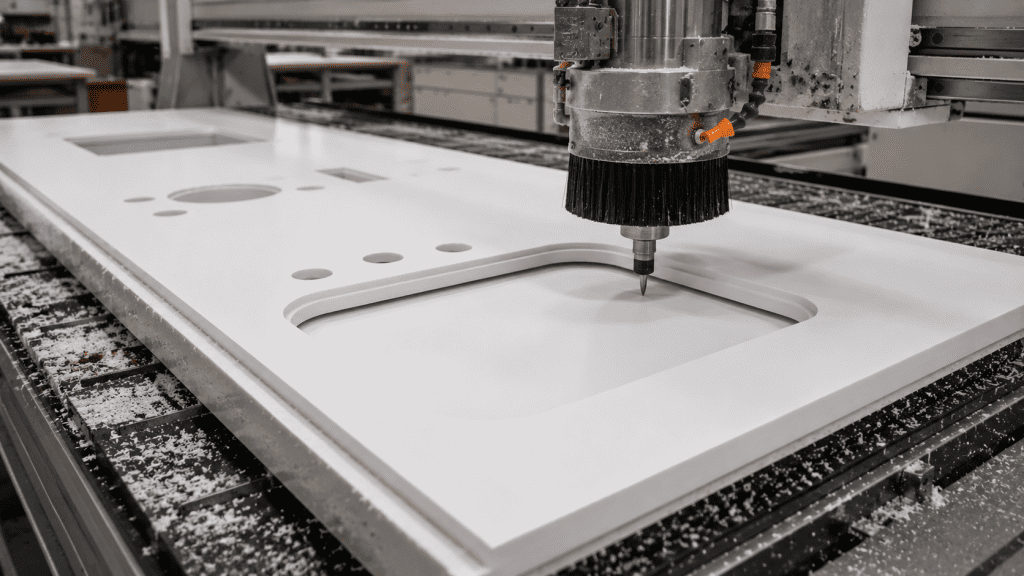
La découpe est la base de la fabrication de surfaces solides.
La fabrication professionnelle nécessite une découpe dimensionnelle précise, une préparation contrôlée des découpes et une attention particulière à la gestion des contraintes internes, en particulier autour des ouvertures d'évier, des découpes d'appareils et des transitions à forte charge.
2. Usinage CNC
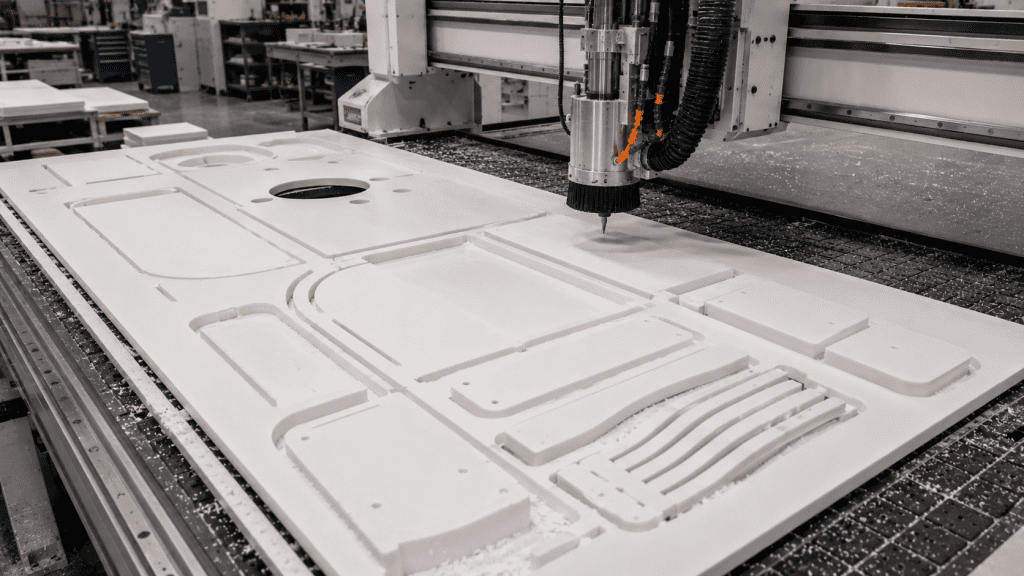
La fabrication numérique augmente considérablement la précision de la conception.
L'usinage CNC permet une fabrication reproductible pour des profils complexes, des détails routés, des composants personnalisés, des éléments de signalisation et des intégrations architecturales qui seraient difficiles à réaliser manuellement.
3. Traitement de forage et de pénétration
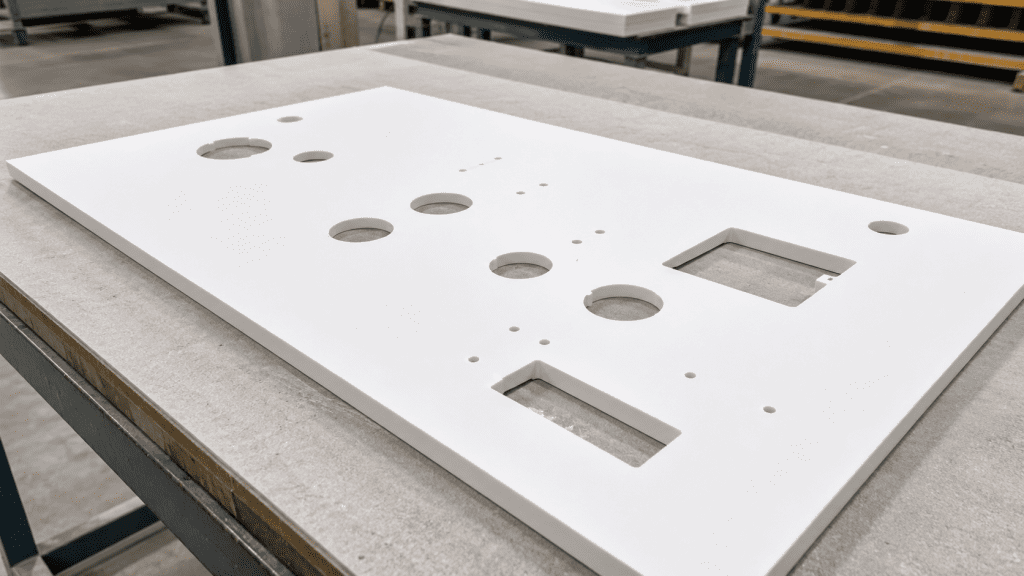
Le forage nécessite des pratiques de fabrication contrôlées pour préserver l’intégrité structurelle.
Des techniques de perçage inappropriées peuvent créer des points de concentration de contraintes, des risques de fissuration ou une imprécision dimensionnelle.
4. Assemblage sans couture
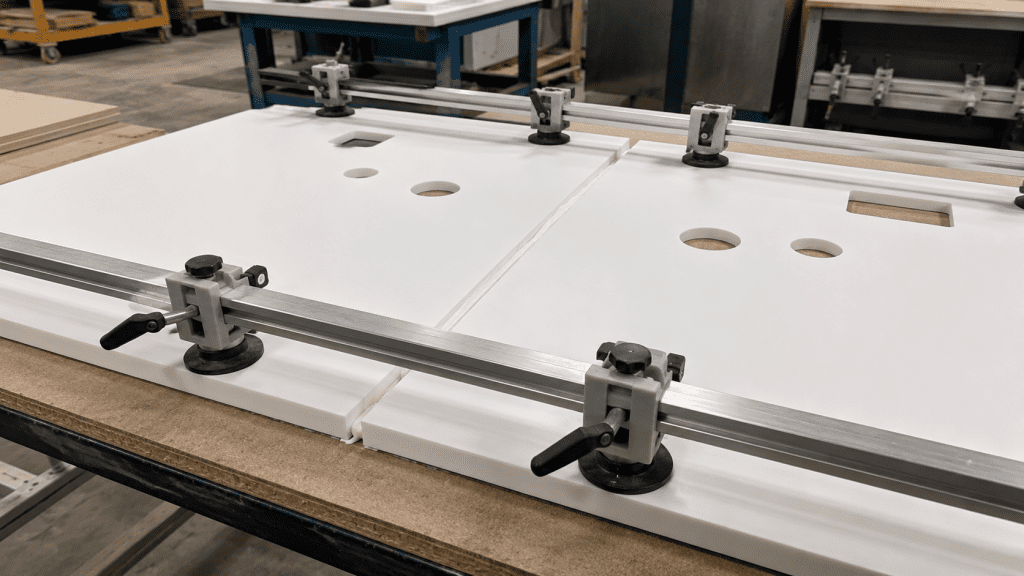
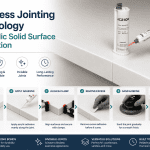
Le jointoiement sans couture est l’un des avantages techniques les plus reconnus de la surface solide acrylique.
Le collage adhésif de couleur assortie permet d'intégrer plusieurs panneaux dans des surfaces architecturales visuellement continues avec un minimum de joints visibles.
Cela offre des avantages à la fois esthétiques et hygiéniques dans les applications commerciales.
Lire le guide d'assemblage sans soudure →
5. Systèmes de liaison adhésive
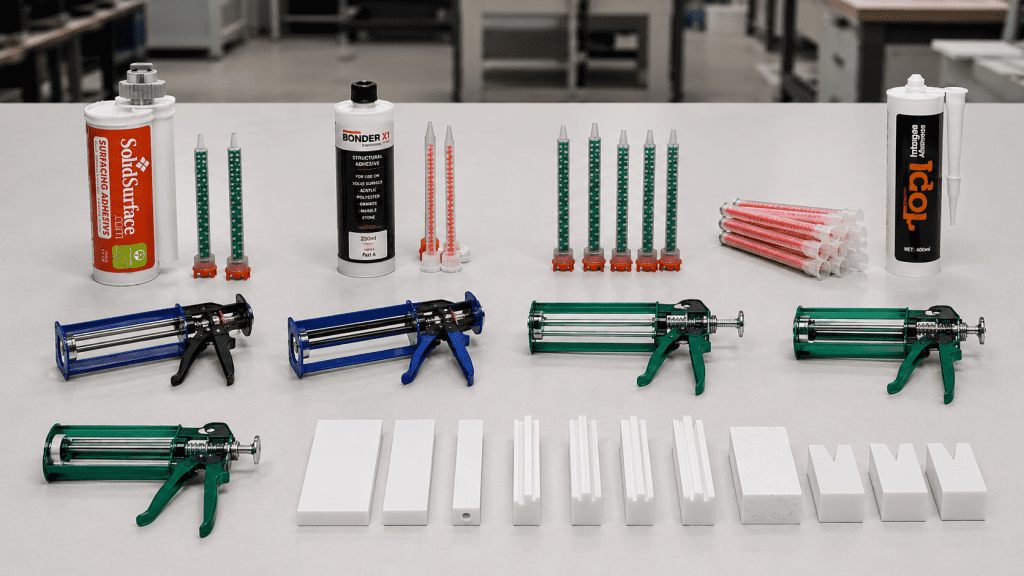
La fabrication professionnelle dépend de systèmes adhésifs appropriés, de la préparation des joints, de la discipline de durcissement et de pratiques de collage cohérentes.
6. Thermoformage et fabrication incurvée
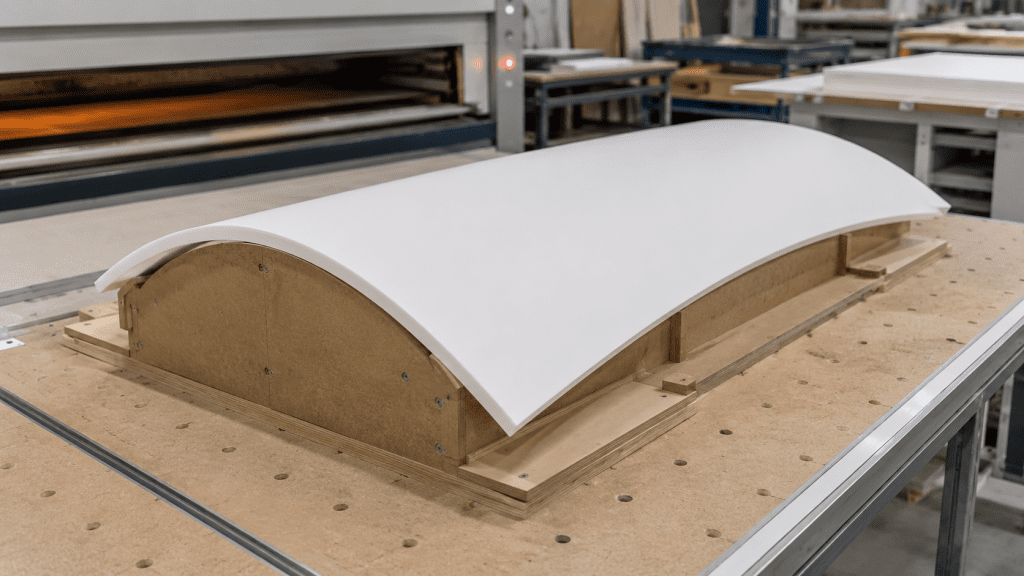
Le thermoformage permet à la surface solide acrylique d'être chauffée et façonnée selon des géométries incurvées contrôlées.
Cette capacité de fabrication permet des formes architecturales fluides qui sont difficiles, voire impossibles, avec de nombreux matériaux de revêtement conventionnels.
Lire le guide de thermoformage
7. Finition des surfaces
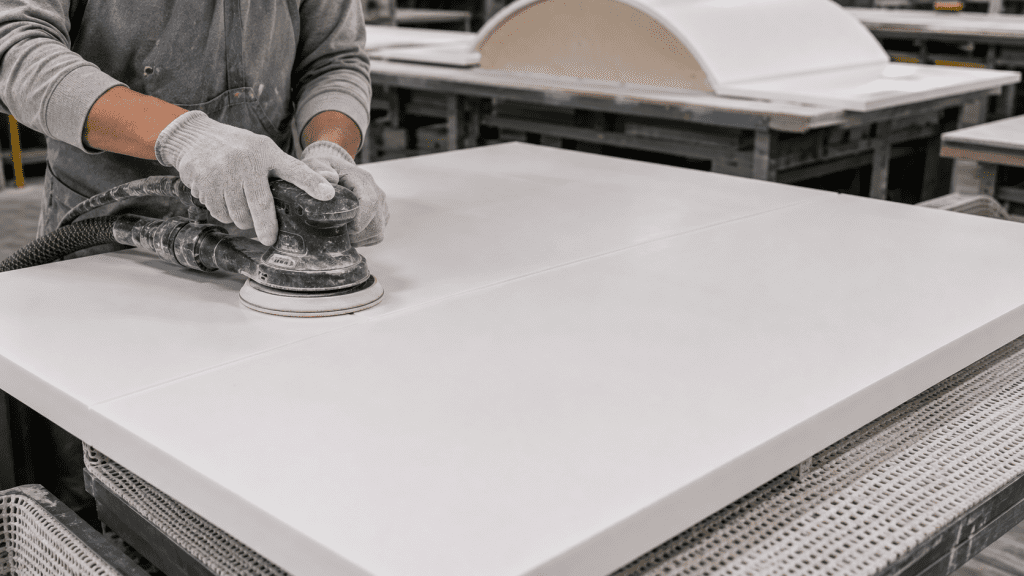
La qualité de la surface finale est fortement influencée par la méthodologie de finition.
Une bonne progression du ponçage, un contrôle du polissage et une cohérence de finition affectent directement la qualité visuelle et tactile de l’installation terminée.
8. Détails intégrés et fabrication de dosseret
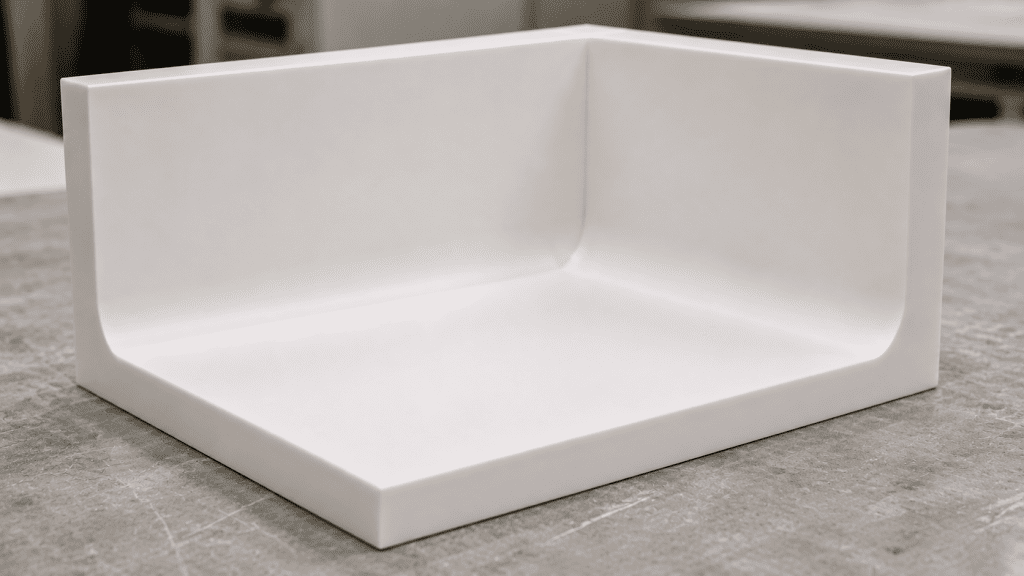
La surface solide permet des détails intégrés tels que des transitions à gorges, des rebords, des dosserets et des détails axés sur l'hygiène qui améliorent à la fois l'esthétique et la nettoyabilité.
9. Considérations sur l'équipement de fabrication
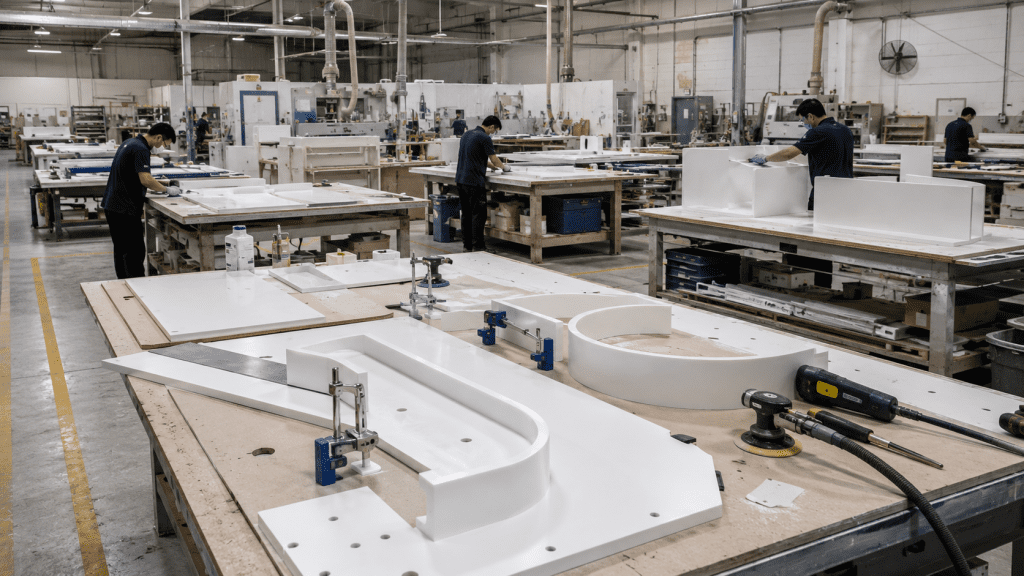
Une qualité de fabrication constante dépend non seulement du matériau, mais également de la capacité de l'outillage, des machines et de l'atelier.
Erreurs de fabrication courantes
- mauvaise préparation des articulations
- pratique adhésive incorrecte
- géométrie de coupe induisant des contraintes
- flux de travail de finition incohérent
- mauvais contrôle de la température de thermoformage
- inadéquation des outils
Applications bénéficiant de la fabrication avancée
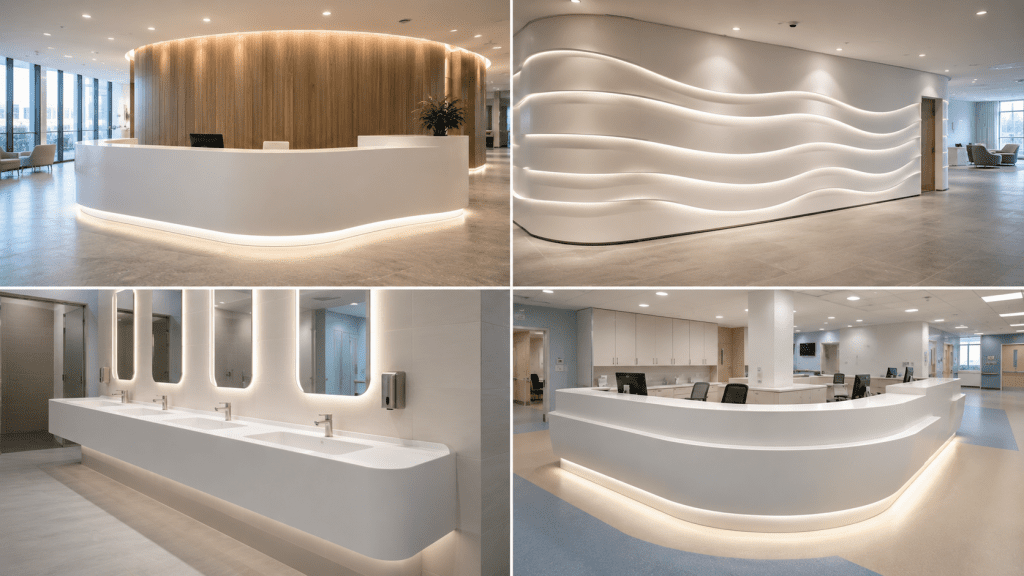
- comptoirs d'accueil
- comptoirs de santé
- vanités d'hospitalité
- systèmes d'affichage au détail
- intérieurs d'aéroport
- toilettes commerciales
- aménagements architecturaux sur mesure
FAQ
La surface solide en acrylique est-elle facile à fabriquer ?
Comparée à de nombreux matériaux décoratifs rigides, la surface solide acrylique offre une excellente usinabilité, une capacité de thermoformage et une flexibilité de fabrication sans couture.
La surface solide peut-elle être usinée CNC ?
Oui. L'usinage CNC est largement utilisé pour la fabrication de précision de composants à surface solide en acrylique.
Pourquoi la fabrication sans couture est-elle importante ?
La fabrication sans couture améliore la continuité visuelle, les performances d’hygiène et la qualité des détails architecturaux.
Parlez à ACRION à propos des solutions de fabrication architecturale
ACRION soutient les architectes, les distributeurs, les fabricants et les acheteurs de projets avec des matériaux architecturaux à surface solide en acrylique conçus pour une flexibilité de fabrication avancée.