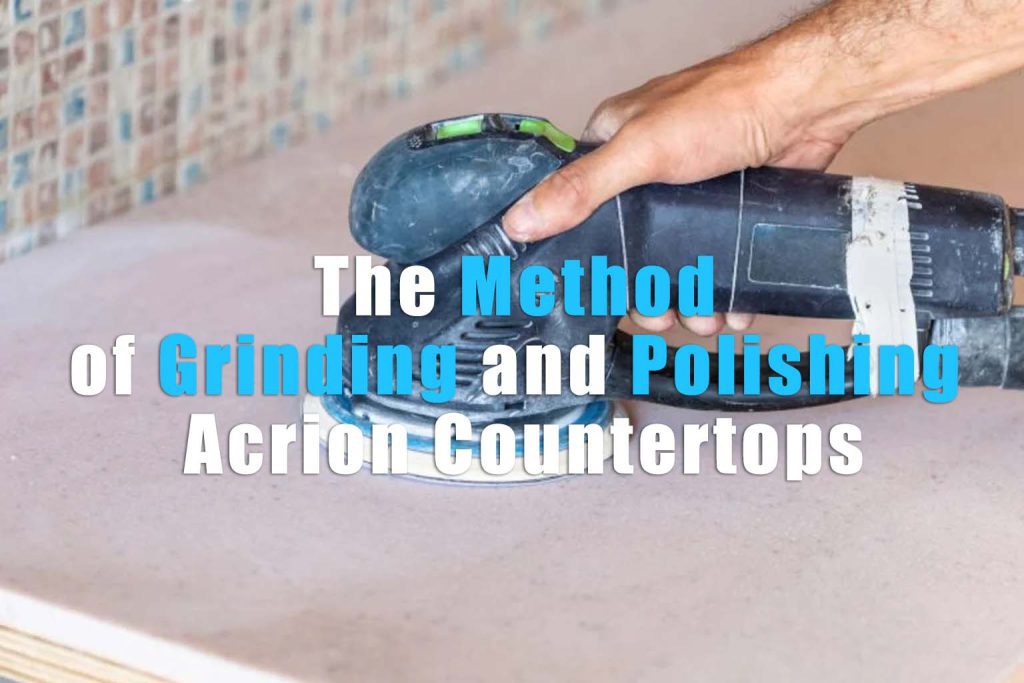
La finition de surface est l’une des capacités déterminantes de la fabrication professionnelle de surfaces solides en acrylique. Même si une coupe précise et un collage des joints sont essentiels, le ponçage et le polissage finaux déterminent la qualité visuelle, la cohérence tactile et la maintenabilité à long terme.
Étant donné que la surface solide en acrylique est un matériau réparable et facile à fabriquer, la méthodologie de finition affecte directement l'apparence, l'invisibilité des coutures, la facilité d'entretien et la qualité d'acceptation par le client.
Pourquoi la finition de surface est importante
La finition professionnelle transforme les assemblages fabriqués en surfaces architecturales visuellement continues.
- Invisibilité des coutures
- Sensation tactile constante
- Niveau de brillance contrôlé
- Réparabilité des rayures
- Qualité d'acceptation visuelle
- Renouvelabilité à long terme
Ponçage ou polissage : comprendre la différence
Bien que souvent regroupés, le ponçage et le polissage répondent à des objectifs différents.
- Ponçage élimine les irrégularités de surface, affine les joints et prépare le niveau de finition.
- Polissage améliore l’apparence visuelle finale et la consistance du brillant là où cela est nécessaire.
Les systèmes de finition professionnels utilisent ces étapes de manière stratégique en fonction des exigences du projet.
1. Affinement des coutures et mélange des surfaces
La finition des coutures fait partie des étapes visuellement les plus sensibles de la fabrication de surfaces solides en acrylique.
- Transition de hauteur en douceur
- Mélange de surface cohérent
- Aucune visibilité sur la crête
- Continuité tactile uniforme
Une mauvaise finition des coutures compromet immédiatement l’apparence sans couture.
2. Sélection du niveau de finition
Différentes applications peuvent nécessiter des attentes différentes en matière de finition.
- Finition mate
- Finition satinée
- Fini semi-brillant
- Finition brillante (le cas échéant)
Les applications commerciales privilégient souvent la maintenabilité pratique plutôt que la brillance extrême.
3. Gestion de la chaleur pendant la finition
Une mauvaise technique de finition peut générer une chaleur localisée excessive.
- Risque de surchauffe des surfaces
- Incohérence de brillance
- Contrainte de la résine
- Défauts de finition visuelle
Une technique de finition contrôlée aide à protéger l’intégrité des matériaux.
4. Réparabilité et renouvelabilité des rayures
L’un des avantages les plus importants du cycle de vie des surfaces solides acryliques est la réparabilité.
Contrairement à de nombreux matériaux de surface rigides, la finition professionnelle peut souvent restaurer l'apparence après une usure ou des dommages localisés.
- Capacité de renouvellement des surfaces
- Réparabilité localisée
- Durée de vie prolongée
- Coût de remplacement réduit
5. Erreurs de finition courantes
- Mélange de coutures incohérent
- Surchauffe pendant le polissage
- Apparence de finition inégale
- Surpolissage des surfaces commerciales à usage intensif
- Ignorer les attentes de finition spécifiques au projet
6. Inspection finale de la qualité de la surface
L’assurance qualité de la finition professionnelle doit évaluer :
- Cohérence visuelle sous éclairage directionnel
- Examen de la visibilité des coutures
- Contrôle de continuité tactile
- Uniformité de finition
- Adéquation fonctionnelle à l'usage prévu
Liste de contrôle d'assurance qualité pour la finition rapide
| Zone d'inspection | Objectif principal |
|---|---|
| Coutures | Qualité du mélange |
| Finition de surface | Aspect uniforme |
| Sensation tactile | Une continuité fluide |
| Impact thermique | Aucun défaut visuel |
| Réparabilité | Valeur du cycle de vie renouvelable |
Applications où la qualité de finition compte le plus
- Comptoirs d'accueil
- Plans de travail pour le secteur médical
- Systèmes de vanité d'hôtel
- Ensembles d'évier intégrés
- Comptoirs de vente au détail
- Installations architecturales fabriquées
FAQ
La surface solide en acrylique rayée peut-elle être réparée ?
Oui. L’un des principaux avantages de la surface solide acrylique est la finition professionnelle et la restauration de l’apparence renouvelable.
Une finition brillante est-elle toujours meilleure ?
Non. La sélection de la finition doit correspondre à la fonction du projet, aux attentes en matière de maintenance et aux exigences visuelles.
Pourquoi les coutures restent-elles parfois visibles après la fabrication ?
Une mauvaise préparation des joints, un mélange incohérent ou une méthodologie de finition inadéquate sont des causes courantes.
Pensées finales
La fabrication professionnelle de surfaces solides en acrylique dépend d’une méthodologie de finition disciplinée et non d’un simple polissage seul.
ACRION développe des matériaux architecturaux à surface solide conçus pour une fabrication sans couture, des performances renouvelables et des applications commerciales exigeantes.