Une installation réussie sur une surface solide en acrylique ne dépend pas seulement d’une fabrication précise. La qualité de l'alignement, la régularité du support et le contrôle de l'ajustement de l'interface jouent tous un rôle essentiel dans l'obtention d'un résultat final professionnel.
Même les matériaux de qualité supérieure à surface solide peuvent sembler mal exécutés si l’alignement de l’installation n’est pas correctement contrôlé. Des espaces visibles, des joints inégaux, des retours verticaux inclinés et des conditions de support instables peuvent tous compromettre la qualité du projet.
Pourquoi l'alignement de l'installation est important
Les installations de surfaces solides en acrylique impliquent souvent des systèmes fabriqués assemblés plutôt que de simples surfaces planes. Ceux-ci peuvent inclure des bords de cascade, des retours verticaux, des comptoirs de réception, des vanités intégrées et des applications architecturales personnalisées.
Un mauvais alignement peut entraîner :
- Lacunes d'installation visibles
- Transitions de couture inégales
- Surfaces hors de niveau
- Assemblages verticaux mal alignés
- Transfert de contraintes dans les joints fabriqués
- Mauvaise finition visuelle
1. Qualité d’ajustement du comptoir au mur
L’un des problèmes de qualité d’installation les plus courants est l’ajustement incohérent entre la surface fabriquée et les murs adjacents.
Les environnements de construction réels offrent rarement des murs parfaitement droits ou carrés. L'installation professionnelle doit gérer ces variations grâce à des détails d'ajustement contrôlés plutôt qu'à une installation forcée.
L'inspection doit se concentrer sur :
- Apparence cohérente des écarts d'interface
- Transitions murales épurées
- Aucune distorsion visible
- Détails d'étanchéité appropriés si nécessaire
2. Niveau du Cabinet et du soutien
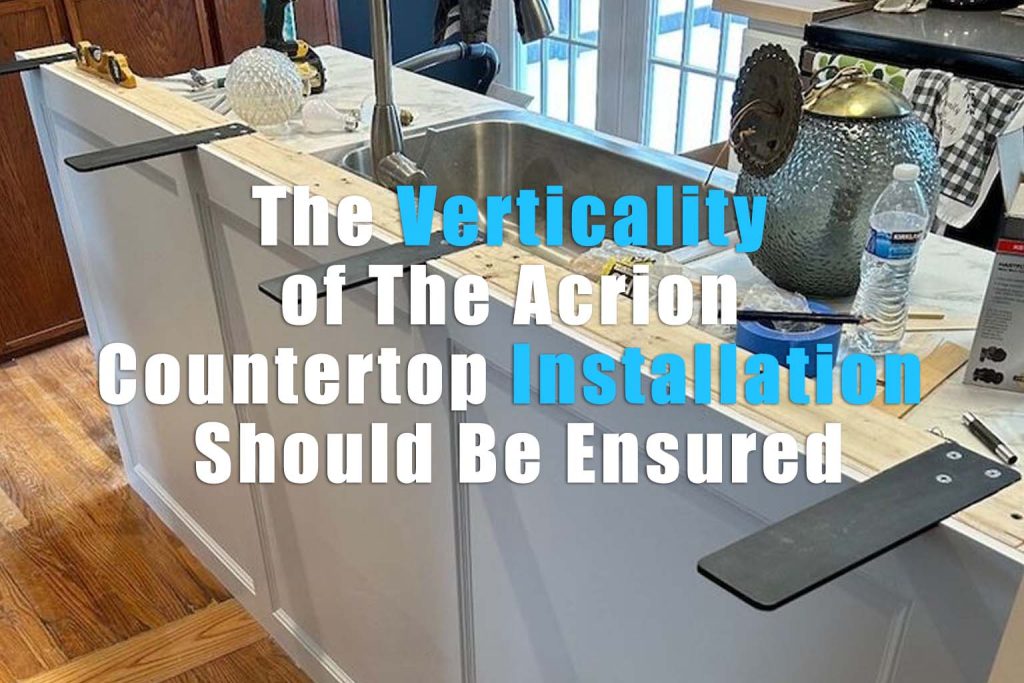
La surface solide est un matériau de fabrication et non un système de charpente structurelle. La qualité de l'installation dépend fortement d'un support stable et de niveau sous l'assemblage fabriqué.
L'inspection de support doit vérifier :
- Dessus d'armoires de niveau
- Support porteur stable
- Pas de balancement ni de mouvement
- Contact structurel constant
Même de petits écarts de support peuvent créer un désalignement visible ou des fissures sous contrainte à long terme.
3. Alignement des bords de la cascade
Les applications en bordure de cascade comptent parmi les installations de surfaces solides les plus exigeantes sur le plan visuel.
L'inspection de la qualité doit confirmer :
- Véritable alignement visuel vertical
- Exécution nette des coutures dans les coins
- Pas d'apparence penchée
- Support structurel stable
Même un désalignement mineur devient immédiatement visible dans les installations en cascade.
4. Alignement de l'assemblage vertical
Les comptoirs de réception, les retours verticaux et les assemblages fabriqués sur mesure nécessitent un alignement d’aplomb contrôlé.
Un désalignement peut créer :
- Mauvais équilibre visuel
- Stress au niveau des coutures
- Défauts de fabrication visibles
- Problèmes d'acceptation des clients
5. Coordination de la tolérance
Les problèmes d’alignement de l’installation résultent souvent d’une variation de tolérance accumulée plutôt que d’une simple erreur.
- Déviation du mur
- Variation dimensionnelle du meuble
- Tolérance de fabrication
- Différences de niveau du sol
- Ajustement de l'installation
L'installation professionnelle doit anticiper l'empilement dimensionnel plutôt que de supposer des conditions de site parfaites.
6. Qualité de l’alignement des coutures
Les joints font partie des parties les plus sensibles visuellement des installations de surfaces solides en acrylique.
L'inspection doit vérifier :
- Transitions de hauteur en douceur
- Mélange de finition cohérent
- Aucun effet de crête visible
- Pas d'ajustement forcé induisant du stress
7. Inspection finale de la qualité de l'installation
L’assurance qualité professionnelle doit combiner des contrôles techniques et une inspection visuelle.
- Examen direct de la ligne de visibilité
- Contrôle de cohérence des écarts
- Inspection tactile des coutures
- Vérification de la stabilité du support
- Examen global de la qualité de finition
Liste de contrôle d'alignement d'installation rapide
| Zone d'inspection | Accent sur la qualité |
|---|---|
| Interfaces murales | Ajustement cohérent et transitions nettes |
| Soutien du Cabinet | Niveau et stable |
| Bords de cascade | Véritable alignement vertical |
| Assemblages verticaux | Aspect d'aplomb |
| Coutures | Lisse et aligné |
| Gestion des tolérances | Ajustement contrôlé |
Applications où le contrôle de l'alignement est le plus important
- Comptoirs d'accueil
- Systèmes de vanité d'hôtel
- Comptoirs à bord en cascade
- Comptoirs de vente au détail
- Plans de travail pour le secteur médical
- Installations architecturales fabriquées
FAQ
Pourquoi l’alignement de l’installation est-il important ?
Un mauvais alignement affecte l’apparence, la qualité des coutures, la répartition des contraintes structurelles et la durabilité à long terme.
Les murs sont-ils toujours parfaitement droits ?
Non. Les environnements de construction réels nécessitent souvent une gestion professionnelle de l’ajustement et des détails d’interface.
Un mauvais support peut-il affecter l’alignement ?
Oui. Les structures de support instables ou inégales sont l’une des causes les plus courantes de défauts d’alignement.
Pensées finales
Les installations professionnelles sur surfaces solides en acrylique dépendent d'un contrôle d'alignement discipliné, d'une gestion précise de l'ajustement et d'une ingénierie de support stable, et non d'un ajustement improvisé pendant l'installation.
ACRION développe des matériaux architecturaux à surface solide conçus pour une fabrication fiable, une exécution transparente et des applications commerciales exigeantes.