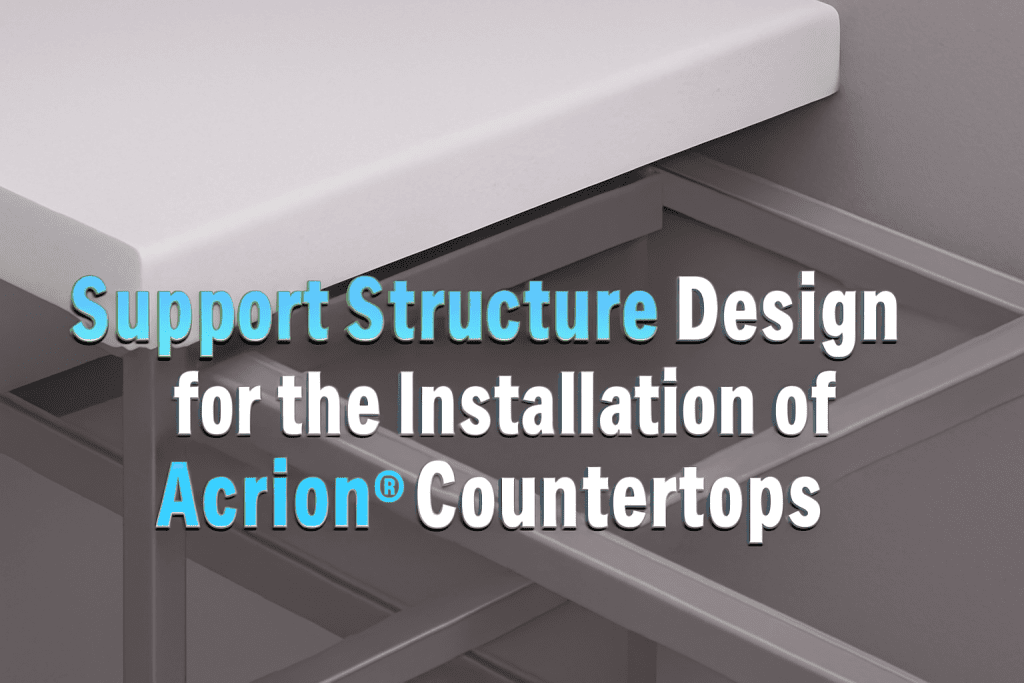
Un support structurel adéquat est l’un des facteurs les plus importants pour la fabrication et l’installation réussies d’une surface solide en acrylique. Même les matériaux de qualité supérieure à surface solide peuvent échouer prématurément si la conception du support est inadéquate.
Les problèmes courants causés par une mauvaise conception du support comprennent la fissuration sous contrainte, la rupture visible des joints, l'affaissement, la déflexion structurelle, l'instabilité de l'évier et les problèmes de durabilité à long terme.
Ce guide explique les principes d'ingénierie derrière la conception appropriée d'une structure de support pour les applications de surfaces solides en acrylique.
Pourquoi le soutien structurel est important
La surface solide acrylique est un matériau de fabrication et non un matériau de charpente structurelle.
Bien qu'il offre une fabrication, une réparabilité et une flexibilité de conception sans faille, il repose sur une ingénierie de support appropriée pour maintenir la stabilité dimensionnelle et les performances à long terme.
Sans un support approprié, les installations fabriquées peuvent développer :
- Fissures de contrainte
- Séparation visible des coutures
- Déviation ou affaissement
- Distorsion des bords
- Défaillance structurelle localisée
- Dommages aux supports liés à l'eau
1. Principes de support continu
La plupart des applications horizontales de surfaces solides en acrylique nécessitent un support stable et correctement réparti sous l'assemblage fabriqué.
Un support continu aide à :
- Répartir la charge uniformément
- Réduire la concentration du stress
- Minimiser la déviation
- Protéger l’intégrité des coutures
- Améliorer la stabilité dimensionnelle à long terme
La conception du support doit toujours correspondre aux exigences structurelles de l’application.
2. Considérations sur la portée non prises en charge
Les longues portées non soutenues augmentent les contraintes de flexion et le risque de déflexion.
Cela devient particulièrement important dans :
- Comptoirs d'accueil
- Plans de travail professionnels
- Installations flottantes
- Systèmes de vanité longue
- Applications de meubles sur mesure
La planification du support structurel doit tenir compte de la géométrie des travées, des charges anticipées et de l'intention de conception.
3. Renfort de découpe d'évier
Les découpes des éviers réduisent la continuité structurelle et créent des zones de contraintes localisées.
Une attention supplémentaire en matière d'assistance est souvent requise dans les domaines suivants :
- Zones d'évier intégrées
- Zones de rail avant
- Transitions de support arrière
- Longues travées de bassin
Sans support approprié, ces zones peuvent devenir des points d’initiation de fissures au fil du temps.
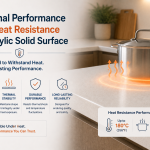
4. Table de cuisson et zones d'exposition à la chaleur
Les découpes de la table de cuisson combinent interruption structurelle et cycle thermique.
Ces conditions augmentent le risque en raison de :
- Expansion et contraction thermique
- Concentration des contraintes du matériau
- Continuité structurelle réduite
- Fluctuations répétées de la température
L'ingénierie de support devrait réduire l'accumulation de contraintes dans ces zones.
5. Planification du support en porte-à-faux
Les dessus de bar, les îlots, les comptoirs et les applications en porte-à-faux nécessitent une évaluation minutieuse des surplombs.
Les facteurs clés comprennent :
- Attentes de charge
- Espacement des supports
- Exigences de renforcement structurel
- Intensité de l'utilisation commerciale
Les projections non prises en charge ne doivent jamais être traitées avec désinvolture dans la conception technique.
6. Alignement des armoires et de la base
Des armoires de support mal nivelées peuvent introduire des contraintes cachées dans les assemblages de surfaces solides fabriqués.
L'inspection doit vérifier :
- Surfaces d'appui de niveau
- Construction de base stable
- Aucun mouvement de balancement
- Transfert de charge cohérent
Même de petites erreurs d’alignement peuvent entraîner des fissures à long terme.
7. Protection contre l'humidité pour les structures de support
Les systèmes de support dans les environnements humides nécessitent une prise en compte de l’humidité.
Les risques potentiels comprennent :
- Gonflement du substrat
- Instabilité dimensionnelle
- Défaillance du joint
- Transfert de contrainte secondaire
Ceci est particulièrement pertinent dans les applications de vanité, d’évier et de soins de santé.
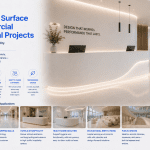
8. Applications de chargement commercial
Les environnements commerciaux imposent souvent des conditions d’utilisation plus lourdes que les applications résidentielles.
- Comptoirs d'hospitalité
- Stations de lavage publiques
- Bureaux de services de vente au détail
- Plans de travail pour le secteur médical
- Aires de préparation de restauration
Les structures de support doivent refléter les conditions d’utilisation réelles plutôt que des hypothèses de conception purement visuelles.
Liste de contrôle rapide du support structurel
| Zone d'assistance | Objectif de l'inspection |
|---|---|
| Assistance continue | Stable et correctement distribué |
| Portées non prises en charge | Risque de déviation maîtrisé |
| Découpes pour évier | Renforcement et continuité du support |
| Zones de cuisson | Gestion du stress thermique |
| Surplombs | Adéquation structurelle |
| Bases d'armoires | Niveau et stable |
| Zones humides | Planification de support résistant à l'humidité |
Applications où la conception du support est critique
- Comptoirs d'accueil
- Systèmes de vanité d'hôtel
- Plans de travail professionnels
- Postes de santé
- Comptoirs de vente au détail
- Meubles sur mesure
- Installations architecturales fabriquées
FAQ
La surface solide en acrylique peut-elle se soutenir structurellement ?
Non. La surface solide en acrylique est un matériau de fabrication et nécessite généralement un support correctement conçu en fonction de l'application.
Pourquoi des fissures apparaissent-elles souvent près des découpes des éviers ?
Les découpes des éviers réduisent la continuité structurelle et créent des zones de contraintes localisées si la conception du support est inadéquate.
Les projets commerciaux nécessitent-ils une planification de soutien plus solide ?
Oui. L’utilisation commerciale implique généralement une charge plus élevée, une utilisation plus fréquente et des attentes plus strictes en matière de durabilité.
Pensées finales
Le succès des installations de surfaces solides en acrylique dépend non seulement de la qualité des matériaux, mais également d'une ingénierie de support structurel et d'une planification de fabrication disciplinées.
ACRION développe des matériaux architecturaux à surface solide conçus pour la fiabilité de fabrication, les applications transparentes et les environnements commerciaux exigeants.