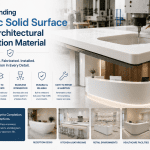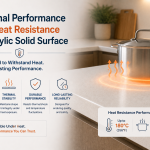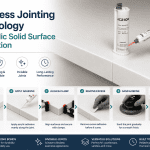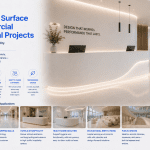
In professional acrylic solid surface projects, long-term performance is often determined not by the material itself, but by the quality of installation detailing. Small execution errors can lead to visible seams, stress cracks, water ingress, structural instability, and costly after-sales issues.
For architects, fabricators, contractors, and project teams, disciplined installation detailing is essential for delivering reliable commercial solid surface applications.
Why Installation Detailing Matters
Acrylic solid surface offers seamless fabrication, hygienic performance, repairability, and design flexibility. However, poor installation detailing can compromise these advantages.
Common failures caused by weak detailing include:
- Visible seam defects
- Surface misalignment
- Water leakage
- Stress cracking
- Uneven edge transitions
- Poor sink performance
- Structural instability
1. Seam Execution Quality
Seam detailing is one of the most visible indicators of installation quality.
Inspection should verify:
- Smooth visual transitions
- No noticeable height difference
- Clean adhesive finishing
- Consistent appearance under normal lighting
- No pinholes or seam defects
Well-executed seamless joints remain one of the defining advantages of acrylic solid surface systems.
2. Surface Alignment Control
Adjacent sections should align correctly both visually and structurally.
- No uneven panel transitions
- Consistent installation plane
- No rocking or movement
- Stable structural contact
Poor alignment often creates hidden stress that later causes cracking.
3. Wall Interface Detailing
Transitions between solid surface assemblies and surrounding walls must be carefully executed.
- Clean splashback transitions
- Consistent sealant finishing
- Controlled expansion allowance where needed
- No visually messy silicone application
Wall interface detailing strongly affects final project appearance.
4. Sink Integration Detailing
Sink zones combine structural interruption, water exposure, and daily use stress.
Critical detailing includes:
- Accurate sink alignment
- Reliable bond integrity
- Smooth transition finishing
- Correct drainage slope
- Moisture sealing around vulnerable areas
Weak sink detailing is one of the most common after-sales risk areas.
5. Corner Detailing
Corner detailing directly affects structural durability.
- Avoid sharp stress-concentrating internal corners
- Maintain smooth transitions where possible
- Ensure clean finishing continuity
- Avoid seam placement in high-stress corner zones
Improper corner execution frequently contributes to crack initiation.
6. Edge Finishing Quality
Edge detailing influences both durability and aesthetics.
- Uniform edge geometry
- Consistent profile finishing
- No chips or sharp defects
- Matching surface finish consistency
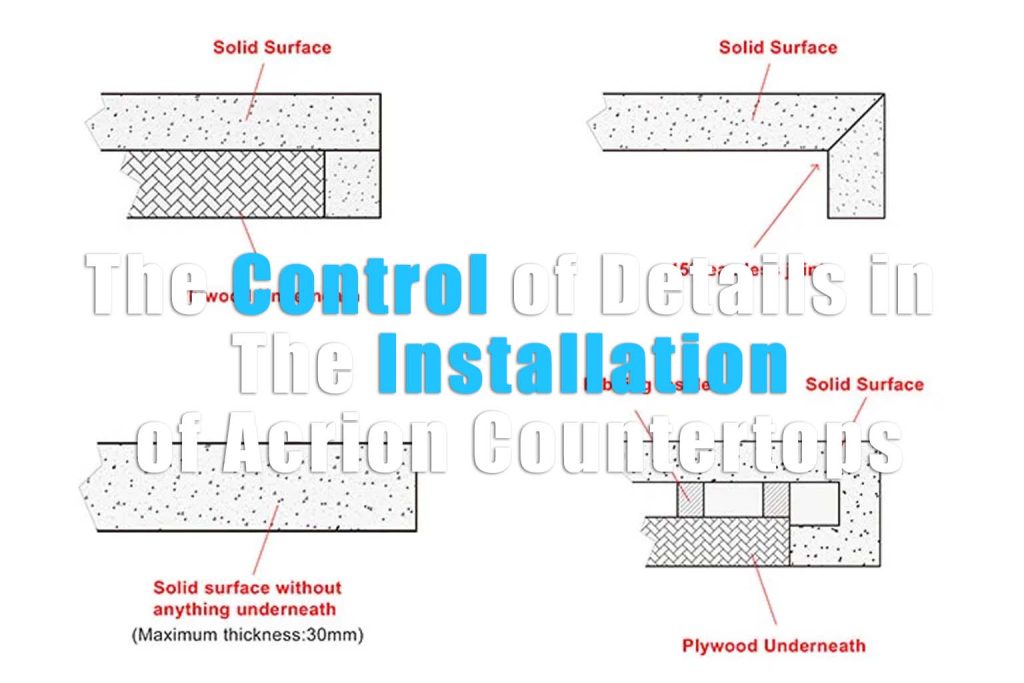
7. Structural Support Verification
Installation detailing must always confirm structural support quality.
- Stable substrate support
- Level cabinetry or framing
- No unsupported stress zones
- Load transfer consistency
Even excellent seam work cannot compensate for poor support engineering.
8. Final Visual and Functional Inspection
Final inspection should combine appearance review and practical performance checks.
- Lighting condition inspection
- Touch inspection of seams and edges
- Sink drainage test
- Stability check
- Sealant inspection
- Overall finish consistency review
Quick Installation Detailing Checklist
| Detail Area | Inspection Focus |
|---|---|
| Seams | Smooth and visually consistent |
| Alignment | Level and stable |
| Wall interfaces | Clean and properly sealed |
| Sink zones | Bond integrity and drainage |
| Corners | Stress-aware detailing |
| Edges | Consistent finishing |
| サポート | Stable structural base |
Where Detailing Standards Matter Most
- Hotel vanity systems
- Reception counters
- Healthcare worktops
- Commercial wash stations
- Retail counters
- Custom furniture
- Architectural solid surface installations
よくある質問
What is the most common installation detailing defect?
Visible seam defects, poor alignment, weak sink detailing, and improper support verification are among the most common issues.
Why does detailing matter if the material is high quality?
Material quality alone cannot prevent failures caused by poor workmanship or weak installation execution.
Is detailing more important in commercial projects?
Yes. Commercial environments typically impose higher durability, hygiene, and visual consistency expectations.
Final Thoughts
Professional acrylic solid surface projects succeed through disciplined detailing, not just material selection.
ACRION develops architectural solid surface materials engineered for fabrication reliability, seamless applications, and demanding commercial environments.