Material performance in architecture is not judged by appearance alone. Behind every reception counter, healthcare worktop, commercial vanity, or custom fabricated interior element lies a practical engineering question: can the material withstand real-world mechanical demands?
Acrylic solid surface is widely specified because it combines design flexibility with dependable mechanical performance for commercial interior applications.
But what do “mechanical properties” actually mean in the context of solid surface materials?
This guide explains the key mechanical characteristics of acrylic solid surface from a practical architectural and fabrication perspective.
What Are Mechanical Properties in Solid Surface Materials?
Mechanical properties describe how a material behaves under physical force, stress, repeated use, and fabrication processes.
For acrylic solid surface, key performance considerations include:
- Structural strength
- Flexural performance
- Impact resistance
- Surface durability
- Dimensional stability
- Fabrication behavior
- Repairability
These characteristics influence both fabrication efficiency and long-term project reliability.
Why Mechanical Performance Matters in Commercial Projects
Architectural materials must survive more than showroom conditions.
Commercial environments expose surfaces to:
- daily impact
- high-frequency contact
- point loading
- cleaning routines
- transport handling
- fabrication stress
- installation movement
Poor mechanical performance increases the risk of cracking, deformation, edge failure, installation issues, and reduced service life.
Key Mechanical Properties of Acrylic Solid Surface
1. Flexural Strength
Flexural performance describes how well a material resists bending forces.
This is especially important for:
- counter spans
- vanity tops
- cantilever details
- wall cladding systems
- fabricated architectural features
Proper support design remains essential, but acrylic solid surface offers dependable flexural behavior for interior architectural fabrication when correctly engineered.
2. Impact Resistance
Impact resistance refers to how well the material tolerates sudden force or accidental contact.
Real-world sources include:
- dropped objects
- equipment contact
- transport handling
- installation movement
- public-use abuse
Compared with brittle decorative surfacing materials, acrylic solid surface offers practical resilience, particularly when professional fabrication standards are followed.
3. Stiffness and Structural Stability
Mechanical stiffness helps maintain dimensional stability under normal service loads.
This matters for maintaining clean alignment, joint integrity, and reliable installation performance.
4. Edge Integrity
Edges are often the most vulnerable part of fabricated surfaces.
Mechanical performance must account for:
- edge chipping risk
- fabrication stress concentration
- installation handling damage
- impact at exposed corners
Correct detailing significantly improves durability outcomes.
5. Long-Term Durability
Mechanical performance is not just about initial test values.
Long-term durability depends on how the material behaves after years of commercial use.
This includes resistance to wear, repeated use, and service environment stress.
Mechanical Performance vs Surface Durability
Mechanical properties and surface durability are related, but not identical.
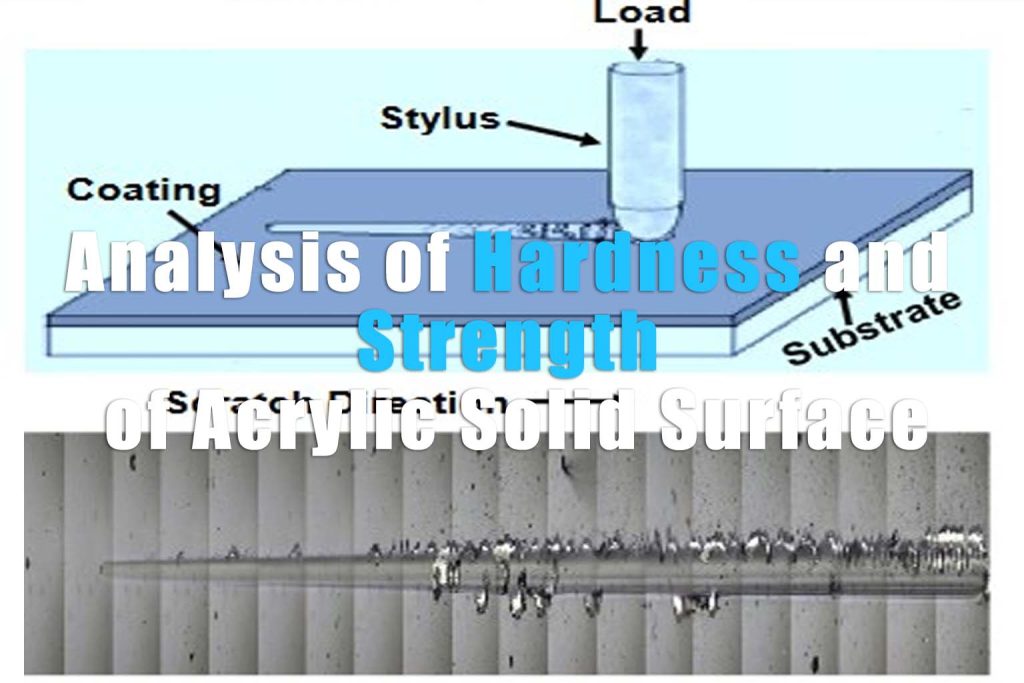
For detailed discussion of hardness, toughness, wear resistance, and scratch-related performance, see our technical companion guide.
Read Hardness & Wear Resistance Guide
Fabrication Performance Matters as Much as Raw Material Strength
For architects and fabricators, mechanical performance must be evaluated together with fabrication behavior.
Acrylic solid surface is widely chosen because it combines mechanical reliability with:
- thermoforming capability
- seamless joint fabrication
- CNC machinability
- repairability
- custom edge detailing
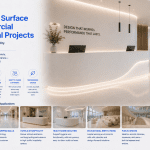
Typical Commercial Applications
- reception desks
- healthcare worktops
- commercial vanities
- hospitality counters
- retail service surfaces
- architectural feature fabrication
- wall cladding elements
Why Acrylic Solid Surface Remains a Preferred Architectural Material
- balanced strength and workability
- excellent fabrication flexibility
- repairability
- commercial durability
- clean architectural appearance
- consistent engineered performance
FAQ
Is acrylic solid surface mechanically strong?
Yes. Acrylic solid surface offers dependable mechanical performance for interior architectural and commercial applications when correctly designed, fabricated, and installed.
Can acrylic solid surface crack?
Like all engineered materials, improper support design, poor fabrication, excessive point loading, or installation stress can create failure risk.
Is acrylic solid surface impact resistant?
It provides practical resilience for commercial interiors, though performance depends on design details and application conditions.
Talk to ACRION About Architectural Solid Surface Solutions
ACRION supports architects, fabricators, distributors, and project buyers with architectural acrylic solid surface solutions engineered for commercial applications.