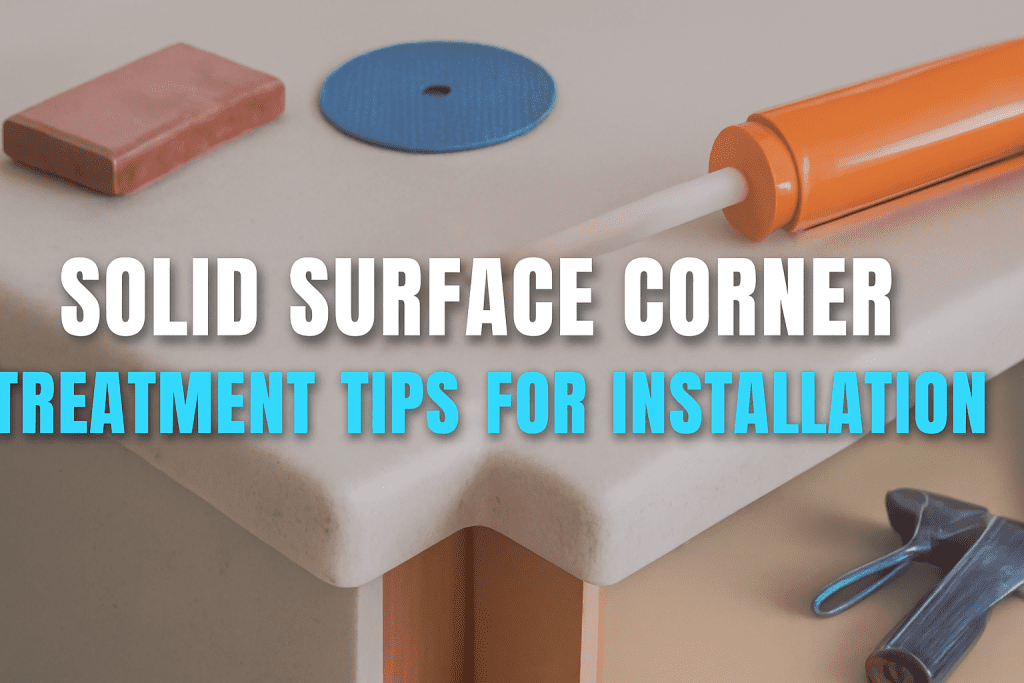
O detalhamento de cantos é um dos aspectos mais críticos da fabricação de superfícies sólidas acrílicas. Um projeto de canto deficiente pode criar concentração de tensão, aumentar o risco de trincas, enfraquecer a durabilidade estrutural e reduzir o desempenho a longo prazo em aplicações comerciais.
Seja para balcões de recepção, sistemas de toucador, bancadas de saúde, móveis personalizados ou instalações arquitetônicas, a engenharia adequada de cantos é essencial para a fabricação confiável de superfícies sólidas.
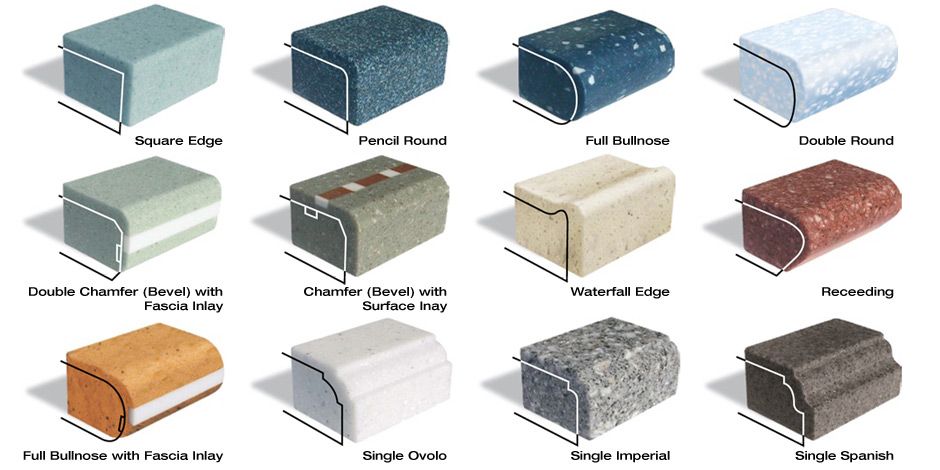
Por que o design de cantos é importante na fabricação de superfícies sólidas
A superfície sólida acrílica oferece fabricação perfeita e flexibilidade de termoformação, mas, como todos os materiais de engenharia, o detalhamento deficiente pode criar pontos de tensão mecânica.
O problema mais comum ocorre quando cantos internos afiados criam zonas de tensão concentrada que podem eventualmente levar a rachaduras sob carga, movimento, mudança térmica ou uso prolongado.
O risco central: concentração de estresse
Cantos internos agudos atuam como elevadores de tensão.
Quando força, vibração, movimento térmico ou carga estrutural são aplicados, a tensão se acumula nesses pontos em vez de se distribuir uniformemente pelo componente fabricado.
É por isso que cantos internos mal fabricados estão entre os pontos de início de trincas mais comuns em aplicações de superfícies sólidas.
1. Design do raio do canto interno
Cantos internos agudos de 90 graus devem ser evitados sempre que possível.
A prática recomendada inclui a introdução de uma transição de raio suave para distribuir a tensão de forma mais eficaz.
- Melhora a resistência a rachaduras
- Reduz a concentração de estresse
- Melhora a durabilidade da fabricação
- Cria transições visuais mais limpas
Este princípio é especialmente importante em recortes de pias, cantos internos de bancadas e designs geométricos personalizados.
2. Proteção de canto recortado para pia
Os recortes de pia são zonas de alto risco porque combinam interrupção estrutural, exposição à umidade e estresse mecânico repetido.
As melhores práticas incluem:
- Cantos de recorte interno arredondados
- Acabamento CNC suave
- Evitando defeitos iniciais de microfissuras
- Reforço adequado quando necessário
O detalhamento deficiente do canto da pia geralmente se torna o ponto de partida para futuras rachaduras.
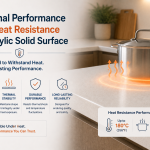
3. Cooktop e zonas de exposição ao calor
Recortes próximos a aparelhos de cozinha requerem atenção adicional de engenharia.
Essas áreas experimentam:
- Ciclismo térmico
- Tensão de carga mecânica
- Expansão e contração de materiais
O detalhamento dos cantos deve reduzir a tensão concentrada, mantendo ao mesmo tempo a folga segura e a estabilidade estrutural.
4. Aplicações de canto termoformado
Uma vantagem da superfície sólida acrílica é a flexibilidade da termoformação.
Isso permite curvas contínuas suaves para:
- Balcões de recepção
- Contadores curvos
- Móveis personalizados
- Transições de parede arquitetônica
No entanto, a qualidade da termoformação depende de parâmetros de fabricação controlados, incluindo consistência de aquecimento, desenho do raio, estabilidade de resfriamento e compatibilidade de materiais.
Práticas inadequadas de termoformação podem criar estresse interno oculto.
5. Durabilidade do canto externo
Os cantos externos expostos enfrentam risco de impacto durante o uso normal.
Considerações recomendadas:
- Perfis arredondados quando apropriado
- Geometria de aresta controlada
- Detalhamento sensível ao impacto
- Consistência de acabamento adequada
Isto é particularmente relevante em hospitalidade, varejo e ambientes públicos.
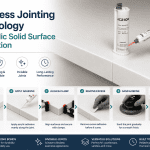
6. Colocação da costura perto dos cantos
O posicionamento da costura pode afetar significativamente o desempenho a longo prazo.
As melhores práticas geralmente evitam colocar costuras diretamente em zonas de canto de alta tensão sempre que o layout permitir.
O planejamento adequado da costura melhora a confiabilidade estrutural e a consistência visual.
7. Estratégia de Reforço
Algumas aplicações de canto requerem reforço adicional dependendo do vão, da geometria do recorte e das condições de uso.
Os exemplos incluem:
- Zonas de afundamento
- Áreas de fogão
- Aplicativos suspensos
- Transições longas e sem suporte
Lista de verificação de design de canto rápido
| Área de projeto | Melhores Práticas |
|---|---|
| Cantos internos | Use transições de raio suaves |
| Recortes de pia | Evite cantos afiados |
| Zonas de fogão | Considere o gerenciamento do estresse térmico |
| Cantos termoformados | Processo de fabricação controlado |
| Bordas externas | Melhore a durabilidade do impacto |
| Costuras | Evite posicionamento de alto estresse |
| Reforço | Adicione onde for estruturalmente necessário |
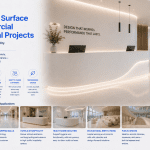
Aplicações onde a engenharia de canto é mais importante
- Balcões de recepção
- Sistemas de vaidade para hotéis
- Bancadas de saúde
- Estações de lavagem comerciais
- Balcões de varejo
- Móveis personalizados
- Instalações arquitetônicas de superfície sólida
Perguntas frequentes
Por que as rachaduras em superfícies sólidas geralmente começam nos cantos?
Cantos agudos criam pontos de tensão concentrados que podem se tornar zonas de início de trincas sob carga ou movimento térmico.
A termoformação pode eliminar o risco de rachaduras nos cantos?
A termoformação pode melhorar a continuidade dos cantos, mas o controle deficiente do processo ainda pode criar problemas de tensão interna.
Os cantos arredondados são sempre melhores?
Na maioria das aplicações internas de alta tensão, as transições arredondadas melhoram a distribuição de tensão e a durabilidade.
Considerações Finais
A fabricação bem-sucedida de superfícies sólidas acrílicas depende não apenas da qualidade do material, mas também de detalhes de engenharia disciplinados, como projeto de canto, planejamento de costura e gerenciamento de tensão.
A ACRION desenvolve materiais arquitetônicos de superfície sólida projetados para confiabilidade de fabricação, aplicações perfeitas e projetos comerciais exigentes.