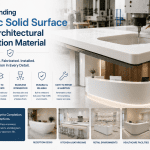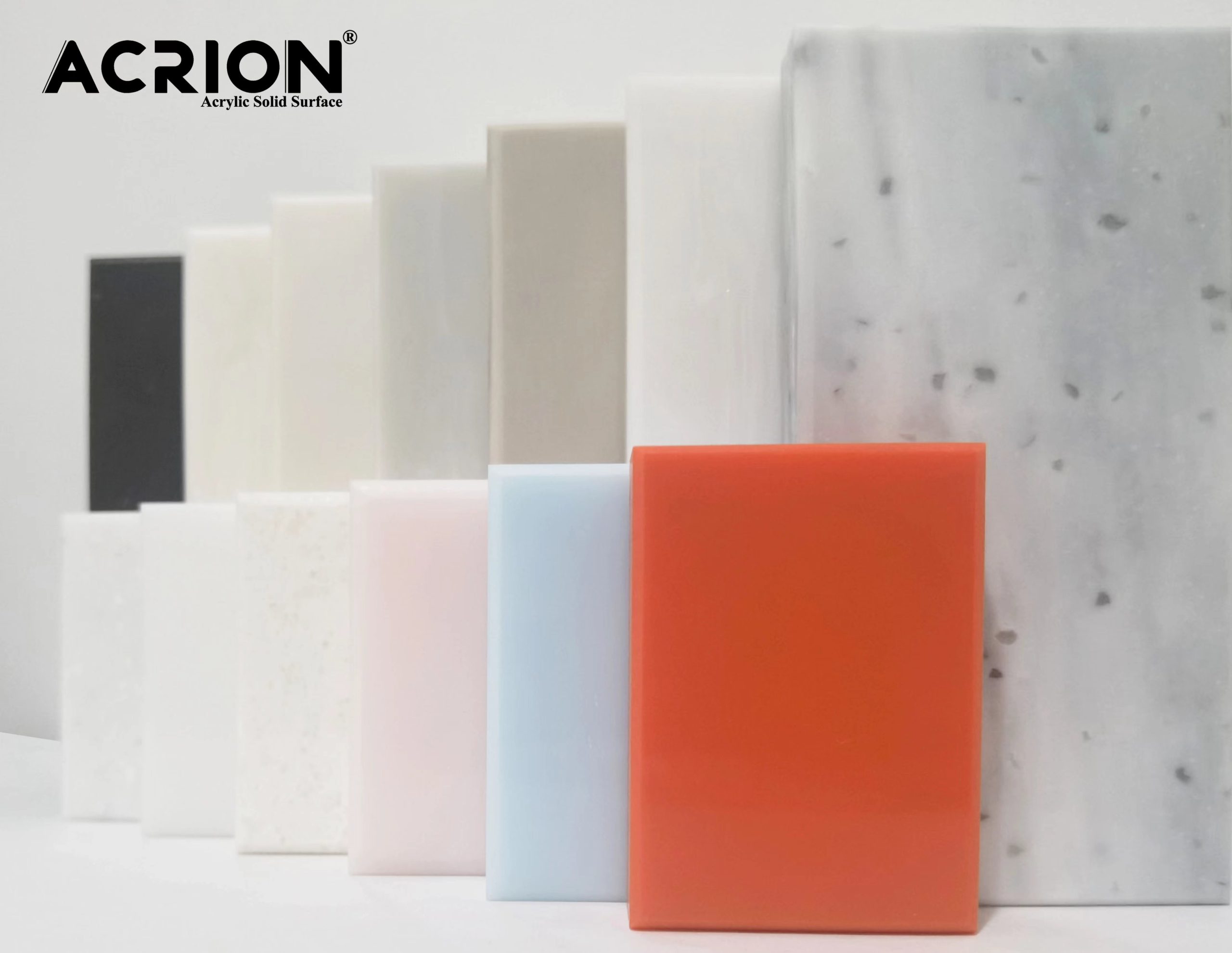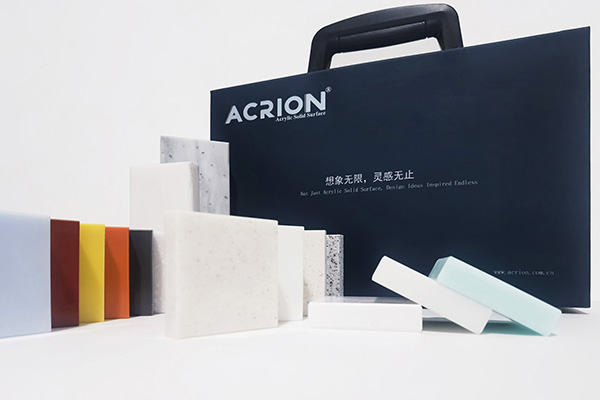
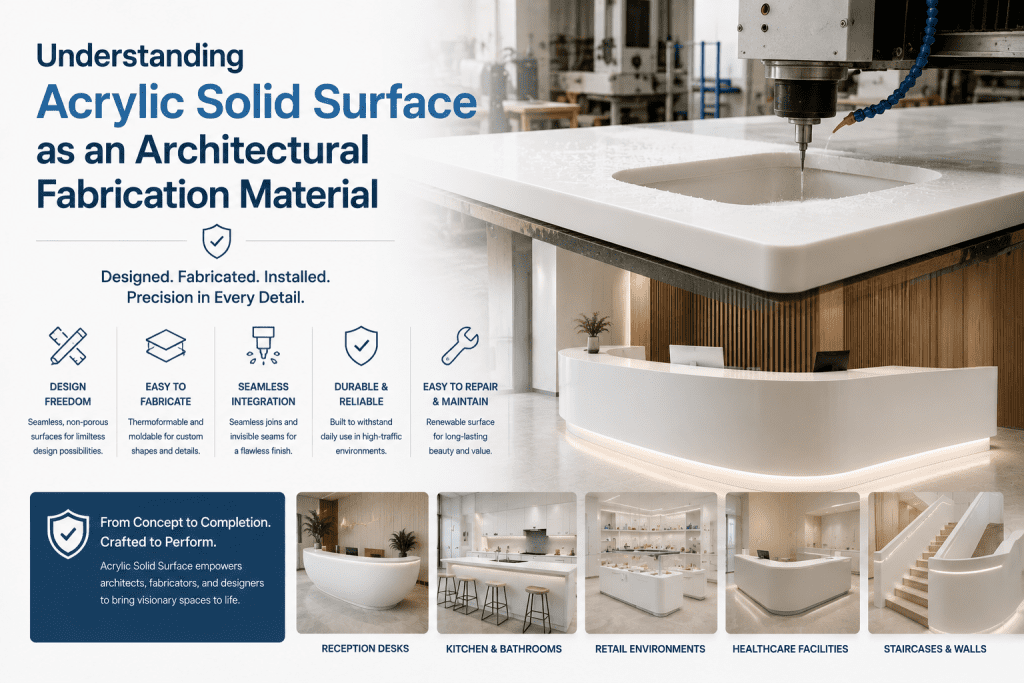
A superfície sólida acrílica continua sendo um dos materiais de fabricação mais versáteis usados na moderna arquitetura de interiores comerciais, instalações de saúde, projetos de hospitalidade, sistemas de varejo e aplicações arquitetônicas personalizadas em todo o mundo.
Como fabricante profissional de superfícies sólidas acrílicas com mais de 20 anos de experiência em fabricação e projetos, a ACRION entende que o valor real da superfície sólida acrílica vai muito além das aplicações tradicionais de bancada.
Sua importância na arquitetura moderna vem da combinação de capacidade de fabricação contínua, flexibilidade de termoformação, tecnologia de superfície renovável e potencial integrado de fabricação personalizada.
Este artigo explica por que a superfície sólida acrílica continua a ser altamente relevante em design de interiores comerciais e sistemas de fabricação arquitetônica.
O que é superfície sólida acrílica?
A superfície sólida acrílica é um material de engenharia homogêneo normalmente fabricado com sistemas de resina acrílica combinados com cargas minerais e pigmentos.
Ao contrário dos materiais decorativos em camadas, a superfície sólida acrílica mantém estrutura e cor relativamente consistentes em toda a espessura do material.
Esta estrutura homogênea suporta:
- Fabricação perfeita
- Renovabilidade de superfície
- Capacidade de termoformação
- Soluções integradas de fabricação
- Flexibilidade de manutenção a longo prazo
Por que a superfície sólida acrílica é diferente do quartzo e da pedra
Diferentes materiais arquitetônicos oferecem diferentes vantagens de desempenho dependendo da aplicação.
| Material | Força principal |
|---|---|
| Superfície sólida acrílica | Flexibilidade de fabricação e integração perfeita |
| Superfície de quartzo | Maior dureza superficial |
| Pedra Sinterizada | Excelente resistência ao calor e aos raios UV |
| Pedra Natural | Variação visual natural |
| Laminado | Menor custo inicial |
A vantagem exclusiva da superfície sólida acrílica não é a dureza extrema ou a resistência ao calor ultra-alta, mas sua capacidade de suportar fabricação personalizada e projeto arquitetônico integrado.
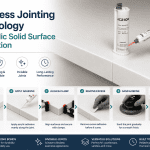
Capacidade de fabricação contínua
Uma das características definidoras da superfície sólida acrílica é a sua capacidade de fabricação contínua.
Usando métodos de fabricação profissionais e sistemas adesivos de cores correspondentes, múltiplas folhas podem ser integradas visualmente em superfícies arquitetônicas contínuas com juntas visíveis mínimas.
Esse recurso é especialmente valioso em:
- Ambientes de saúde
- Balcões de recepção comercial
- Interiores de hospitalidade
- Sistemas de vaidade integrados
- Instalações arquitetônicas de varejo
- Projetos de interiores públicos
A fabricação perfeita melhora a continuidade visual, simplifica a limpeza e apoia a estética arquitetônica minimalista moderna.
Flexibilidade de termoformação e design curvo
Ao contrário de muitos materiais de superfície arquitetônica rígida, a superfície sólida acrílica pode ser termoformada em curvas personalizadas e geometrias complexas sob condições controladas de fabricação.
Isso permite que fabricantes e designers criem:
- Balcões de recepção curvos
- Balcões comerciais orgânicos
- Sistemas de parede integrados
- Estações de trabalho de saúde personalizadas
- Sistemas de exibição de varejo
- Elementos arquitetônicos retroiluminados
A combinação de termoformação e união perfeita proporciona à superfície sólida acrílica flexibilidade significativa de design para interiores arquitetônicos personalizados.
Tecnologia de Superfícies Renováveis
Como a superfície sólida acrílica é um material homogêneo, pequenos danos superficiais podem muitas vezes ser reparados através de procedimentos de retoque.
Os métodos típicos de restauração e manutenção podem incluir:
- Lixamento profissional
- Acabamento de superfície
- Procedimentos de polimento
- Trabalho de reparo localizado
Esta capacidade de superfície renovável ajuda a prolongar a vida útil e a manter a consistência da aparência a longo prazo em ambientes comerciais.
Fabricação integrada de pia e lavatório
A superfície sólida acrílica suporta sistemas integrados de fabricação de pias e bacias que criam superfícies visualmente contínuas sem lacunas de transição expostas.
Esta abordagem de fabricação integrada melhora:
- Continuidade visual
- Facilidade de limpeza
- Eficiência de manutenção
- Integração de design de interiores
- Aparência arquitetônica moderna
A fabricação integrada é amplamente utilizada em aplicações de hospitalidade, saúde e banheiros comerciais.
Características de superfície não porosa e higiênica
A superfície sólida acrílica é amplamente reconhecida por suas características de superfície não porosa e fácil de limpar.
Sua estrutura não porosa ajuda a reduzir a penetração de líquidos e facilita a manutenção em condições normais de uso.
Combinado com a capacidade de fabricação contínua, isso torna a superfície sólida acrílica altamente adequada para:
- Hospitais e clínicas
- Banheiros comerciais
- Interiores de hospitalidade
- Áreas de preparação de alimentos
- Ambientes de varejo
Suas vantagens higiênicas estão principalmente relacionadas à facilidade de limpeza e à engenharia de superfície contínua, em vez da química antibacteriana ativa.
Aplicações além das bancadas tradicionais
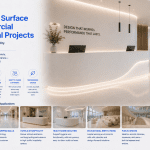
Hoje, a superfície sólida acrílica é amplamente utilizada em uma ampla gama de aplicações de fabricação arquitetônica e comercial, além das bancadas tradicionais.
- Balcões de recepção
- Sistemas de revestimento de parede
- Luminárias de varejo
- Bancadas de saúde
- Sistemas comerciais de vaidade
- Interiores de restaurantes
- Instalações arquitetônicas públicas
- Sistemas decorativos retroiluminados
Sua flexibilidade de fabricação permite que os designers criem sistemas interiores personalizados com funcionalidade integrada e geometria complexa.
Considerações e limitações importantes
Como todos os materiais arquitetônicos, a superfície sólida acrílica também possui limitações de aplicação que devem ser devidamente compreendidas.
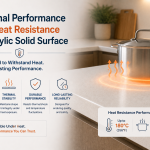
- Panelas quentes diretamente não devem ser colocadas na superfície sem proteção
- Objetos pontiagudos podem riscar o material
- Cores mais escuras podem mostrar riscos mais visivelmente
- A exposição prolongada aos raios UV ao ar livre depende da formulação e das condições climáticas
A fabricação, instalação e manutenção adequadas continuam importantes para o desempenho a longo prazo.
Por que a superfície sólida acrílica continua relevante
Apesar da crescente concorrência do quartzo, porcelana e outros materiais de engenharia, a superfície sólida acrílica continua a ser altamente relevante devido à sua versatilidade de fabricação incomparável.
Sua capacidade de combinar:
- União perfeita
- Flexibilidade de termoformação
- Reparabilidade
- Fabricação integrada
- Personalização arquitetônica
torna-o um dos materiais mais adaptáveis para a moderna arquitetura de interiores comerciais.
Conclusão
A superfície sólida acrílica continua sendo um dos materiais de fabricação arquitetônica mais versáteis porque combina fabricação contínua, flexibilidade de termoformação, tecnologia de superfície renovável e desempenho de superfície higiênica em um único sistema de fabricação integrado.
Seu valor vai muito além das aplicações tradicionais de bancada, abrangendo cuidados de saúde, hotelaria, varejo, interiores comerciais e ambientes arquitetônicos personalizados.
Na ACRION, continuamos a desenvolver soluções de superfícies sólidas acrílicas projetadas para fabricação arquitetônica, flexibilidade de design e durabilidade comercial de longo prazo em todo o mundo.