Os espaços de hospitalidade ao ar livre e terraços utilizam cada vez mais materiais de bancada modernos que combinam durabilidade, estética limpa e flexibilidade de fabricação. A superfície sólida acrílica às vezes é usada em aplicações de bancadas externas cobertas devido à sua aparência perfeita e desempenho não poroso.
No entanto, as condições de uso externo exigem uma consideração cuidadosa da exposição aos raios UV, seleção de cores, estrutura de instalação e desempenho ambiental a longo prazo. Compreender esses fatores é importante ao especificar uma superfície sólida acrílica para projetos de terraços externos.
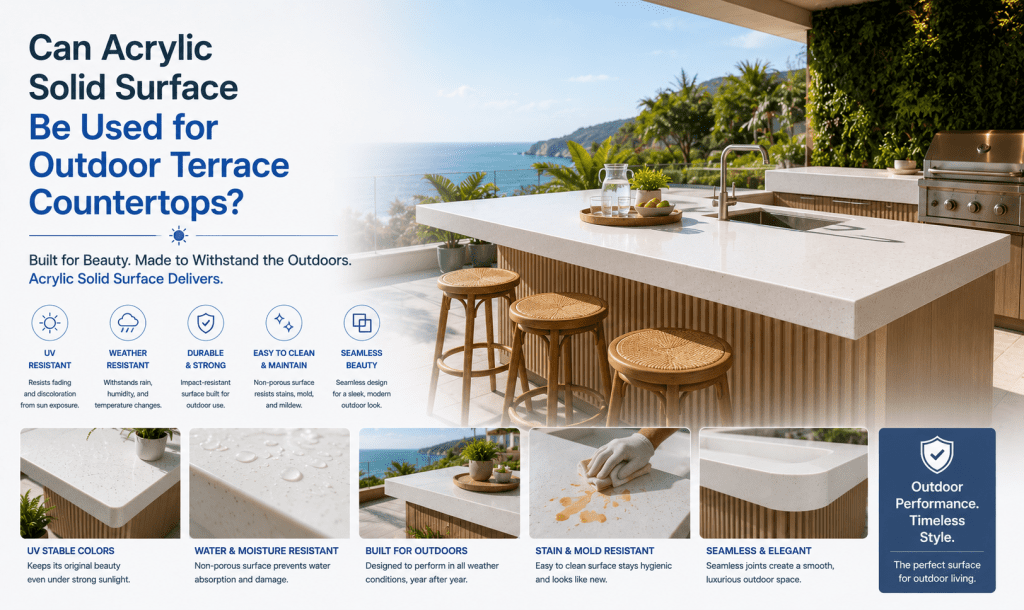
A superfície sólida acrílica pode ser usada ao ar livre?
A superfície sólida acrílica pode ser usada em certas aplicações cobertas ou semi-externas quando são seguidas considerações adequadas de projeto e instalação. As aplicações comuns incluem terraços de hotéis, balcões de cafés, espaços de hospitalidade em coberturas, balcões de recepção ao ar livre e áreas de estar comerciais sombreadas.
Ambientes externos totalmente expostos com luz solar direta contínua, variações extremas de temperatura e exposição climática de longo prazo exigem uma avaliação mais cuidadosa dependendo da formulação específica do material e das condições do projeto.
Aplicações externas cobertas versus exposição total ao sol
Ambientes externos cobertos geralmente fornecem condições mais estáveis para bancadas de superfície sólida acrílica. Os espaços sombreados do terraço ajudam a reduzir a exposição direta aos raios UV, o acúmulo excessivo de calor na superfície e o envelhecimento da cor a longo prazo.
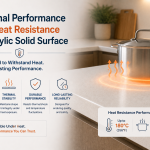
Em contraste, instalações externas totalmente expostas podem sofrer expansão térmica mais forte, aumento da temperatura da superfície e mudança acelerada de cor ao longo do tempo, especialmente em regiões com intensa exposição solar.
Por que as cores claras têm melhor desempenho em exteriores
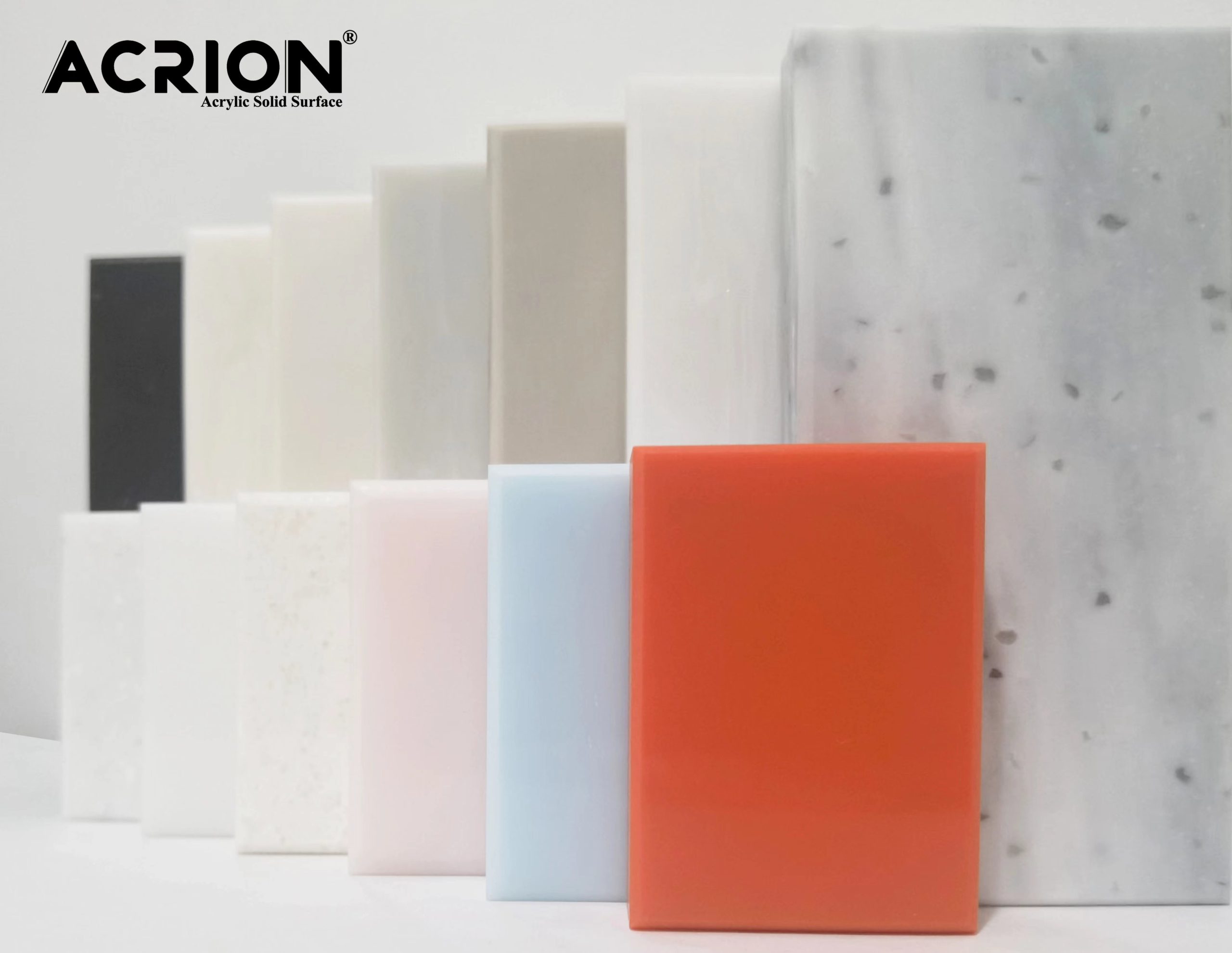
Os materiais de superfície sólida acrílica de cor clara são geralmente mais adequados para aplicações em terraços externos porque absorvem menos calor sob a exposição solar. Tons de branco, bege, cinza claro e areia suave são comumente preferidos em projetos de hotelaria.
Cores mais escuras podem absorver significativamente mais calor sob a luz solar direta, o que pode aumentar o movimento térmico e a temperatura da superfície. A seleção do material deve, portanto, considerar as condições climáticas locais e a intensidade da exposição.
Expansão térmica e considerações de instalação
As instalações de bancadas externas requerem estrutura de suporte adequada e planejamento de expansão. As flutuações de temperatura podem causar movimento do material, especialmente em bancadas longas ou em ambientes com luz solar direta.
Métodos profissionais de fabricação e instalação ajudam a reduzir a concentração de tensão em torno de costuras, recortes, aberturas de pia e pontos de suporte.
Design perfeito para espaços de terraço de hospitalidade
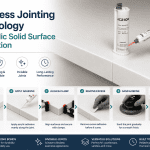
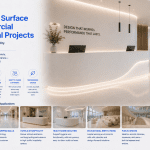
Uma das principais vantagens da superfície sólida acrílica é a fabricação perfeita. Balcões de bar em terraços, bancadas de cafés, balcões de recepção externos e áreas de serviço integradas podem ser fabricados com continuidade visual suave e juntas visíveis mínimas.
Esta aparência perfeita suporta conceitos modernos de design de hospitalidade, ao mesmo tempo que simplifica a limpeza e manutenção de rotina.
Expectativas de manutenção para bancadas externas
Como a maioria dos materiais de revestimento arquitetônico, o desempenho da bancada externa depende das condições de exposição e da manutenção regular. A limpeza de rotina, o sombreamento adequado e a inspeção periódica ajudam a manter a aparência e a usabilidade da superfície a longo prazo.
Pequenos arranhões ou desgaste superficial também podem ser renováveis através de procedimentos de lixamento e retoque quando os padrões de fabricação apropriados forem seguidos.
Conclusão
A superfície sólida acrílica pode ser uma solução adequada para aplicações selecionadas de bancadas de terraços externos cobertos quando a exposição ambiental, a seleção de cores e as condições de instalação são devidamente consideradas.
Sua capacidade de fabricação contínua, aparência moderna e flexibilidade de fabricação o tornam particularmente adequado para terraços de hospitalidade, balcões de cafés, lounges em coberturas e ambientes comerciais semi-externos.