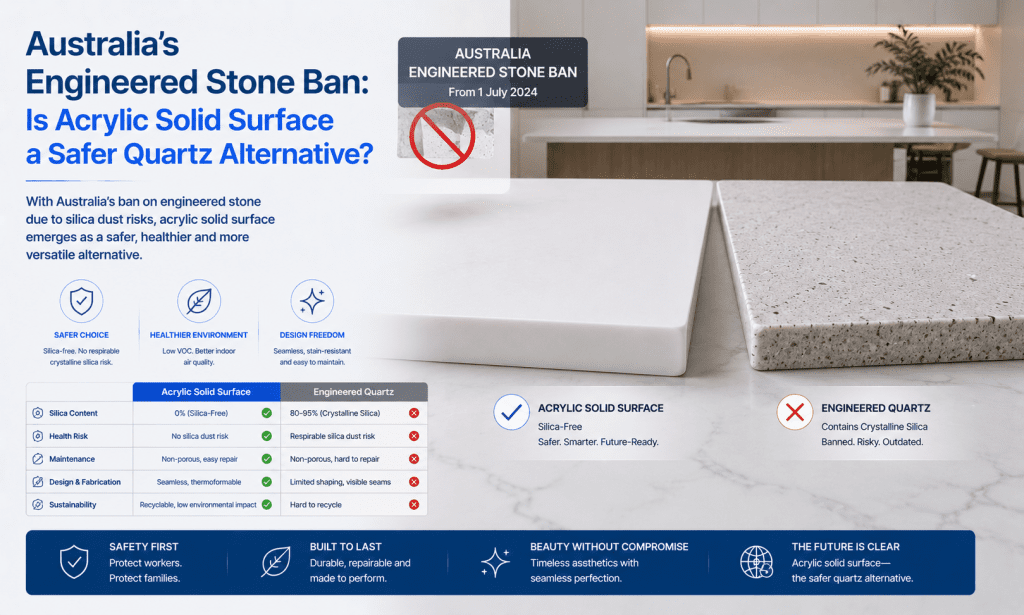
A proibição de pedras projetadas na Austrália tornou-se uma das mudanças regulatórias mais importantes na indústria global de bancadas e revestimentos arquitetônicos. Forçou fabricantes, construtores, distribuidores, projetistas e proprietários de projetos a reconsiderar as escolhas de materiais para bancadas, painéis, lajes e aplicações de superfícies comerciais.
Por muitos anos, superfícies projetadas de pedra e quartzo foram amplamente utilizadas em cozinhas, banheiros e interiores comerciais devido à sua aparência de pedra, dureza e forte aceitação no mercado. No entanto, os riscos para a saúde associados ao pó de sílica cristalina respirável durante o corte, retificação, perfuração e polimento mudaram a discussão em torno da seleção do material de superfície.
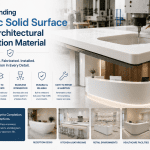
A superfície sólida acrílica agora está sendo considerada por muitos compradores como um dos vários materiais de superfície alternativos porque não é um material de pedra projetada à base de quartzo e oferece comportamento de fabricação diferente, capacidade de design contínuo, fabricação de pia integrada e desempenho de superfície reparável.
Proibição de pedras projetadas na Austrália: o que mudou?
A Austrália introduziu uma proibição nacional de bancadas, painéis e lajes de pedra artificial. A partir de 1º de julho de 2024, o uso, fornecimento e fabricação de bancadas, painéis e lajes de pedra artificial foram proibidos em toda a Austrália sob medidas de saúde e segurança no trabalho.
A partir de 1º de janeiro de 2025, bancadas, painéis e lajes de pedra artificial também passaram a ser importações proibidas para a Austrália. Isto significa que a mudança regulatória afeta não apenas a fabricação e instalação local, mas também as cadeias de abastecimento internacionais que atendem o mercado australiano.
A proibição criou uma forte demanda por materiais de superfície alternativos que possam suportar aplicações em bancadas, banheiros, comerciais e arquitetônicas, ao mesmo tempo em que reduzem a dependência de pedras projetadas à base de quartzo.
Por que a silicose se tornou uma grande preocupação da indústria
A silicose é uma doença pulmonar grave associada à exposição ao pó de sílica cristalina respirável. Na fabricação de pedras projetadas, os trabalhadores podem ser expostos a finas partículas de sílica cristalina quando as placas são cortadas, retificadas, perfuradas ou polidas sem sistemas adequados de controle de poeira.
A preocupação não é simplesmente a superfície acabada em uso normal. O principal risco para a saúde ocupacional está relacionado às atividades de fabricação e processamento que geram poeira de sílica cristalina respirável no ar.
Esta distinção é importante. A seleção de materiais deve considerar não apenas a aparência de uma superfície após a instalação, mas também como ela é fabricada, processada, instalada, reparada e mantida pelos trabalhadores durante todo o ciclo de vida do produto.
Pedra projetada vs superfície sólida acrílica: diferença de material
A pedra projetada, comumente conhecida como superfície de quartzo, é normalmente fabricada pela combinação de quartzo ou outras partículas de pedra com ligantes de resina e pigmentos. Como o quartzo é uma forma de sílica cristalina, o processamento da pedra artificial pode criar pó de sílica cristalina respirável.
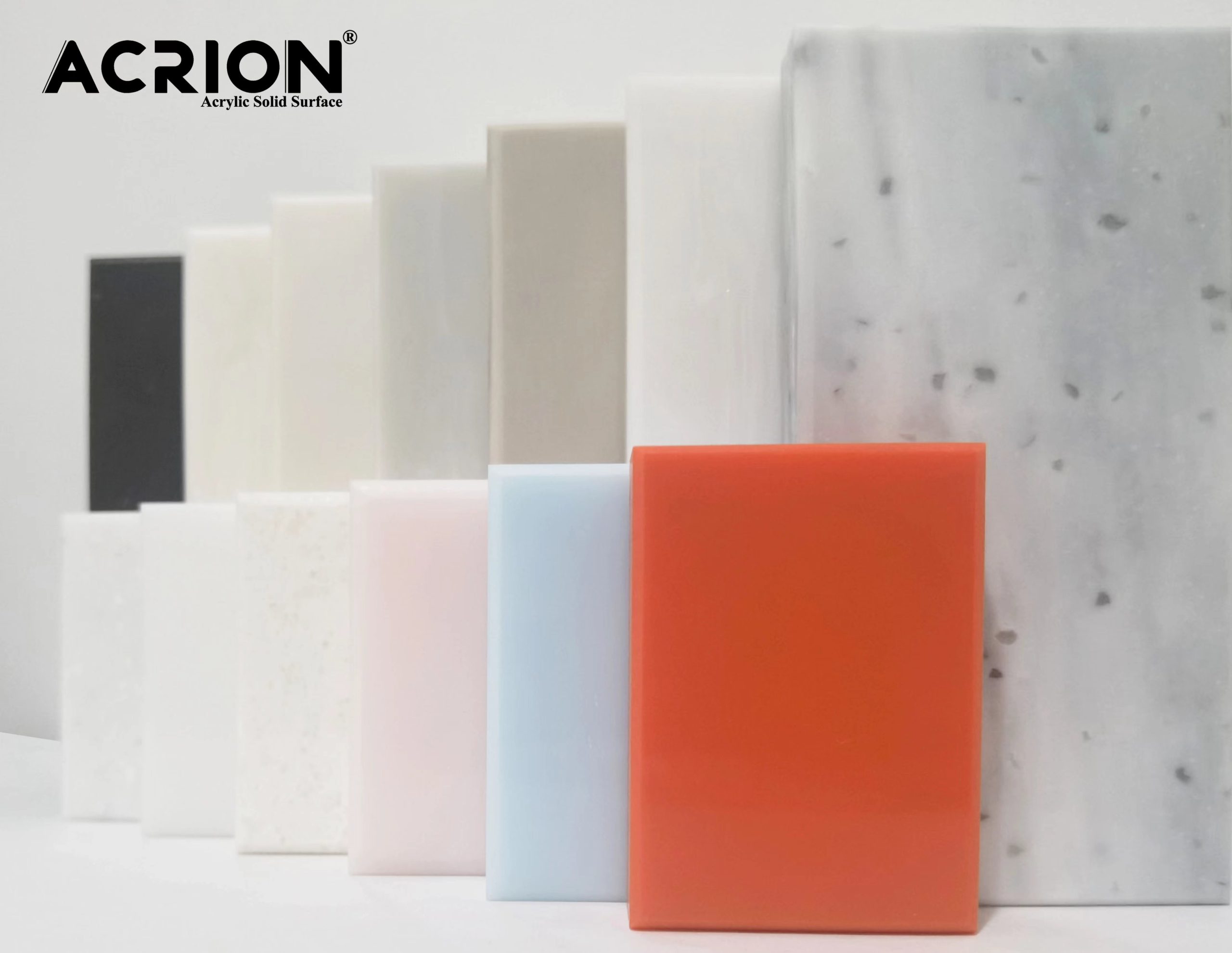
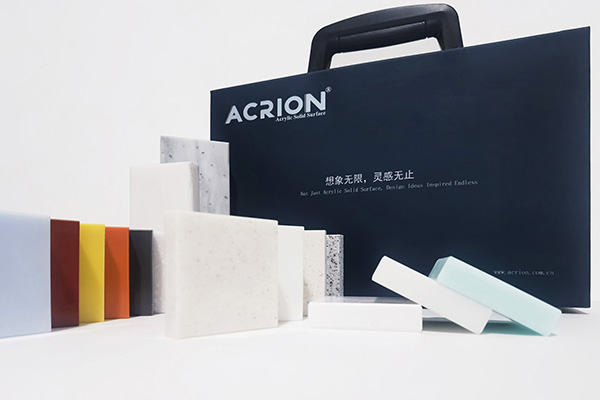
A superfície sólida acrílica é um tipo diferente de material de superfície. É comumente fabricado com resina acrílica e cargas minerais e é projetado para fabricação contínua, termoformagem, sistemas de pia integrados e aplicações arquitetônicas reparáveis.
A superfície sólida acrílica não é um material de pedra projetada à base de quartzo. Isto proporciona um perfil de exposição ocupacional à poeira diferente em comparação com a pedra artificial. No entanto, não deve ser descrito como totalmente isento de riscos. A fabricação ainda requer coleta adequada de poeira, ventilação, equipamento de proteção individual e procedimentos de trabalho seguros.
| Área de comparação | Pedra projetada / Quartzo | Superfície sólida acrílica |
|---|---|---|
| Sistema de Materiais | Partículas de quartzo ou pedra com aglutinante de resina | Resina acrílica com cargas minerais |
| Preocupação com Sílica Cristalina | Alta preocupação durante o processamento | Não é pedra projetada à base de quartzo |
| Fabricação perfeita | Limitado; costuras visíveis são comuns | Excelente; juntas imperceptíveis possíveis |
| Fabricação de pia integrada | Limitado | Excelente |
| Termoformagem | Não | Sim |
| Reparabilidade | Difícil uma vez lascado ou danificado | Renovável através de lixamento e retoque |
| Resistência a arranhões | Forte | Moderado |
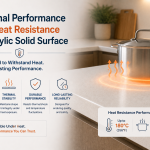
| Resistência ao Calor | Geralmente mais alto | Moderado |
A superfície sólida acrílica é uma alternativa ao quartzo?
A superfície sólida acrílica pode ser considerada um dos materiais alternativos para projetos que precisam reduzir a dependência de pedras projetadas à base de quartzo, especialmente onde a fabricação contínua, pias integradas, capacidade de reparo e sistemas de superfície higiênicos são importantes.
Não é um substituto direto do quartzo em todas as aplicações. O quartzo tem vantagens em resistência a arranhões, dureza, resistência ao calor e profundidade visual semelhante à pedra. A superfície sólida acrílica tem vantagens na fabricação contínua, termoformação, capacidade de reparo, sistemas de pia integrados e flexibilidade arquitetônica comercial.
A questão correta não é se um material é universalmente melhor. A questão correta é qual material se adapta melhor aos requisitos de fabricação do projeto, às prioridades de segurança, ao ambiente de aplicação e às expectativas de manutenção a longo prazo.
Segurança de fabricação: o que ainda precisa de atenção
Embora a superfície sólida acrílica não seja um material de pedra artificial à base de quartzo, a segurança na fabricação profissional continua essencial. Cortar, lixar, fresar e polir qualquer material de superfície pode gerar poeira e exigir controles adequados no local de trabalho.
Os fabricantes devem usar sistemas de extração de poeira, ventilação adequada, proteção respiratória adequada, proteção para os olhos, manuseio seguro de ferramentas e procedimentos de oficina limpos. O processamento úmido ou sistemas de vácuo eficazes também podem ser necessários, dependendo das regulamentações locais de segurança no local de trabalho e dos métodos de fabricação.
Um fornecedor de material responsável deve evitar sugerir que qualquer material de fabricação esteja completamente livre de poeira ou risco no local de trabalho. A posição mais profissional é que a superfície sólida acrílica oferece uma preocupação diferente e menor relacionada à sílica cristalina em comparação com a pedra projetada à base de quartzo, embora ainda exija um gerenciamento adequado de segurança de fabricação.
Onde a superfície sólida acrílica faz sentido após a proibição
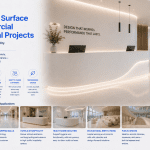
Após a proibição de pedras projetadas na Austrália, a superfície sólida acrílica pode ser adequada para diversas aplicações comerciais e de bancada, onde projetistas e fabricantes precisam de materiais de superfície alternativos com forte flexibilidade de fabricação.
| Aplicativo | Por que a superfície sólida acrílica se encaixa |
|---|---|
| Bancadas de cozinha | Juntas perfeitas, capacidade de reparo, opções de pia integradas |
| Vaidades de banheiro | Superfícies não porosas e fabricação de bacia integrada |
| Balcões de saúde | Sistemas de superfícies higiênicas perfeitas |
| Recepção de Hospitalidade | Termoformagem, balcões curvos, integração de marca |
| Estações de lavagem pública | Pias integradas e manutenção mais fácil |
| Balcões de atendimento comercial | Superfícies reparáveis para interiores de alto tráfego |
| Espaços Laboratoriais e Educacionais | Integração perfeita entre bancadas e estações de lavagem |
| Revestimento de parede e superfícies características | Sistemas de superfície interior contínua e geometria termoformada |
Por que a fabricação contínua é importante
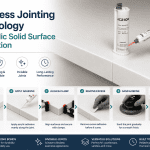
Uma das principais razões pelas quais a superfície sólida acrílica é considerada para ambientes comerciais e de saúde é a sua capacidade de fabricação contínua. Juntas imperceptíveis, pias integradas, backsplashes arredondados e transições contínuas de superfície podem reduzir lacunas visíveis e simplificar os procedimentos de limpeza.
Isto torna a superfície sólida acrílica especialmente útil em aplicações onde a higiene, a manutenção e a continuidade visual são importantes, como interiores de cuidados de saúde, estações de lavagem públicas, balcões de hospitalidade, espaços de bem-estar e sistemas de recepção comercial.
Limitações: onde o quartzo e outros materiais ainda têm pontos fortes
A superfície sólida acrílica não deve ser apresentada como a única alternativa à pedra artificial. Outros materiais, incluindo pedra natural, porcelanato, pedra sinterizada, aço inoxidável, laminado, madeira e superfícies compactas, também podem ser considerados dependendo dos requisitos do projeto.
O quartzo e a pedra projetada tornaram-se populares em parte devido à sua dureza, resistência a arranhões, resistência ao calor e aparência de pedra. Superfícies de pedra sinterizada e porcelana também oferecem forte resistência ao calor e estabilidade UV em certas aplicações.
A superfície sólida acrílica é mais forte quando os projetos exigem fabricação contínua, termoformação, pias integradas, capacidade de reparo e sistemas de superfície arquitetônica higiênica. A seleção de materiais deve sempre basear-se em prioridades específicas do projeto, em vez de uma simples classificação de materiais.
O que fabricantes e compradores devem avaliar
Antes de selecionar uma alternativa de pedra artificial, os fabricantes, distribuidores e compradores do projeto devem avaliar o material tanto do ponto de vista do design quanto da segurança no local de trabalho.
| Área de Avaliação | Perguntas-chave |
|---|---|
| Composição de materiais | O material é à base de quartzo, acrílico, cerâmica ou pedra natural? |
| Poeira de Fabricação | Que riscos de poeira são criados durante o corte, lixamento, perfuração e polimento? |
| Conformidade Regulatória | O material está em conformidade com as leis locais e os requisitos de segurança no local de trabalho? |
| Fabricação perfeita | O material pode suportar pias integradas e juntas imperceptíveis? |
| Manutenção | A superfície pode ser reparada, restaurada ou renovada após o uso? |
| Ajuste de aplicação | O material é adequado para interiores residenciais, de saúde, hotelaria ou públicos? |
| Confiabilidade de Fornecimento | O fornecedor pode oferecer suporte a amostras, documentação, prazo de entrega e coordenação de projetos? |
Perspectiva da ACRION
Do ponto de vista da ACRION, a proibição de pedras projetadas na Austrália reflete uma mudança mais ampla da indústria em direção a uma seleção de materiais de superfície mais seguros, melhor documentados e mais conscientes da fabricação.
A superfície sólida acrílica não deve ser promovida como um material milagroso ou um substituto universal para o quartzo. Em vez disso, deve ser entendido como um sistema de superfície arquitetônica orientado para a fabricação, com vantagens claras em design contínuo, pias integradas, termoformação, capacidade de reparo e aplicações comerciais higiênicas.
ACRION se concentra em materiais acrílicos de superfície sólida para cuidados de saúde, hotelaria, interiores públicos, bancadas residenciais, sistemas de recepção comercial, revestimento de paredes, aplicações em banheiros e projetos de fabricação arquitetônica personalizados.
Para os mercados que avaliam alternativas de quartzo, a ACRION fornece materiais acrílicos de superfície sólida projetados para fabricação integrada, aplicações arquitetônicas modernas e suporte de fabricação baseado em projetos na China.
Perguntas frequentes
Por que a Austrália proibiu a pedra artificial?
A Austrália introduziu a proibição devido a sérios problemas de saúde relacionados à exposição à sílica cristalina respirável durante o processamento de pedras artificiais. A proibição se aplica a bancadas, painéis e lajes de pedra projetada.
A superfície sólida acrílica é igual à pedra projetada?
Não. A superfície sólida acrílica não é um material de pedra artificial à base de quartzo. É comumente fabricado com resina acrílica e cargas minerais e possui diferentes características de fabricação.
A superfície sólida acrílica está completamente livre de poeira durante a fabricação?
Não. Cortar, lixar, fresar e polir superfícies sólidas de acrílico ainda pode gerar poeira. Ainda são necessários procedimentos adequados de extração de poeira, ventilação, EPI e fabricação segura.
A superfície sólida acrílica pode substituir as bancadas de quartzo?
A superfície sólida acrílica pode ser uma alternativa em projetos que priorizam a fabricação contínua, a capacidade de reparo, os coletores integrados e as preocupações relacionadas à sílica cristalina mais baixa. Não é um substituto direto para todas as aplicações de quartzo.
Onde a superfície sólida acrílica é mais adequada?
É amplamente utilizado em balcões de saúde, lavatórios públicos, balcões de recepção de hospitalidade, penteadeiras de banheiro, pias integradas, balcões comerciais, revestimento de paredes e bancadas residenciais.
Conclusão
A proibição de pedras projetadas na Austrália mudou a forma como fabricantes, construtores e compradores de projetos avaliam materiais de bancada e revestimento. A questão não é apenas aparência ou preço, mas também composição do material, risco de fabricação, segurança do trabalhador, conformidade regulatória e adequação do projeto a longo prazo.
A superfície sólida acrílica pode ser considerada uma das alternativas de sílica com baixo teor cristalino à pedra projetada à base de quartzo, especialmente em projetos que exigem fabricação contínua, pias integradas, capacidade de reparo e sistemas de superfície arquitetônica higiênica.
À medida que a indústria global de revestimentos continua a responder às preocupações com a saúde dos trabalhadores e às mudanças regulamentares, a superfície sólida acrílica continua a ser uma importante opção de material para arquitetos, fabricantes, distribuidores e proprietários de projetos que procuram alternativas orientadas para a fabricação para interiores modernos.