Em interiores comerciais, a higiene não é simplesmente uma preferência de manutenção – é um requisito de desempenho do material.
Ambientes de saúde, projetos de hospitalidade, balcões de varejo, sistemas de banheiros, balcões de recepção e interiores voltados para o público exigem superfícies fáceis de manter, visualmente duráveis e adequadas para limpeza frequente.
É por isso que a superfície sólida acrílica é amplamente especificada em aplicações arquitetônicas sensíveis à higiene.
Mas o que realmente torna um material de revestimento higiênico? É química antibacteriana? Estrutura de superfície? Facilidade de limpeza? Ou desempenho de manutenção a longo prazo?
Neste guia, explicamos as reais características de desempenho higiênico da superfície sólida acrílica a partir de uma perspectiva de especificação profissional.
O que significa desempenho higiênico em materiais de revestimento?
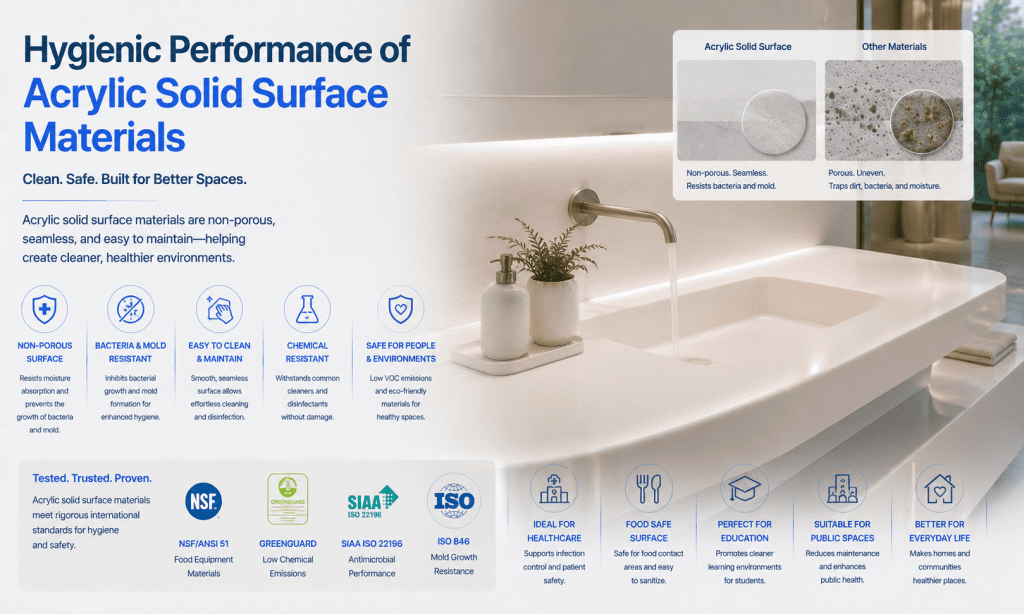
O desempenho higiênico é muitas vezes mal compreendido como desempenho “antibacteriano”. Na seleção profissional de materiais arquitetônicos, o conceito é mais amplo.
Um material de revestimento higiênico deve proporcionar ambientes mais limpos, seguros e fáceis de manter por meio de:
- Baixa porosidade superficial
- Facilidade de limpeza
- Resistência a manchas
- Compatibilidade com protocolos de limpeza de rotina
- Acúmulo mínimo de sujeira nas juntas
- Integridade da superfície a longo prazo
- Reparabilidade quando danificado
Para projetos comerciais, o desempenho higiênico é, portanto, uma combinação de design de material e comportamento prático de manutenção.
Por que a superfície sólida acrílica tem um bom desempenho em aplicações higiênicas
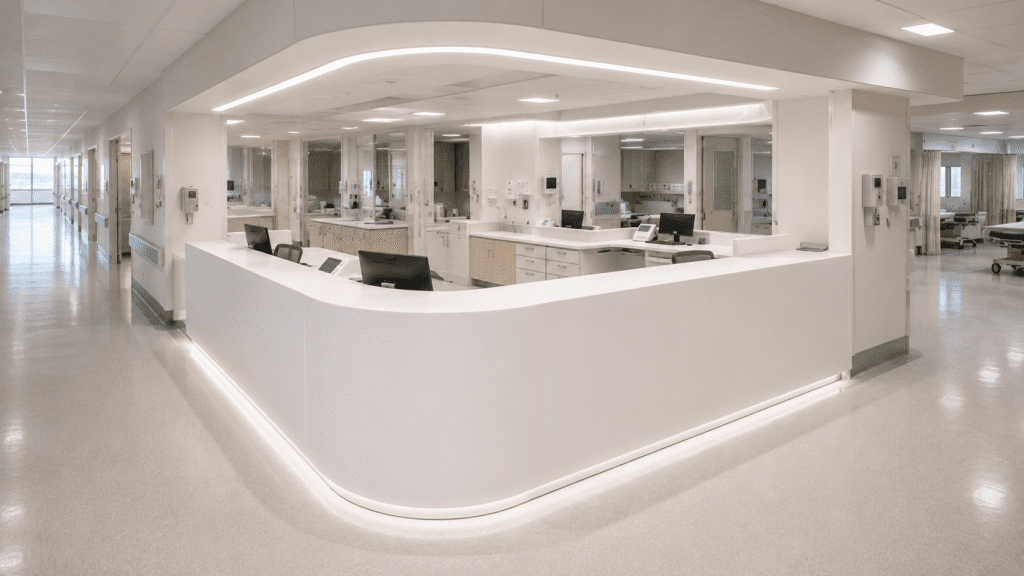
1. Estrutura de superfície não porosa
Uma das razões mais importantes pelas quais a superfície sólida acrílica é selecionada para aplicações sensíveis à higiene é sua estrutura de superfície densa e não porosa.
Ao contrário dos materiais decorativos porosos que podem reter umidade, resíduos ou contaminantes dentro dos microvazios, a superfície sólida acrílica adequadamente fabricada apresenta uma superfície projetada que pode ser limpa.
Isso ajuda a promover um saneamento mais fácil e ambientes de uso mais limpos a longo prazo.
2. Capacidade de fabricação contínua
A higiene material não se trata apenas de química – trata-se também de fabricação.
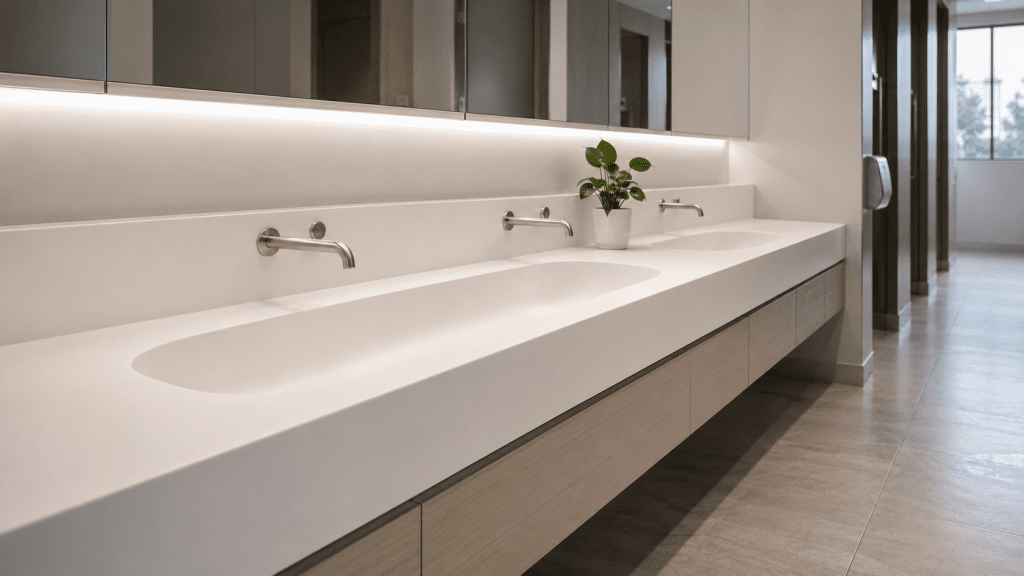
A superfície sólida acrílica pode ser fabricada com juntas perfeitas, reduzindo as lacunas visíveis onde sujeira, umidade e detritos podem se acumular.
Isso o torna especialmente valioso para:
- Balcões de saúde
- Balcões de recepção
- Vaidades de banheiro
- Balcões de atendimento comercial
- Interiores de hospitalidade
3. Limpeza de rotina fácil
Em ambientes comerciais reais, a higiene depende muito da capacidade dos funcionários de limpar as superfícies de forma eficiente e consistente.
A superfície sólida acrílica é valorizada porque a limpeza de rotina é simples com práticas de limpeza adequadas.
Isto é particularmente importante em espaços de utilização de alta frequência.
4. Resistência a manchas comuns e contaminação de superfície
As superfícies comerciais frequentemente encontram:
- café
- chá
- resíduos de sabão
- derramamentos de comida
- resíduos cosméticos
- produtos químicos de limpeza de rotina
A seleção do material deve considerar a facilidade com que a contaminação pode ser removida sem degradação visual permanente.
Alegações de higiene versus “antibacterianas”
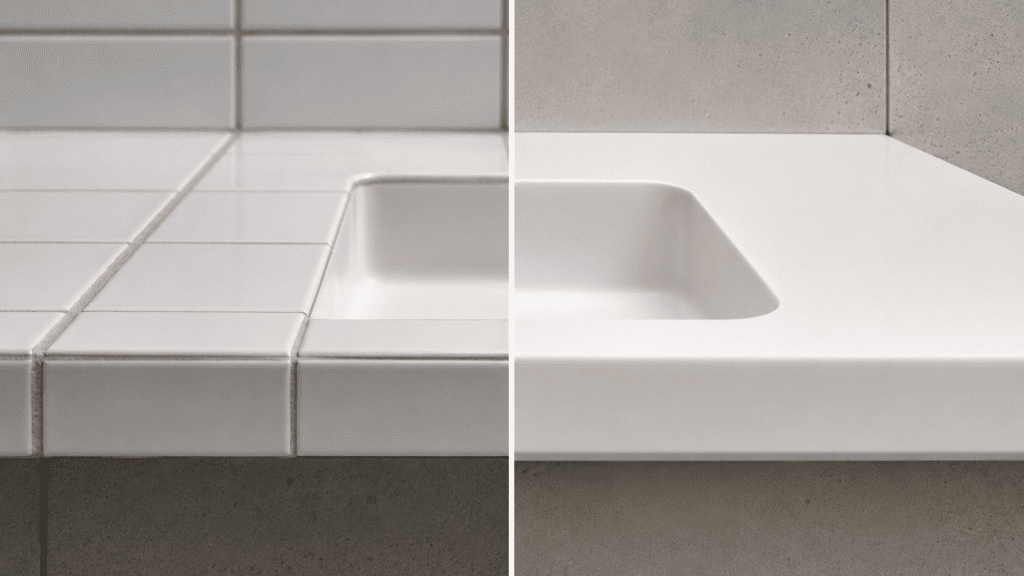
Os especificadores profissionais devem distinguir entre o desempenho higiênico do material e as afirmações simplistas de marketing antibacteriano.
Uma superfície pode apoiar a manutenção higiênica porque não é porosa, pode ser limpa e é fabricada perfeitamente – não porque mata bactérias ativamente.
Esta distinção é importante em trabalhos sérios de especificação comercial.
Por que a integridade da superfície a longo prazo é importante
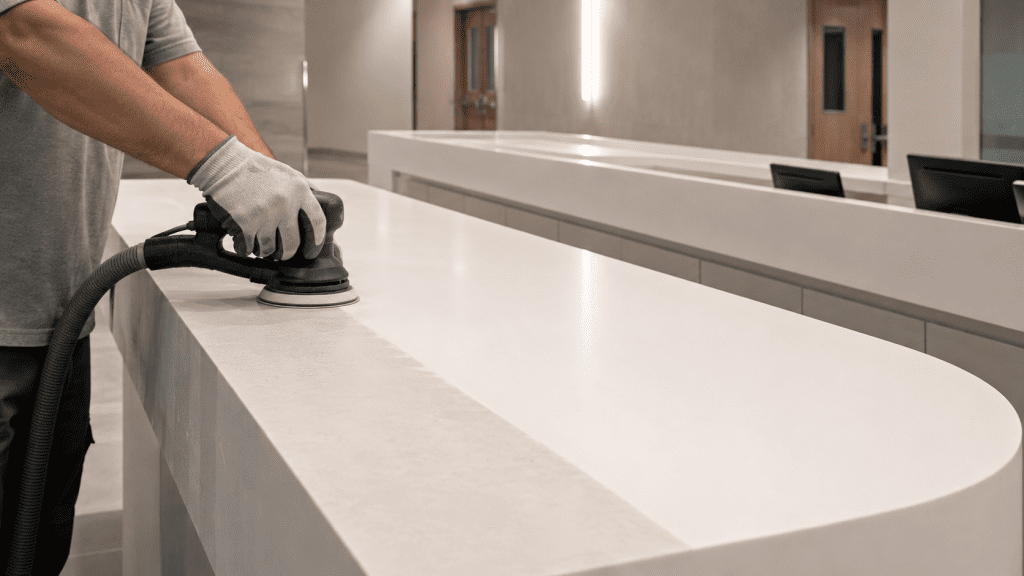
Um material higiénico deve permanecer higiénico após anos de utilização – não apenas quando instalado recentemente.
Degradação da superfície a longo prazo, rachaduras, falhas nas juntas ou danos podem comprometer a limpeza.
É aqui que a superfície sólida acrílica oferece vantagens de ciclo de vida.
Reparabilidade
Como o material é homogêneo em toda a sua espessura, muitos danos superficiais podem ser reparados ou retocados profissionalmente.
Isto ajuda a manter o desempenho de higiene a longo prazo em aplicações comerciais exigentes.
Aplicações higiênicas recomendadas
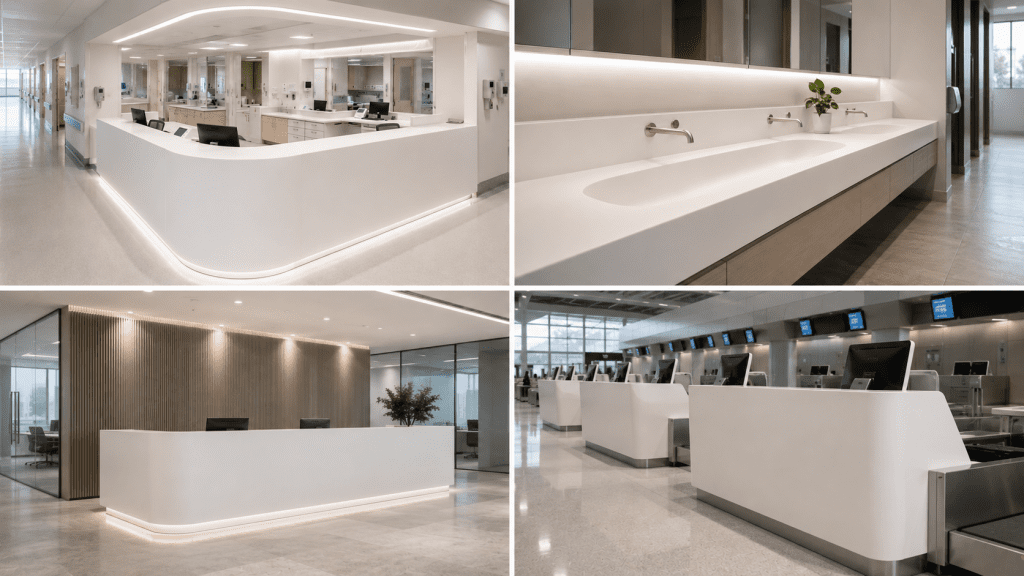
- Bancadas de saúde
- Estações de lavagem hospitalar
- Balcões de clínicas
- Sistemas de vaidade para hospitalidade
- Banheiros comerciais
- Balcões de atendimento de varejo
- Balcões de recepção
- Interiores do aeroporto
- Interiores comerciais voltados para o público
Por que os arquitetos especificam superfícies sólidas acrílicas
- Desempenho de superfície não porosa
- Fabricação perfeita
- Fácil manutenção
- Reparabilidade
- Durabilidade comercial
- Aparência arquitetônica limpa
- Flexibilidade de fabricação personalizada
Perguntas frequentes
A superfície sólida acrílica é higiênica?
Sim. A superfície sólida acrílica é amplamente especificada em interiores comerciais sensíveis à higiene devido à sua estrutura não porosa, capacidade de fabricação contínua e facilidade de manutenção.
A superfície sólida acrílica é antibacteriana?
O desempenho higiênico não deve ser confundido com alegações simplistas de marketing antibacteriano. A higiene prática depende da facilidade de limpeza, manutenção e integridade da superfície.
Onde a superfície sólida acrílica é comumente usada por razões de higiene?
Saúde, hotelaria, banheiros comerciais, áreas de recepção, balcões de atendimento de varejo e interiores públicos.
Fale com a ACRION sobre soluções de superfícies arquitetônicas higiênicas
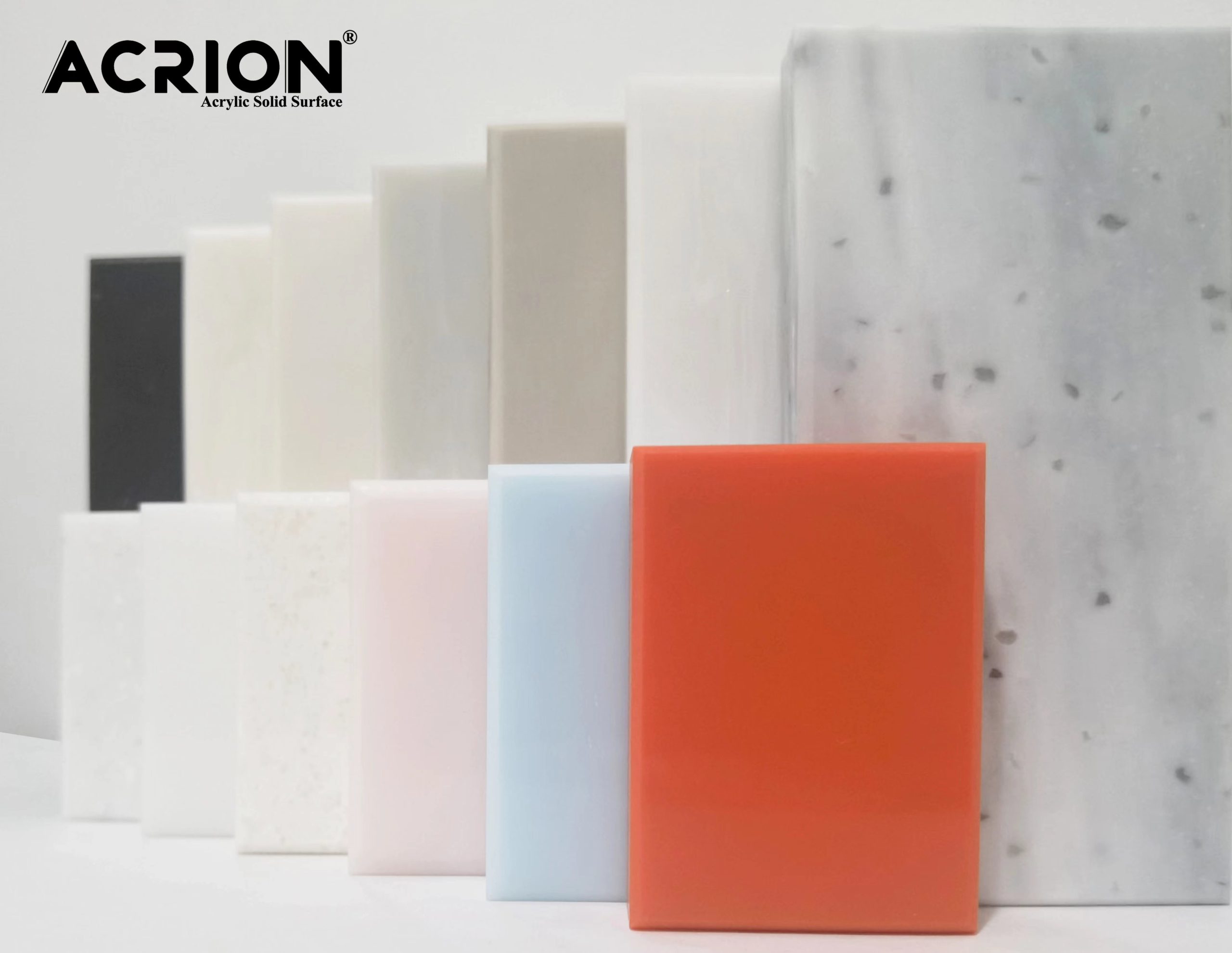
ACRION desenvolve soluções arquitetônicas de superfícies sólidas acrílicas para interiores comerciais onde a higiene, a facilidade de limpeza e o desempenho a longo prazo são importantes.