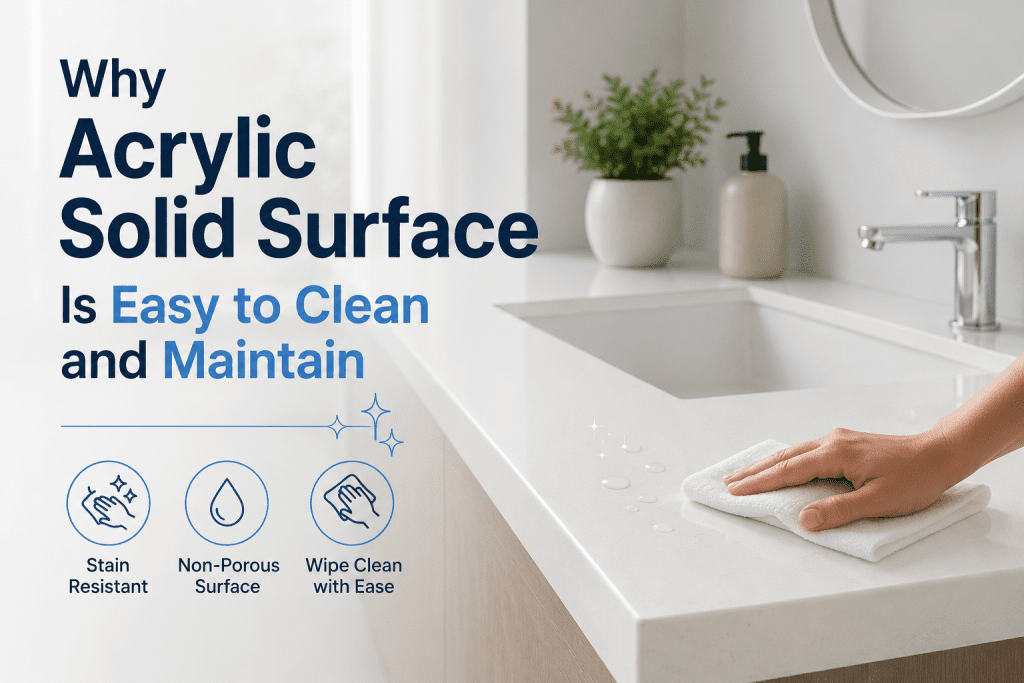
Acrylic solid surface has become one of the most widely used architectural surface materials in healthcare, hospitality, commercial interiors, and residential kitchens due to its hygienic performance, seamless fabrication capability, and easy maintenance characteristics.
In the market, some people incorrectly describe acrylic solid surface as a “self-cleaning material.” From a professional material engineering perspective, this description is not technically accurate. Acrylic solid surface does not contain photocatalytic or nano self-cleaning technology. Instead, its excellent cleanability mainly comes from its non-porous structure, seamless fabrication, and stain-resistant material properties.
As a professional acrylic solid surface manufacturer with more than 20 years of fabrication and project experience, ACRION understands that proper material structure and fabrication quality are the key factors behind long-term hygienic and easy-to-maintain surface performance.
What Makes Acrylic Solid Surface Easy to Clean?
The easy-cleaning performance of acrylic solid surface is mainly related to its dense and non-porous material structure.
Unlike porous natural stone or materials with exposed surface voids, acrylic solid surface does not easily absorb liquids, grease, or common household stains into the material body.
This helps reduce:
- Liquid penetration
- Surface staining
- Bacterial accumulation
- Mold growth in joints
- Long-term discoloration
For this reason, acrylic solid surface is widely used in environments where hygiene and maintenance are important considerations.
Non-Porous Structure and Hygienic Performance
One of the core advantages of acrylic solid surface is its non-porous structure.
High-quality acrylic solid surface materials are manufactured using aluminum trihydrate (ATH) filler and acrylic resin systems such as MMA (Methyl Methacrylate), creating a dense and homogeneous material body.
This structure helps prevent:
- Moisture penetration
- Food residue absorption
- Bacterial retention inside pores
- Surface contamination buildup
Compared with tile systems that contain grout joints, seamless acrylic solid surface installations are generally easier to maintain in long-term daily use.
Seamless Fabrication Reduces Dirt Accumulation
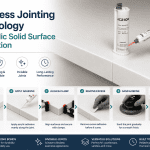
Professional solid surface fabrication allows countertops, worktops, and integrated sinks to be joined seamlessly using color-matched adhesive systems.
This seamless fabrication approach reduces areas where dirt, grease, moisture, and bacteria can accumulate.
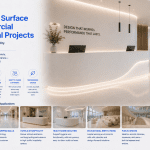
In commercial and healthcare environments, seamless construction is especially valuable because it improves both cleaning efficiency and long-term surface hygiene.
- Pias integradas
- Hospital nurse stations
- Bancadas de laboratório
- Bancadas de restaurante
- Commercial reception desks
Difference Between Easy-to-Clean and Self-Cleaning Materials
It is important to distinguish between “easy-to-clean” materials and true “self-cleaning” technologies.
| Categoria | Descrição |
|---|---|
| Easy-to-Clean Materials | Depend on smooth, non-porous, and stain-resistant surfaces for easier maintenance |
| Self-Cleaning Materials | Use photocatalytic, nano-coating, or hydrophilic technologies to actively break down contaminants |
Acrylic solid surface belongs to the easy-to-clean material category rather than the self-cleaning material category.
Common Cleaning Methods for Acrylic Solid Surface
For daily maintenance, acrylic solid surface can usually be cleaned using simple household cleaning methods.
- Soft cloth or sponge
- Mild soap solution
- Non-abrasive household cleaner
- Warm water cleaning
For more stubborn stains, light sanding and surface refinishing can often restore the original appearance of the material. This repairability is one of the unique advantages of acrylic solid surface compared with many other countertop materials.
Applications Where Hygienic Surfaces Are Important
Due to its easy maintenance and hygienic performance, acrylic solid surface is widely used in:
- Hospitals and healthcare facilities
- laboratórios
- Cozinhas comerciais
- Ambientes de hospitalidade
- Cozinhas e banheiros residenciais
- Public washroom countertops
Its seamless appearance and renewable surface characteristics make it especially suitable for high-traffic commercial projects.
Recomendações importantes de manutenção
Although acrylic solid surface is highly durable and easy to maintain, proper daily care is still recommended.
- Avoid prolonged exposure to high heat
- Use cutting boards instead of direct knife cutting
- Limpe derramamentos imediatamente
- Avoid highly aggressive chemical cleaners
- Perform periodic surface maintenance if necessary
Professional fabrication and installation also play an important role in long-term surface performance.
Conclusão
Acrylic solid surface is not a self-cleaning material in the scientific sense. However, thanks to its non-porous structure, seamless fabrication capability, stain resistance, and renewable surface properties, it remains one of the most hygienic and easy-to-maintain architectural surface materials available today.
For healthcare, hospitality, commercial, and residential applications, professionally fabricated acrylic solid surface provides a practical balance between aesthetics, hygiene, durability, and maintenance efficiency.
At ACRION, we continue to develop acrylic solid surface solutions engineered for seamless fabrication, hygienic performance, and long-term architectural applications worldwide.