Кухонные острова стали одним из центральных элементов современного дизайна кухни, объединяя функции приготовления пищи, социального взаимодействия, хранения и приема пищи в единое интегрированное рабочее пространство. Поскольку дизайн кухонного острова продолжает развиваться в сторону более чистых линий и более крупных бесшовных поверхностей, твердая акриловая поверхность становится все более популярным выбором материала для столешниц.
Возможность бесшовного изготовления, отсутствие пор, возобновляемые свойства поверхности и гибкость дизайна делают акриловую твердую поверхность особенно подходящей для современных кухонных столешниц.
Роль кухонных островов в современном дизайне кухни
Современные кухонные острова больше не используются только как дополнительное пространство на столешнице. Теперь они функционируют как зоны приготовления, интегрированные обеденные зоны, системы хранения, места для встреч и визуальные фокусные элементы на кухнях открытой планировки.
Поскольку кухонные острова являются хорошо заметными и часто используемыми поверхностями, выбор материала столешницы играет важную роль как в функциональности, так и в долгосрочном внешнем виде.
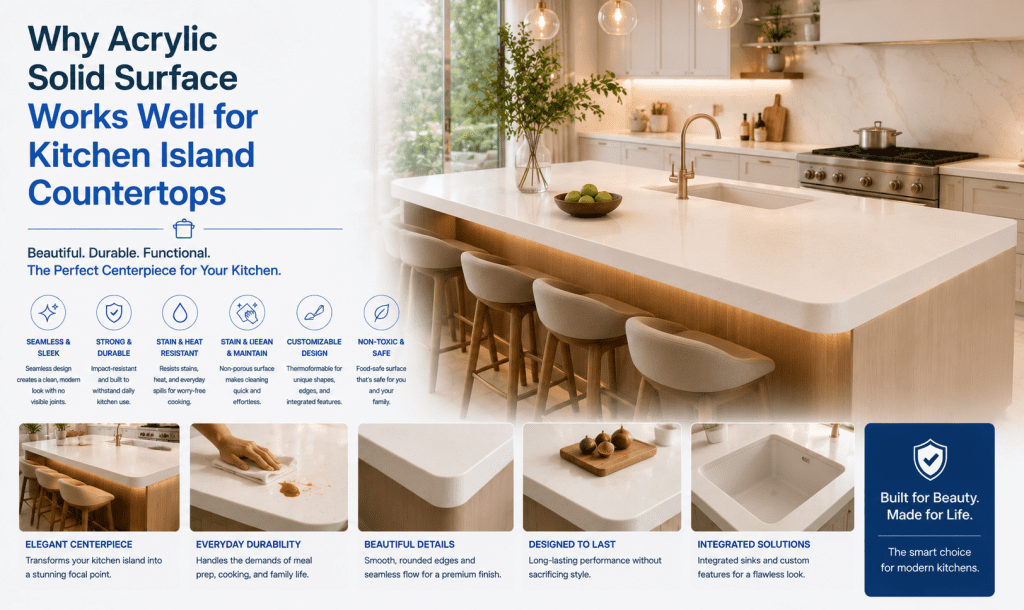
Почему бесшовные столешницы важны для больших островов
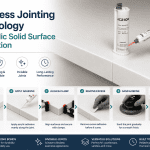
Одним из основных преимуществ акриловой твердой поверхности является бесшовное изготовление швов. Большие кухонные острова часто требуют расширенных пролетов столешницы, которые могут визуально прерываться при наличии видимых стыков.
Твердая акриловая поверхность позволяет производителям создавать более плавную визуальную непрерывность с минимальными видимыми швами, помогая сохранить более чистый и монолитный вид острова.
Интегрированный дизайн раковины и бытовой техники
Современные кухонные острова все чаще включают в себя встроенные раковины, скрытое хранилище, розетки, варочные панели и зоны приготовления пищи в единую систему столешниц.
Твердая акриловая поверхность обеспечивает бесшовную интеграцию раковины и индивидуальные детали изготовления, которые упрощают очистку и улучшают общую визуальную целостность.
Край водопада и минималистичный дизайн острова
Кухонные острова с краями водопада стали широко использоваться в современных жилых и гостиничных кухнях. Твердая акриловая поверхность поддерживает непрерывную обработку кромок и плавные переходы углов, которые дополняют минималистские концепции дизайна интерьера.
Матовая отделка, профили с мягкими краями и четкие переходы поверхностей помогают уменьшить визуальный беспорядок, создавая при этом более изысканный архитектурный вид.
Долговечность и ежедневная производительность на кухне
Кухонные острова ежедневно подвергаются воздействию воды, пятен и частому взаимодействию с пользователем. Твердая акриловая поверхность представляет собой непористую и возобновляемую поверхность, подходящую для длительного использования на кухне.
Небольшие царапины и износ поверхности часто можно устранить с помощью шлифовки и полировки, что помогает сохранить внешний вид столешницы с течением времени.
Рекомендации по рабочему процессу и расположению сидений
Хорошо спроектированные кухонные острова должны учитывать эффективность рабочего процесса, пространство для циркуляции, расположение сидений и взаимодействие между зонами приготовления, приготовления и уборки.
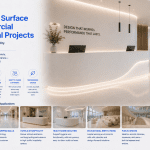
Большие бесшовные поверхности столешницы помогают создать более гибкие рабочие зоны, поддерживая при этом встроенные сидения и многофункциональную планировку кухни.
Почему производители предпочитают акриловую твердую поверхность для кухонных островов
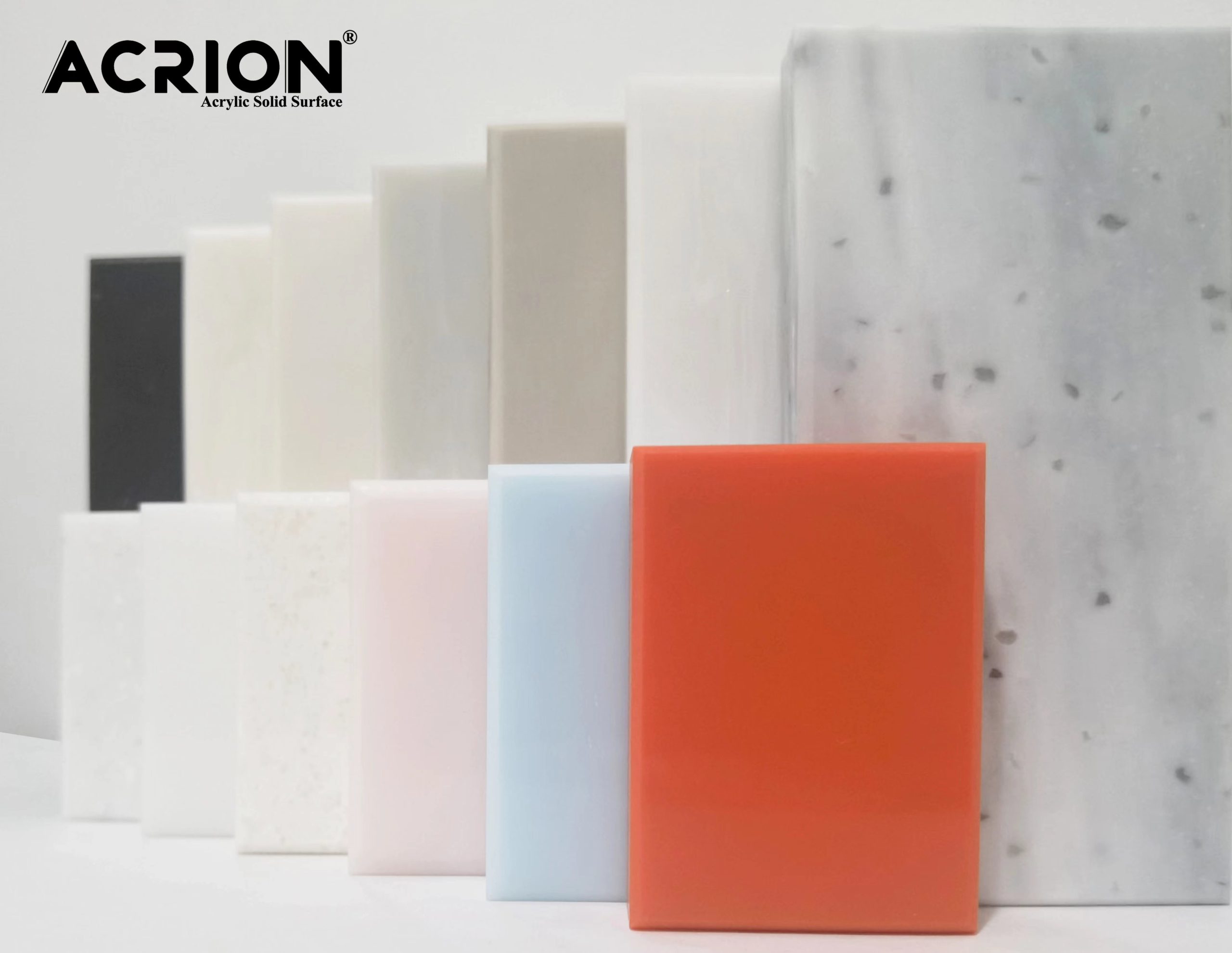
По сравнению со многими традиционными материалами столешниц, акриловая твердая поверхность обеспечивает большую гибкость изготовления для индивидуальных проектов кухонного острова. Материал может быть обработан на станке с ЧПУ, подвергнут термоформованию, бесшовному соединению и полировке с использованием стандартных методов изготовления твердых поверхностей.
Эта гибкость делает его подходящим для индивидуальных кухонных островов с изогнутой геометрией, интегрированных систем раковин, водопадных краев и крупноформатных столешниц.
Заключение
Твердая акриловая поверхность сочетает в себе бесшовное изготовление, современную эстетику, характеристики возобновляемой поверхности и гибкость изготовления, что делает ее очень подходящей для современных кухонных столешниц.
От встроенных островков под раковину до столешниц с водопадом и кухонных планировок открытой планировки, этот материал предоставляет дизайнерам и производителям большую свободу для создания чистых, функциональных и визуально изысканных кухонных пространств.