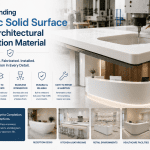
Acrylic solid surface is widely used in healthcare facilities, hospitality interiors, commercial environments, and residential kitchens because of its seamless appearance, hygienic performance, repairability, and comfortable surface characteristics.
In some discussions, acrylic solid surface is incorrectly described as an “insulation material.” From a professional material engineering perspective, this description is not technically accurate. Acrylic solid surface is not designed as a specialized thermal insulation or electrical insulation material. However, compared with highly conductive materials such as stainless steel or aluminum, acrylic solid surface can provide a warmer and more comfortable tactile experience due to its relatively lower thermal conductivity.
As a professional acrylic solid surface manufacturer with more than 20 years of fabrication and project experience, ACRION understands that user comfort in architectural environments is influenced not only by aesthetics, but also by surface touch, heat transfer behavior, and practical daily interaction.
What Is Thermal Comfort in Surface Materials?
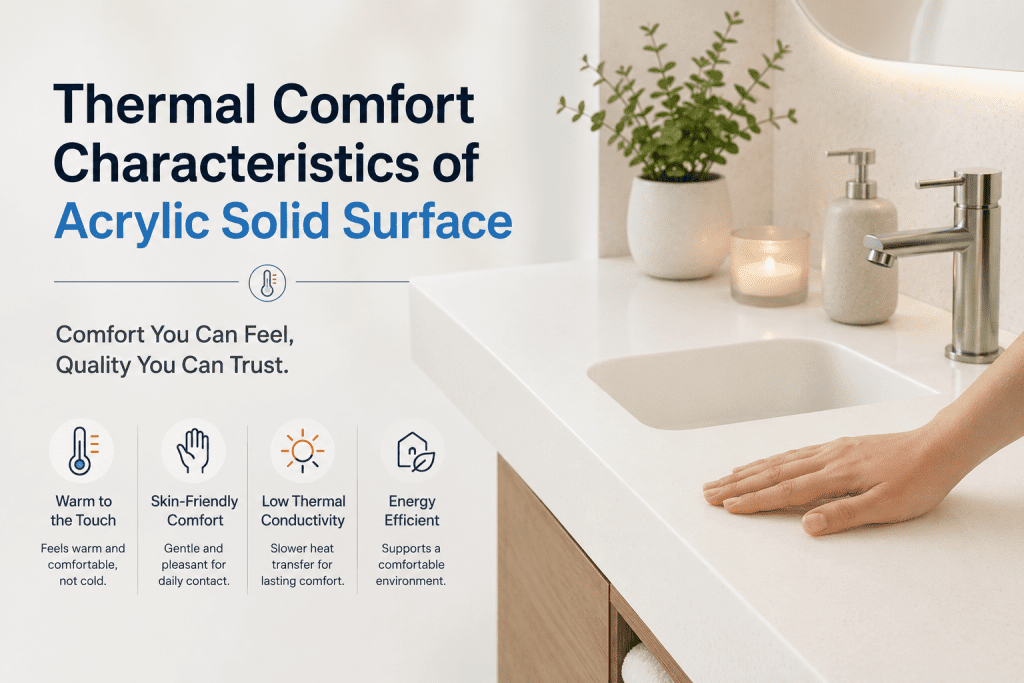
Thermal comfort refers to how a material feels when touched during daily use. Materials with high thermal conductivity tend to transfer heat quickly, often creating a colder surface sensation when touched by hand.
By contrast, materials with lower thermal conductivity usually feel warmer and softer because they transfer heat more slowly between the human body and the material surface.
This is one reason why acrylic solid surface is often perceived as more comfortable than metal countertop materials in many interior applications.
Почему акриловая твердая поверхность кажется теплее, чем металл
Unlike stainless steel or aluminum surfaces, acrylic solid surface does not rapidly transfer heat away from the hand during contact.
Its dense acrylic-based composition combined with aluminum trihydrate (ATH) filler creates a more balanced surface temperature sensation during everyday use.
| Материал | Typical Surface Touch Experience |
|---|---|
| Нержавеющая сталь | Холодный и высокопроводящий |
| Алюминий | Cool surface sensation with rapid heat transfer |
| Кварцевая поверхность | Плотное и относительно прохладное тактильное ощущение |
| Акриловая твердая поверхность | Warmer and softer touch sensation |
For this reason, acrylic solid surface is often preferred in environments where user comfort and tactile experience are important.
Applications Where Thermal Comfort Is Important
Healthcare Facilities
In hospitals and healthcare environments, surface comfort plays an important role in patient and staff experience. Acrylic solid surface is widely used for:
- Медсестринские посты
- Patient room countertops
- Медицинские столешницы
- Integrated wash stations
Compared with metal surfaces, acrylic solid surface can provide a more comfortable and less industrial tactile experience.
Hospitality and Residential Kitchens
Hotels, restaurants, and residential kitchens often prioritize materials that feel visually refined and comfortable in daily interaction.
The softer touch characteristics of acrylic solid surface contribute to a more premium and user-friendly environment.
Commercial Reception Areas
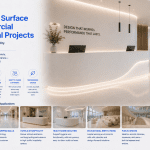
In commercial interiors, reception desks and customer-facing surfaces benefit from materials that combine seamless aesthetics with comfortable surface interaction.
Heat Resistance Limitations of Acrylic Solid Surface
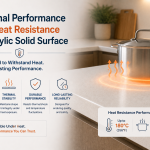
Although acrylic solid surface provides a comfortable tactile experience, it is important to understand that the material is not designed for direct exposure to extreme heat.
Как и большинство архитектурных материалов на основе полимеров, акриловая твердая поверхность может подвергаться воздействию:
- Прямой контакт с горячей посудой.
- Длительное воздействие высоких температур
- Условия термического удара
- Improper heat concentration
For this reason, professional fabricators and manufacturers generally recommend:
- Using heat pads or trivets
- Avoiding direct placement of hot pots
- Preventing sudden extreme temperature changes
- Following proper fabrication guidelines
Acrylic Solid Surface Is Not a Professional Insulation Material
It is important to distinguish between thermal comfort and professional insulation performance.
Acrylic solid surface is not classified as:
- Electrical insulation board
- Industrial thermal insulation material
- Fire insulation system
- Specialized engineering insulation product
Instead, its advantages are primarily related to:
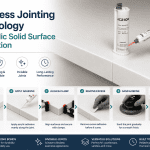
- Бесшовное изготовление
- Non-porous structure
- Ремонтопригодность
- Гигиенические характеристики
- Архитектурная эстетика
- Comfortable tactile experience
Maintenance and Long-Term Performance
Professional fabrication and correct daily use are important for maintaining the long-term appearance and performance of acrylic solid surface.
- Avoid prolonged direct heat exposure
- Clean surfaces regularly using non-abrasive cleaners
- Repair minor scratches through refinishing when necessary
- Follow proper installation and support guidelines
Заключение
Acrylic solid surface is not a specialized insulation material in the engineering sense. However, due to its lower thermal conductivity compared with metal surfaces, it can provide a warmer and more comfortable tactile experience in architectural and interior applications.
Combined with seamless fabrication, hygienic performance, repairability, and modern design flexibility, acrylic solid surface remains one of the most versatile materials for healthcare, hospitality, commercial, and residential projects.
At ACRION, we continue to develop acrylic solid surface solutions engineered for architectural fabrication, user comfort, and long-term commercial performance worldwide.