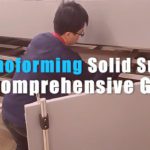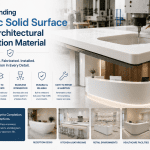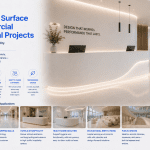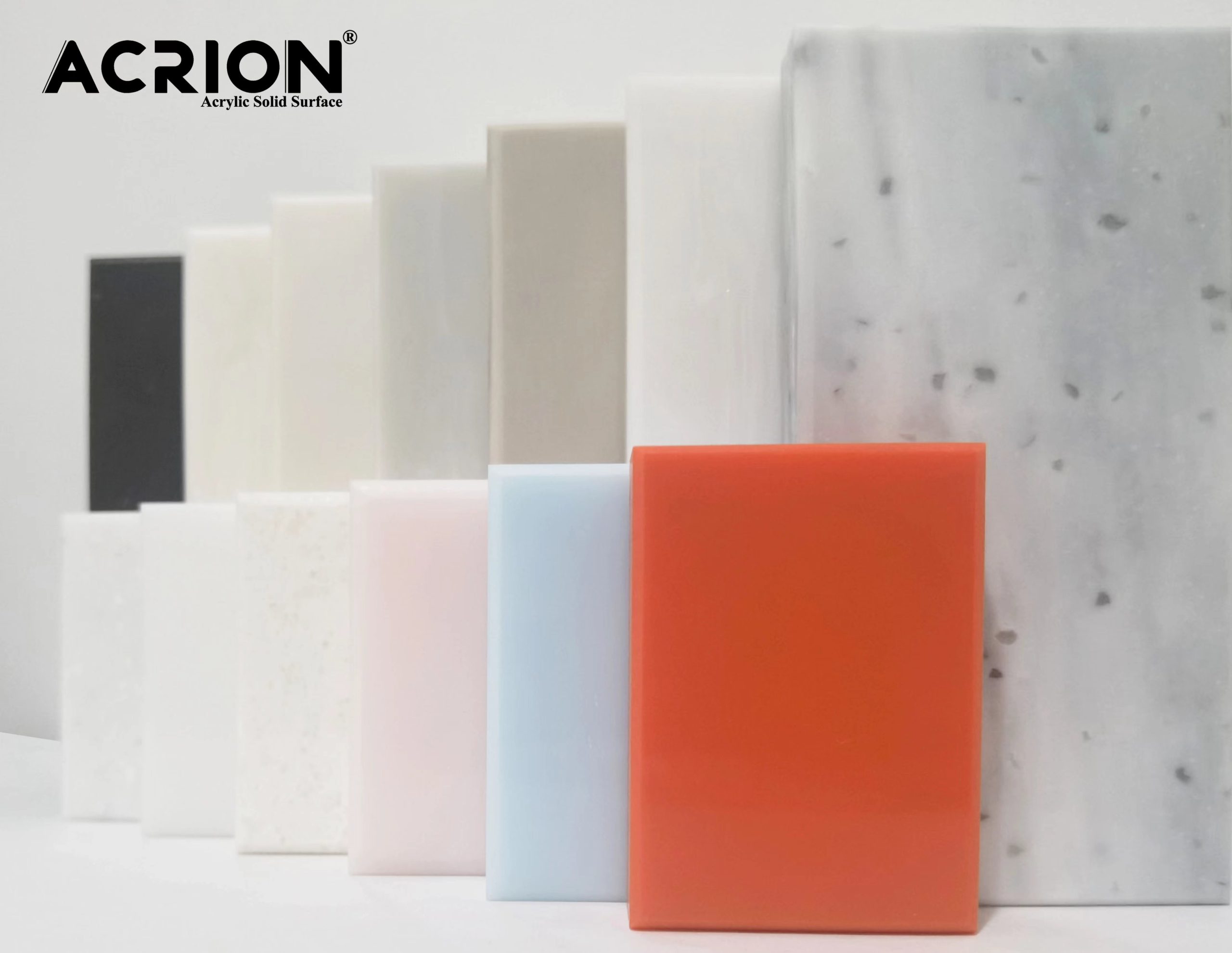
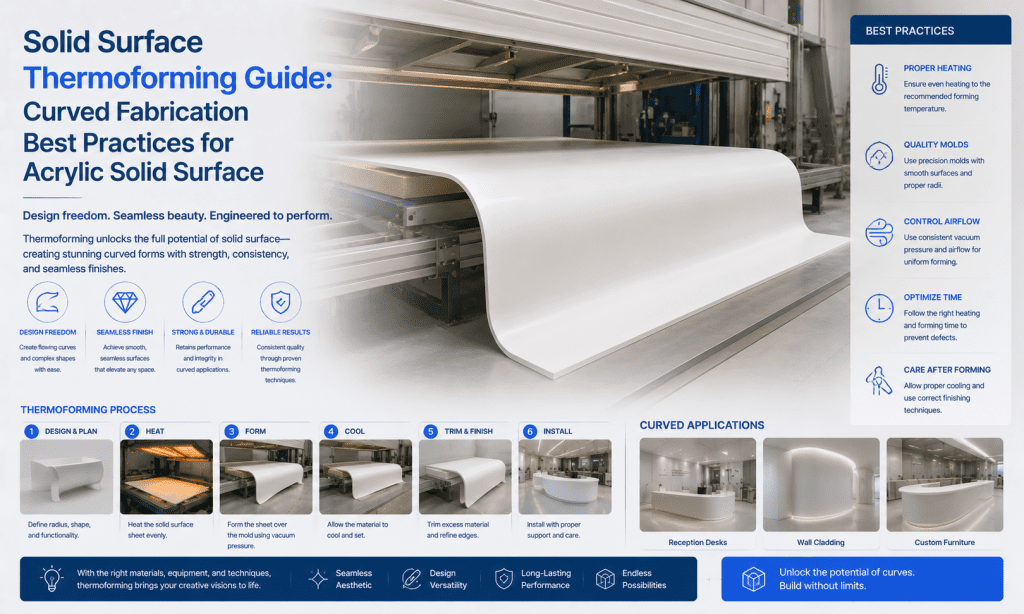
Thermoforming is one of the most distinctive fabrication advantages of acrylic solid surface. Unlike rigid surfacing materials that are limited to flat applications, acrylic solid surface can be heated, shaped, and formed into smooth curved geometries for advanced architectural and commercial design applications.
Because thermoforming directly influences appearance quality, structural stability, and fabrication success, professional methodology is essential for reliable results.
Why Thermoforming Matters
Thermoforming expands acrylic solid surface beyond flat panel fabrication into sculptural and functional design possibilities.
- Изогнутые стойки ресепшн
- Интегрированные системы мойки
- Organic hospitality furniture
- Healthcare seamless surfaces
- Architectural wall features
- Custom fabricated 3D forms
This flexibility is one of the defining advantages of acrylic solid surface compared with many rigid surfacing alternatives.
1. Material Suitability for Thermoforming
Not all solid surface materials behave identically under thermal forming conditions.
- Pure acrylic systems generally offer superior thermoforming performance
- Modified acrylic systems may have different forming limitations
- Material formulation affects flexibility, stability, and achievable geometry
Fabricators should always validate forming suitability for the specific material system being used.
2. Preparation Before Heating
Successful thermoforming begins with disciplined preparation.
- Accurate panel sizing
- Clean, defect-free surface preparation
- Edge inspection
- Mold readiness confirmation
- Production workflow planning
Minor defects may become amplified during thermal forming.
3. Heating Methodology
Controlled heating allows acrylic solid surface to become formable without damaging material integrity.
- Uniform thermal exposure
- Controlled heating environment
- Avoidance of localized overheating
- Workflow coordination with forming equipment
Exact forming conditions depend on material system, thickness, geometry, and fabrication setup. :contentReference[oaicite:1]{index=1}
4. Mold and Forming Systems
Forming quality depends heavily on mold design and process control.
- Male/female mold systems
- Vacuum-assisted forming
- Press-assisted forming
- Custom fixture-based shaping
Professional mold quality improves repeatability, geometry consistency, and commercial production reliability.
5. Radius and Geometry Considerations
Curvature capability is influenced by material formulation, thickness, and design geometry.
- Minimum radius limitations
- Stress concentration risk
- Complex geometry feasibility
- Repeatability for production applications
Aggressive geometry without process validation increases defect risk.
6. Cooling and Shape Stabilization
Cooling is part of the forming process—not merely the final waiting stage.
- Shape retention control
- Stress stabilization
- Distortion prevention
- Согласованность размеров
Improper cooling may compromise final geometry.
7. Common Thermoforming Mistakes
- Overheating the material
- Poor mold preparation
- Ignoring material compatibility
- Excessively tight curvature assumptions
- Inadequate cooling control
- Production workflow inconsistency
Quick Thermoforming QA Checklist
| Зона инспекции | Первичный фокус |
|---|---|
| Material suitability | Forming compatibility |
| Preparation | Surface and workflow readiness |
| Heating | Uniform thermal control |
| Mold system | Geometry consistency |
| Cooling | Shape stabilization |
| Финальный контроль качества | Visual and structural acceptance |
Applications Where Thermoforming Delivers Maximum Value
- Изогнутые стойки администратора
- Интегрированные умывальники
- Healthcare seamless worktops
- Hospitality custom furniture
- Architectural feature walls
- Органические формы коммерческого интерьера
Часто задаваемые вопросы
Can acrylic solid surface be curved?
Yes. Thermoforming is one of acrylic solid surface’s defining fabrication advantages. :contentReference[oaicite:2]{index=2}
Is every solid surface equally thermoformable?
No. Material formulation significantly affects forming performance.
Why is mold quality important?
Because mold precision directly affects geometry consistency, repeatability, and final appearance quality.
Заключительные мысли
Thermoforming is not simply bending material—it is a disciplined fabrication capability that enables advanced architectural design execution.
ACRION develops architectural acrylic solid surface materials engineered for seamless fabrication, curved forming flexibility, and demanding commercial applications.