Architectural materials are judged not only by how they look at installation, but by how they perform after years of real-world use.
For architects, fabricators, distributors, and commercial project buyers, appearance durability is a serious specification concern. A surface that looks impressive on day one but develops yellowing, fading, gloss inconsistency, or visible aging over time can compromise both project quality and brand perception.
This is why acrylic solid surface color stability matters.
In this guide, we examine how acrylic solid surface performs over time, what affects long-term appearance, and why material formulation matters in professional architectural applications.
What Does Color Stability Mean in Acrylic Solid Surface?
Color stability refers to a material’s ability to maintain a consistent visual appearance throughout its service life.
For acrylic solid surface, this includes far more than simple fading resistance.
- Resistance to yellowing
- Color consistency over time
- Gloss retention
- Resistance to visible aging
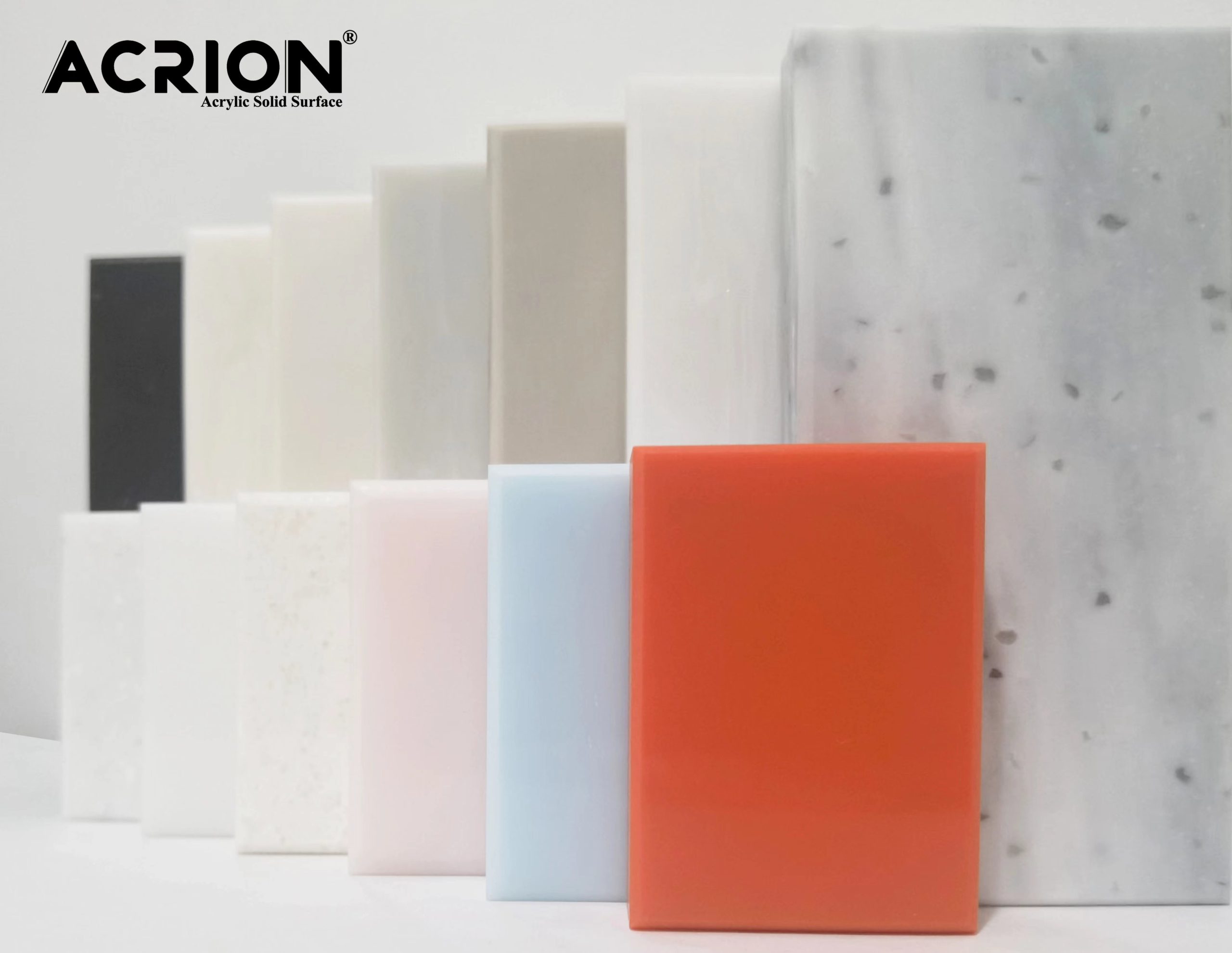
- Pigment stability
- Appearance consistency after maintenance or repair
- Surface performance under environmental exposure
In commercial environments, these factors directly affect lifecycle performance and user perception.
Why Long-Term Appearance Performance Matters
Material selection in architectural projects is increasingly lifecycle-driven rather than purely appearance-driven.
A reception desk, healthcare worktop, hospitality vanity, or retail service counter may be expected to maintain appearance for years under continuous daily use.
Failure in long-term appearance can lead to:
- Premature replacement costs
- Maintenance complaints
- Brand image damage
- Inconsistent refurbishment outcomes
- Specification distrust in future projects
What Affects Acrylic Solid Surface Color Stability?
1. Resin Chemistry
The base resin system strongly influences long-term visual performance.
Pure acrylic solid surface based on high-quality PMMA chemistry generally offers stronger long-term appearance stability compared with lower-cost modified formulations.
This is one reason why pure acrylic is preferred in demanding architectural and commercial applications.
2. Pigment System Quality
Not all colors behave identically over time.
Color performance depends heavily on pigment engineering, dispersion consistency, and formulation stability.
Darker shades, specialty decorative systems, and heat-absorbing colors may require additional evaluation depending on project conditions.
3. UV Exposure
Ultraviolet exposure is one of the most commonly discussed appearance factors for polymer-based materials.
PMMA is widely recognized for strong UV and weather resistance, but exposure conditions still matter. Prolonged UV stress can contribute to appearance changes depending on formulation and environment.
For sunlight-specific technical guidance, see our dedicated UV performance article.
4. Heat Exposure
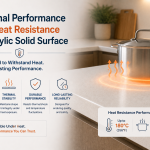
Repeated thermal stress, localized overheating, or poor application design may influence appearance over time.
This is especially relevant near heat-generating equipment or direct sunlight accumulation zones.
5. Maintenance Practices
Improper cleaning can accelerate appearance deterioration.
Aggressive solvents, unsuitable chemicals, or abrasive maintenance practices may damage surface finish or alter visual consistency.
Pure Acrylic vs Modified Acrylic: Long-Term Performance Comparison
| Property | Pure Acrylic Solid Surface | Modified Acrylic Solid Surface |
|---|---|---|
| Color stability | Higher | Moderate |
| Yellowing resistance | Stronger | More variable |
| Repairability | Excellent | More limited |
| Architectural suitability | High | Application dependent |
Can Acrylic Solid Surface Yellow Over Time?
This is one of the most frequent buyer questions.
In properly specified interior applications, high-quality acrylic solid surface is chosen for stable long-term appearance performance.
However, actual outcomes depend on:
- Material formulation
- Environmental exposure
- Heat conditions
- Cleaning practices
- Project design
Like all engineered materials, performance must be evaluated according to application conditions rather than marketing assumptions.
One Major Lifecycle Advantage: Renewability
Unlike many decorative surfacing materials, acrylic solid surface offers a significant lifecycle benefit.
Because the material is homogeneous throughout its thickness, superficial visual wear can often be professionally restored through refinishing.
This renewability makes acrylic solid surface highly attractive for commercial architectural environments where maintenance lifecycle matters.
Recommended Architectural Applications
- Healthcare worktops
- Hospitality vanity systems
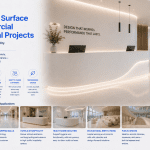
- Commercial reception counters
- Retail service counters
- Wall cladding systems
- Washroom applications
- Custom fabricated architectural interiors
Why Acrylic Solid Surface Remains a Preferred Architectural Material
- Strong long-term appearance performance
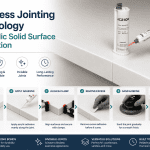
- Seamless fabrication capability
- Thermoforming flexibility
- Repairability
- Non-porous hygienic surface
- Commercial lifecycle suitability
FAQ
Does acrylic solid surface fade?
High-quality acrylic solid surface is engineered for strong long-term appearance stability, though performance depends on environment and application conditions.
Is pure acrylic more stable than modified acrylic?
In demanding commercial applications, pure acrylic generally provides stronger long-term visual consistency.
Can appearance issues be repaired?
Many superficial visual issues can be professionally improved through refinishing due to the material’s homogeneous structure.
Talk to ACRION About Architectural Solid Surface Projects
ACRION supports architects, fabricators, distributors, and project buyers with architectural acrylic solid surface solutions engineered for demanding commercial applications.