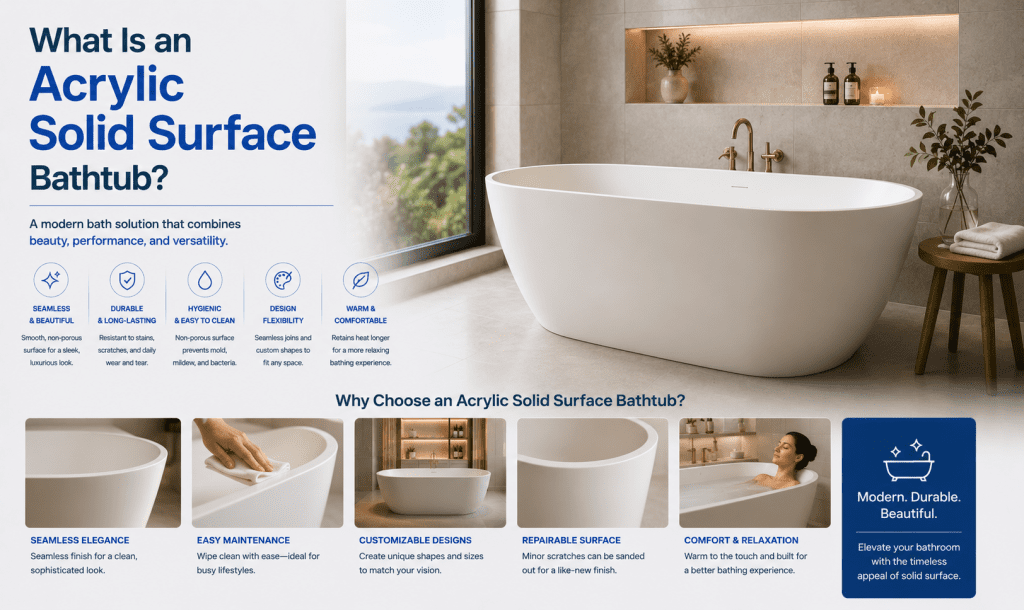
Acrylic solid surface bathtubs are widely used in modern residential, hospitality, and luxury bathroom projects because of their seamless appearance, matte surface texture, and sculptural freestanding design possibilities.
Unlike many traditional bathtub materials, acrylic solid surface supports monolithic forms, integrated architectural detailing, and refined matte finishes that align with contemporary minimalist bathroom design trends.
From luxury villas and hospitality suites to spa environments and modern apartments, acrylic solid surface bathtubs have become an important part of integrated architectural bathroom systems.
What Is an Acrylic Solid Surface Bathtub?
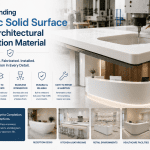
An acrylic solid surface bathtub is a freestanding or integrated bathtub manufactured using acrylic resin and mineral fillers to create a non-porous and durable solid surface structure.
Compared with conventional glossy acrylic vacuum-formed bathtubs, acrylic solid surface bathtubs typically feature thicker structural walls, matte mineral-like finishes, and more sculptural monolithic forms.
The material allows manufacturers to create cleaner geometric lines, seamless visual continuity, and customized bathroom integration systems for modern architectural interiors.
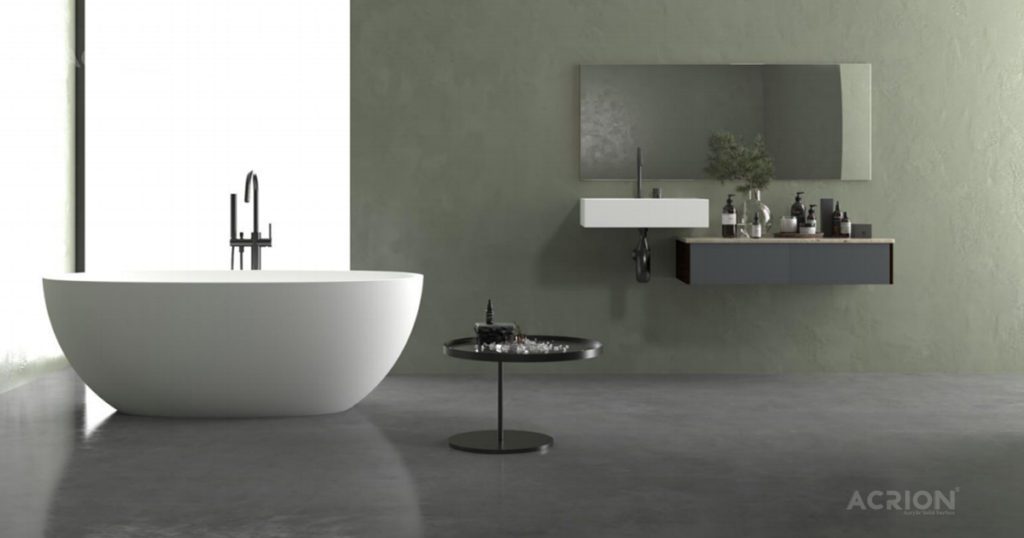
Why Solid Surface Bathtubs Are Popular in Modern Bathrooms
Modern bathroom design increasingly favors minimalist architectural surfaces, soft matte textures, and integrated spatial continuity instead of heavily decorative bathroom environments.
Acrylic solid surface bathtubs align well with these contemporary design trends because of their sculptural appearance, low visual noise, and refined surface texture.
Freestanding solid surface bathtubs are often used as focal architectural elements within luxury bathrooms, hospitality suites, wellness spaces, and modern residential interiors.
Freestanding Sculptural Bathtub Design
One of the major advantages of acrylic solid surface is its ability to support monolithic freestanding bathtub forms with cleaner geometric transitions and softer edge detailing.
Oval tubs, asymmetrical bathtubs, curved-edge forms, and minimalist rectangular geometries are commonly fabricated using solid surface manufacturing techniques.
These sculptural bathtub designs help create stronger architectural identity within modern bathroom interiors.
Matte Surface Texture and Soft-Touch Feel
Matte finishes are one of the defining characteristics of many acrylic solid surface bathtubs. Compared with highly reflective glossy surfaces, matte textures provide a softer visual appearance and a more refined tactile experience.
The mineral-based surface texture also contributes to a warmer and more comfortable touch perception compared with some conventional bathtub materials.
Integrated Bathroom Surface Systems
Modern luxury bathrooms increasingly use coordinated surface materials across bathtubs, vanity tops, integrated basins, wall cladding systems, shelving, and architectural detailing.
Acrylic solid surface supports this integrated bathroom design approach because the material can be fabricated into multiple coordinated interior elements with consistent texture and visual continuity.
This helps designers create cleaner and more cohesive architectural bathroom environments.
Solid Surface Bathtubs vs Traditional Acrylic Bathtubs
Traditional glossy acrylic bathtubs are commonly manufactured using vacuum forming techniques with thinner acrylic sheets and fiberglass reinforcement systems.
In comparison, acrylic solid surface bathtubs generally emphasize thicker monolithic structures, matte finishes, sculptural geometry, and architectural surface consistency.
Material selection should always consider project positioning, design requirements, maintenance expectations, and overall bathroom style.
Hospitality and Luxury Residential Applications
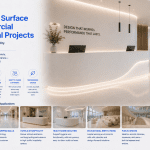
Acrylic solid surface bathtubs are widely used in luxury villas, hospitality suites, spa environments, wellness resorts, and high-end residential bathrooms.
Freestanding tubs are often positioned as central architectural elements within open-plan bathroom layouts that emphasize spatial calmness, minimalist material palettes, and quiet luxury design concepts.
ACRION Solid Surface Bathtub Manufacturing
ACRION manufactures acrylic solid surface bathtubs for residential, hospitality, and commercial bathroom projects. The manufacturing process includes mold forming, structural reinforcement, precision surface finishing, edge detailing, sanding, and quality inspection procedures.
Our bathtub production focuses on seamless visual quality, refined matte finishes, structural consistency, and customized architectural bathroom applications.
Abschluss
Acrylic solid surface bathtubs combine sculptural design flexibility, matte surface texture, seamless architectural integration, and modern minimalist aesthetics, making them highly suitable for luxury residential and hospitality bathroom projects.
From freestanding monolithic tubs to integrated bathroom surface systems, acrylic solid surface continues to support contemporary bathroom environments that prioritize architectural continuity, refined material texture, and quiet luxury design.
FQA
An acrylic solid surface bathtub is a bathtub manufactured using acrylic resin and mineral fillers to create a durable, non-porous, and architecturally refined bathing surface.
Solid surface bathtubs generally feature thicker monolithic construction, matte finishes, and more sculptural architectural forms compared with many conventional glossy acrylic bathtubs.
Yes. Acrylic solid surface bathtubs are widely used in luxury villas, hospitality suites, spa projects, and modern minimalist bathrooms.
Yes. Matte finishes are one of the most common design characteristics of acrylic solid surface bathtubs.
Yes. Acrylic solid surface can be used for bathtubs, vanity tops, integrated basins, wall cladding systems, and customized bathroom architectural elements.