Feste Acryloberflächen sind nach wie vor eines der vielseitigsten Fertigungsmaterialien, die weltweit in der modernen gewerblichen Innenarchitektur, in Gesundheitseinrichtungen, Gastgewerbeprojekten, Einzelhandelssystemen und kundenspezifischen Architekturanwendungen verwendet werden.
Als professioneller Hersteller von festen Acryloberflächen mit mehr als 20 Jahren Fertigungs- und Projekterfahrung ist sich ACRION bewusst, dass der wahre Wert von festen Acryloberflächen weit über herkömmliche Arbeitsplattenanwendungen hinausgeht.
Seine Bedeutung in der modernen Architektur ergibt sich aus der Kombination aus nahtloser Fertigungsfähigkeit, Thermoformungsflexibilität, erneuerbarer Oberflächentechnologie und integriertem Potenzial für kundenspezifische Fertigung.
In diesem Artikel wird erläutert, warum feste Acryloberflächen im gewerblichen Innendesign und bei architektonischen Fertigungssystemen nach wie vor eine hohe Relevanz haben.
Was ist eine feste Acryloberfläche?
Acryl-Feststoffoberfläche ist ein homogenes technisches Material, das typischerweise aus Acrylharzsystemen in Kombination mit mineralischen Füllstoffen und Pigmenten hergestellt wird.
Im Gegensatz zu geschichteten Dekorationsmaterialien behält die feste Acryloberfläche über die gesamte Materialstärke eine relativ gleichmäßige Struktur und Farbe bei.
Diese homogene Struktur unterstützt:
- Nahtlose Fertigung
- Erneuerbarkeit der Oberfläche
- Thermoformfähigkeit
- Integrierte Fertigungslösungen
- Langfristige Wartungsflexibilität
Warum sich feste Acryloberflächen von Quarz und Stein unterscheiden
Unterschiedliche Architekturmaterialien bieten je nach Anwendung unterschiedliche Leistungsvorteile.
| Material | Hauptstärke |
|---|---|
| Feste Acryloberfläche | Fertigungsflexibilität und nahtlose Integration |
| Quarzoberfläche | Höhere Oberflächenhärte |
| Gesinterter Stein | Hervorragende Hitze- und UV-Beständigkeit |
| Naturstein | Natürliche visuelle Variation |
| Laminieren | Niedrigere Anschaffungskosten |
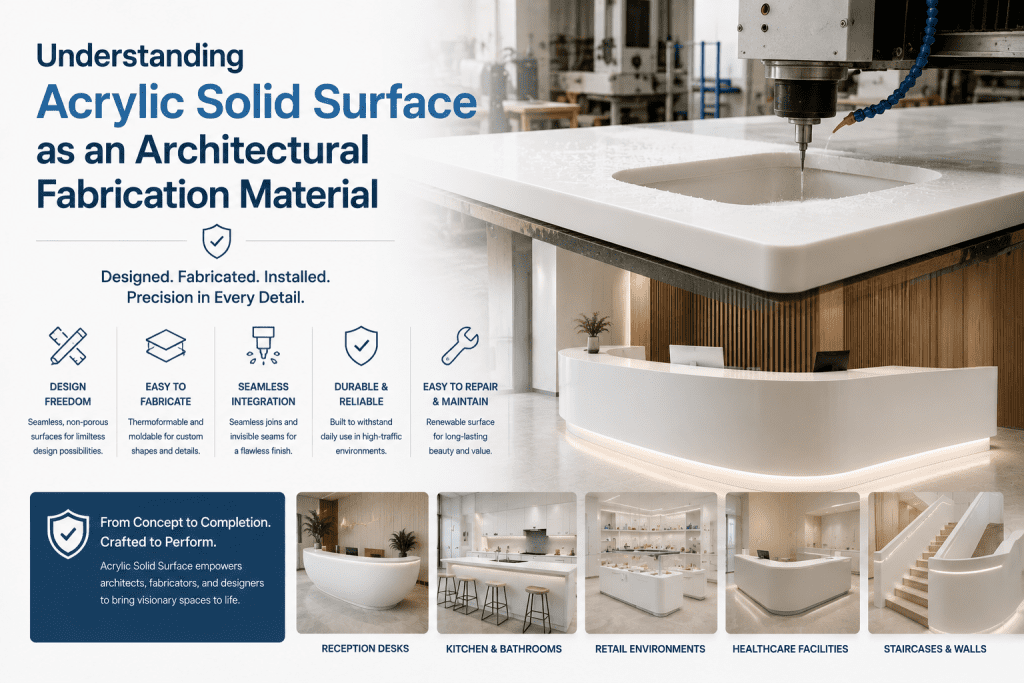
Der einzigartige Vorteil von Acryl-Solid-Surface ist nicht die extreme Härte oder die extrem hohe Hitzebeständigkeit, sondern seine Fähigkeit, maßgeschneiderte Fertigung und integriertes architektonisches Design zu unterstützen.
Nahtlose Fertigungsfähigkeit
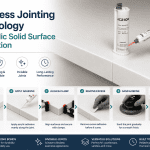
Eines der charakteristischen Merkmale von Acryl-Mineraloberflächen ist die nahtlose Verarbeitbarkeit.
Mithilfe professioneller Fertigungsmethoden und farblich abgestimmter Klebesysteme können mehrere Platten optisch in durchgehende architektonische Oberflächen mit minimalen sichtbaren Fugen integriert werden.
Diese Fähigkeit ist besonders wertvoll in:
- Gesundheitsumgebungen
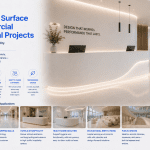
- Kommerzielle Empfangstheken
- Innenräume für das Gastgewerbe
- Integrierte Waschtischsysteme
- Architektureinrichtungen für den Einzelhandel
- Öffentliche Innenarchitekturprojekte
Die nahtlose Fertigung verbessert die visuelle Kontinuität, vereinfacht die Reinigung und unterstützt die moderne, minimalistische Architekturästhetik.
Flexibilität beim Thermoformen und gebogenen Design
Im Gegensatz zu vielen starren Architekturoberflächenmaterialien kann Acryl-Feststoffoberfläche unter kontrollierten Herstellungsbedingungen in individuelle Kurven und komplexe Geometrien thermogeformt werden.
Dadurch können Hersteller und Designer Folgendes erstellen:
- Geschwungene Empfangstheken
- Bio-Gewerbetheken
- Integrierte Wandsysteme
- Maßgeschneiderte Arbeitsplätze im Gesundheitswesen
- Displaysysteme für den Einzelhandel
- Von hinten beleuchtete Architekturelemente
Die Kombination aus Thermoformen und nahtloser Verbindung verleiht Acryl-Mineraloberflächen erhebliche Designflexibilität für individuelle architektonische Innenräume.
Erneuerbare Oberflächentechnologie
Da Acryl Solid Surface ein homogenes Material ist, können kleinere Oberflächenschäden oft durch Nachbearbeitungsverfahren repariert werden.
Typische Wartungswiederherstellungsmethoden können sein:
- Professionelles Schleifen
- Oberflächenveredelung
- Polierverfahren
- Lokale Reparaturarbeiten
Diese Fähigkeit der erneuerbaren Oberfläche trägt dazu bei, die Lebensdauer zu verlängern und das Erscheinungsbild in gewerblichen Umgebungen langfristig konsistent zu halten.
Integrierte Spül- und Waschbeckenherstellung
Die feste Acryloberfläche unterstützt integrierte Spülen- und Beckenfertigungssysteme, die optisch durchgehende Oberflächen ohne freiliegende Übergangslücken schaffen.
Dieser integrierte Fertigungsansatz verbessert:
- Visuelle Kontinuität
- Einfache Reinigung
- Wartungseffizienz
- Integration von Innenarchitektur
- Modernes architektonisches Erscheinungsbild
Die integrierte Fertigung wird häufig im Gastgewerbe, im Gesundheitswesen und in gewerblichen Waschräumen eingesetzt.
Porenfreie und hygienische Oberflächeneigenschaften
Feste Acryloberflächen sind weithin für ihre porenfreien und leicht zu reinigenden Oberflächeneigenschaften bekannt.
Seine porenfreie Struktur trägt dazu bei, das Eindringen von Flüssigkeiten zu reduzieren und erleichtert die Wartung unter normalen Nutzungsbedingungen.
In Kombination mit der nahtlosen Verarbeitungsfähigkeit eignet sich die feste Acryloberfläche hervorragend für:
- Krankenhäuser und Kliniken
- Gewerbliche Waschräume
- Innenräume für das Gastgewerbe
- Bereiche für die Zubereitung von Speisen
- Einzelhandelsumgebungen
Seine hygienischen Vorteile hängen in erster Linie mit der Reinigbarkeit und der nahtlosen Oberflächengestaltung zusammen und nicht mit der aktiven antibakteriellen Chemie.
Anwendungen jenseits herkömmlicher Arbeitsplatten
Heutzutage wird feste Acryloberfläche weit über die herkömmlichen Arbeitsplatten hinaus in einem breiten Spektrum architektonischer und kommerzieller Fertigungsanwendungen eingesetzt.
- Empfangstheken
- Wandverkleidungssysteme
- Einzelhandelseinrichtungen
- Arbeitsplatten für das Gesundheitswesen
- Kommerzielle Waschtischsysteme
- Innenräume von Restaurants
- Öffentliche architektonische Installationen
- Hinterleuchtete Dekorationssysteme
Seine Fertigungsflexibilität ermöglicht es Designern, maßgeschneiderte Innensysteme mit integrierter Funktionalität und komplexer Geometrie zu erstellen.
Wichtige Überlegungen und Einschränkungen
Wie alle architektonischen Materialien weist auch Acryl-Mineraloberfläche Anwendungsbeschränkungen auf, die richtig verstanden werden sollten.
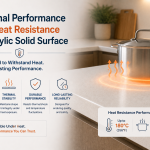
- Direkt heißes Kochgeschirr sollte nicht ungeschützt auf die Oberfläche gestellt werden
- Scharfe Gegenstände können das Material zerkratzen
- Dunklere Farben können Kratzer sichtbarer machen
- Die langfristige UV-Belastung im Freien hängt von der Formulierung und den Klimabedingungen ab
Die ordnungsgemäße Herstellung, Installation und Wartung bleiben für die langfristige Leistung wichtig.
Warum feste Acryloberflächen weiterhin relevant bleiben
Trotz der zunehmenden Konkurrenz durch Quarz, Porzellan und andere technische Materialien bleibt Acryl-Feststoffoberfläche aufgrund seiner unübertroffenen Vielseitigkeit bei der Herstellung weiterhin äußerst relevant.
Seine Fähigkeit zu kombinieren:
- Nahtlose Verbindung
- Flexibilität beim Thermoformen
- Reparierbarkeit
- Integrierte Fertigung
- Architektonische Anpassung
macht es zu einem der anpassungsfähigsten Materialien für die moderne gewerbliche Innenarchitektur.
Abschluss
Acryl-Feststoffoberflächen bleiben eines der vielseitigsten Materialien für die Architekturherstellung, da sie nahtlose Herstellung, Flexibilität beim Thermoformen, erneuerbare Oberflächentechnologie und hygienische Oberflächenleistung in einem einzigen integrierten Herstellungssystem kombinieren.
Sein Wert reicht weit über herkömmliche Arbeitsplattenanwendungen hinaus in das Gesundheitswesen, das Gastgewerbe, den Einzelhandel, gewerbliche Innenräume und maßgeschneiderte architektonische Umgebungen.
Bei ACRION entwickeln wir weiterhin Lösungen für feste Acryloberflächen, die weltweit auf architektonische Fertigung, Designflexibilität und langfristige kommerzielle Haltbarkeit ausgelegt sind.