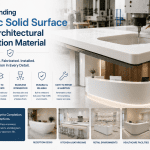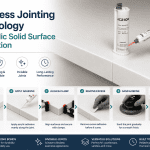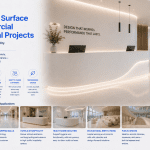
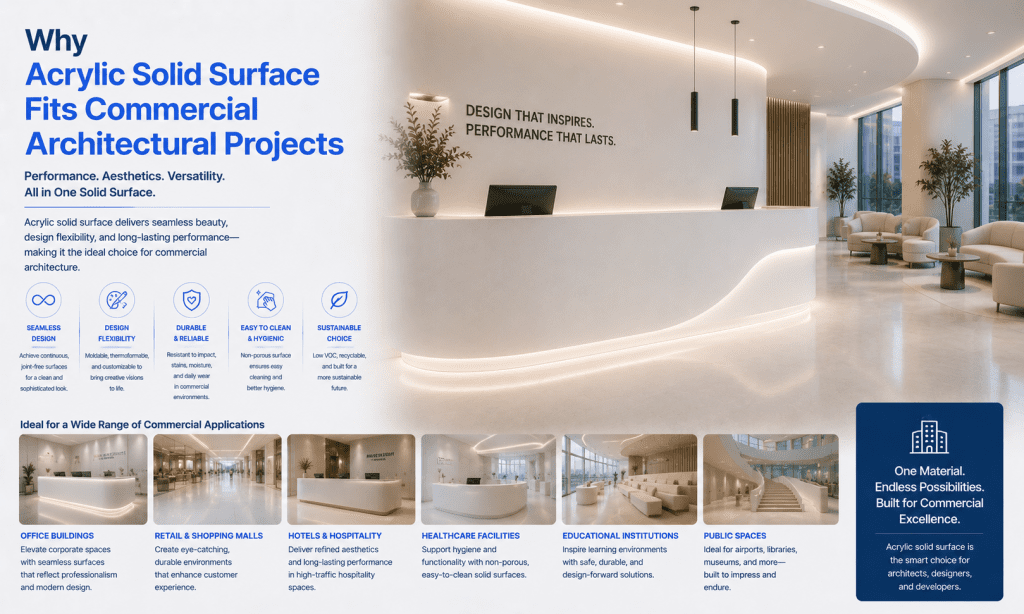
Gewerbliche Architekturumgebungen erfordern zunehmend Oberflächenmaterialien, die nahtlose Verarbeitung, langfristige Haltbarkeit, Wartungseffizienz und flexible Designintegration vereinen. Aufgrund ihrer Fähigkeit, integrierte architektonische Oberflächensysteme zu unterstützen, werden feste Acryloberflächenmaterialien häufig in Innenräumen im Gastgewerbe, im Gesundheitswesen, im Einzelhandel, im öffentlichen Raum, im Bildungswesen und im gewerblichen Bereich eingesetzt.
Im Gegensatz zu vielen starren oder stark verbundenen Materialien ermöglicht die feste Acryloberfläche Designern und Herstellern die Schaffung durchgehender Oberflächen, integrierter Arbeitsplätze, thermogeformter Geometrie und maßgeschneiderter kommerzieller Installationen, die für architektonische Umgebungen mit hohem Verkehrsaufkommen geeignet sind.
Warum kommerzielle Projekte nahtlose Oberflächensysteme erfordern
Gewerbliche Umgebungen sind ständiger täglicher Nutzung, betriebsbedingter Abnutzung, Reinigungsverfahren und starker öffentlicher Interaktion ausgesetzt. In diesen Räumen verwendete Oberflächenmaterialien müssen Haltbarkeit, Wartungseffizienz und langfristige visuelle Konsistenz unterstützen.
Moderne gewerbliche Innenräume legen zunehmend Wert auf nahtlose architektonische Oberflächen mit geringerem visuellen Lärm, integrierter Fertigung und vereinfachten Wartungsanforderungen.
Acrylwerkstoffe mit fester Oberfläche unterstützen diese architektonischen Prioritäten durch nahtlose Fertigungsmöglichkeiten, porenfreie Oberflächenstruktur und individuelle Fertigungsflexibilität.
Empfangs- und Lobbysysteme für das Gastgewerbe
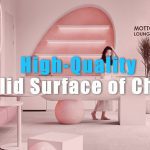
In Innenräumen im Gastgewerbe werden häufig feste Acryloberflächenmaterialien für Empfangstheken, Concierge-Systeme, integrierte Wandverkleidungen, Restauranttheken und maßgeschneiderte Umgebungen für die Interaktion mit Gästen verwendet.
Dank der nahtlosen Fertigungs- und Thermoformbarkeit können Hoteldesigner geschwungene Empfangstheken, skulpturale Gewerbeoberflächen, integrierte Beleuchtungssysteme und maßgeschneiderte Branding-Installationen erstellen.
Diese Fertigungsmerkmale tragen dazu bei, integriertere Innenräume für das Gastgewerbe mit stärkerer architektonischer Kontinuität zu schaffen.
Gesundheitswesen und hygienische kommerzielle Anwendungen
Im Gesundheitswesen sind Oberflächensysteme erforderlich, die einfachere Reinigungsverfahren, ein geringeres Risiko einer Gelenkkontamination und eine langfristige Wartungseffizienz ermöglichen.
Acrylwerkstoffe mit fester Oberfläche werden aufgrund ihrer nahtlosen Herstellungsfähigkeit und porenfreien Struktur häufig für Empfangstheken im Gesundheitswesen, Waschstationen, Laborarbeitsplatten, Klinikoberflächen und integrierte hygienische Architektursysteme eingesetzt.
Integrierte Spülen, gewölbte Rückwände und durchgehende Arbeitsflächen tragen dazu bei, Wartungsarbeiten in institutionellen Umgebungen zu vereinfachen.
Einzelhandel und öffentliche architektonische Umgebungen
Einzelhandelsgeschäfte, Flughäfen, öffentliche Einrichtungen, Bildungsgebäude und Ausstellungsumgebungen verwenden zunehmend feste Acryloberflächen für Kundeninteraktionssysteme und integrierte architektonische Oberflächen.
Zu den gängigen Anwendungen gehören:
- Kassentheken im Einzelhandel
- Informationsschalter am Flughafen
- Schalter für öffentliche Dienstleistungen
- Gewerbliche Waschplätze
- Pädagogische Arbeitsplatten
- Empfangssysteme für Ausstellungen
- Integrierte Anzeigesysteme
- Kommerzielle Möbelinstallationen
Die Fertigungsflexibilität des Materials unterstützt individuelle Layouts und eine projektorientierte architektonische Integration.
Thermoformen und kundenspezifische kommerzielle Fertigung
Eines der entscheidenden Merkmale von Acryl-Feststoffoberflächen ist die Thermoformbarkeit. Das Material kann erhitzt und in gekrümmte Geometrien und skulpturale Architekturformen gebracht werden, die mit vielen starren Oberflächenmaterialien nur schwer zu erreichen sind.
Geschwungene Empfangstresen, fließende Wandübergänge, integrierte Sitzsysteme und maßgeschneiderte kommerzielle Installationen werden zunehmend aus thermogeformten Acryl-Mineraloberflächensystemen hergestellt.
Diese Flexibilität ermöglicht es Architekten und Designern, optisch integriertere und unverwechselbarere Geschäftsumgebungen zu schaffen.
Lebenszykluswartung und erneuerbare Oberflächensysteme
Kommerzielle Projekte legen häufig Wert auf langfristige Betriebseffizienz und Wartungsleistung über den gesamten Lebenszyklus. Mineralwerkstoffe aus Acryl gelten als erneuerbare Oberflächen, da kleinere Kratzer und Oberflächenabnutzung oft durch Schleif- und Nachbearbeitungsverfahren repariert werden können.
Diese Reparaturfähigkeit kann dazu beitragen, den nutzbaren Lebenszyklus gewerblicher Architekturoberflächen zu verlängern und den Austauschbedarf in stark frequentierten Umgebungen zu reduzieren.
Diese Eigenschaften sind besonders wertvoll für Anwendungen im Gastgewerbe, im Gesundheitswesen, im Einzelhandel und in der öffentlichen Architektur.
Warum nichtporöse Oberflächen in gewerblichen Umgebungen wichtig sind
Acryl-Feststoffoberflächen werden als porenfreie Architekturoberflächen hergestellt, die für hygienische gewerbliche Umgebungen geeignet sind.
Im Vergleich zu porösen oder stark verbundenen Systemen tragen nahtlose, nicht poröse Oberflächen dazu bei, die Reinigungsverfahren zu vereinfachen und die Wartung in öffentlichen architektonischen Umgebungen zu erleichtern.
Diese Eigenschaften sind besonders wichtig für Anwendungen in den Bereichen Gesundheitswesen, Gastgewerbe, Bildung, Wellness und Gastronomie.
Übersicht über kommerzielle Anwendungen
| Kommerzielle Anwendung | Warum Acryl-Mineraloberfläche passt |
|---|---|
| Theken im Gesundheitswesen | Fugenlose, hygienische Oberflächen |
| Empfangssysteme für das Gastgewerbe | Thermoformung und Branding-Integration |
| Einzelhandels-Servicetheken | Flexibilität bei der individuellen Fertigung |
| Restaurant- und Barsysteme | Einfache Wartung und nahtlose Integration |
| Öffentliche Waschstationen | Porenfreie integrierte Oberflächen |
| Bildungseinrichtungen | Langlebige Arbeitsplatten für den gewerblichen Gebrauch |
| Wellness-Interieur | Geschwungene und nahtlose architektonische Formen |
| Kommerzielle Möbelsysteme | Integrierte Fertigungsflexibilität |
Flexibilität bei der architektonischen Gestaltung
Zeitgenössische gewerbliche Innenräume legen zunehmend Wert auf integrierte architektonische Geometrie, geringe visuelle Geräusche, durchgehende Oberflächen und maßgeschneiderte Fertigungssysteme.
Die feste Acryloberfläche unterstützt diese Designrichtungen durch nahtlose Verbindungen, Thermoformbarkeit, integrierte Beleuchtungskompatibilität, CNC-Bearbeitung und skulpturale Architekturfertigung.
Diese Eigenschaften ermöglichen es Architekten und Herstellern, kommerzielle Umgebungen mit stärkerer Materialkontinuität und individueller architektonischer Identität zu schaffen.
Warum Acryl-Mineraloberflächen in der kommerziellen Architektur weiter wachsen
Moderne kommerzielle Projekte legen zunehmend Wert auf Flexibilität, Lebenszyklushaltbarkeit, Wartungseffizienz und integrierte Architektursysteme.
Acrylwerkstoffe mit fester Oberfläche erfreuen sich immer größerer Beliebtheit in Innenräumen im Gastgewerbe, im Gesundheitswesen, im öffentlichen Raum, im Einzelhandel, im Wellnessbereich und in gewerblichen Innenräumen, da sie eine nahtlose Fertigung, individuelle architektonische Integration und langfristige kommerzielle Leistung unterstützen.
Da sich die kommerzielle Architektur zunehmend in Richtung integrierter Materialsysteme und skulpturaler Innenumgebungen bewegt, bleibt Acryl-Feststoffoberfläche ein wichtiges fertigungsorientiertes Architekturmaterial.
Häufig gestellte Fragen
Warum eignet sich feste Acryloberfläche für gewerbliche Projekte?
Die feste Acryloberfläche vereint nahtlose Herstellung, Wartungseffizienz, porenfreie Oberflächenstruktur und individuelle Fertigungsflexibilität, die für gewerbliche Architekturumgebungen geeignet ist.
Können feste Acryloberflächen im Gesundheitswesen eingesetzt werden?
Ja. Feste Acryloberflächen werden häufig für Theken im Gesundheitswesen, Waschstationen, Laborarbeitsplatten und hygienische Architektursysteme verwendet.
Warum ist eine nahtlose Fertigung in gewerblichen Innenräumen wichtig?
Die nahtlose Fertigung trägt dazu bei, sichtbare Fugen zu reduzieren, Reinigungsverfahren zu vereinfachen und integriertere architektonische Oberflächensysteme zu schaffen.
Kann feste Acryloberfläche thermogeformt werden?
Ja. Acryl-Feststoffoberflächen können durch Thermoformen in gekrümmte Geometrien und individuelle architektonische Formen für kommerzielle Anwendungen gebracht werden.
Für welche kommerziellen Anwendungen wird üblicherweise eine feste Acryloberfläche verwendet?
Zu den üblichen Anwendungen gehören Empfangstheken im Gastgewerbe, Arbeitsplatten im Gesundheitswesen, Einzelhandelstheken, Restaurantsysteme, öffentliche Waschstationen, Bildungseinrichtungen und integrierte gewerbliche Innenräume.
Abschluss
Acrylwerkstoffe mit fester Oberfläche vereinen nahtlose Herstellung, Thermoformungsflexibilität, erneuerbare Oberflächenfähigkeit und hygienische architektonische Leistung und eignen sich daher hervorragend für kommerzielle Architekturprojekte.
Von Empfangssystemen im Gastgewerbe und im Gesundheitswesen bis hin zu Einzelhandelstheken und öffentlichen architektonischen Innenräumen unterstützt feste Acryloberfläche weiterhin die moderne kommerzielle Architektur, bei der integrierte Fertigung, Wartungseffizienz und langfristige Lebenszyklusleistung im Vordergrund stehen.