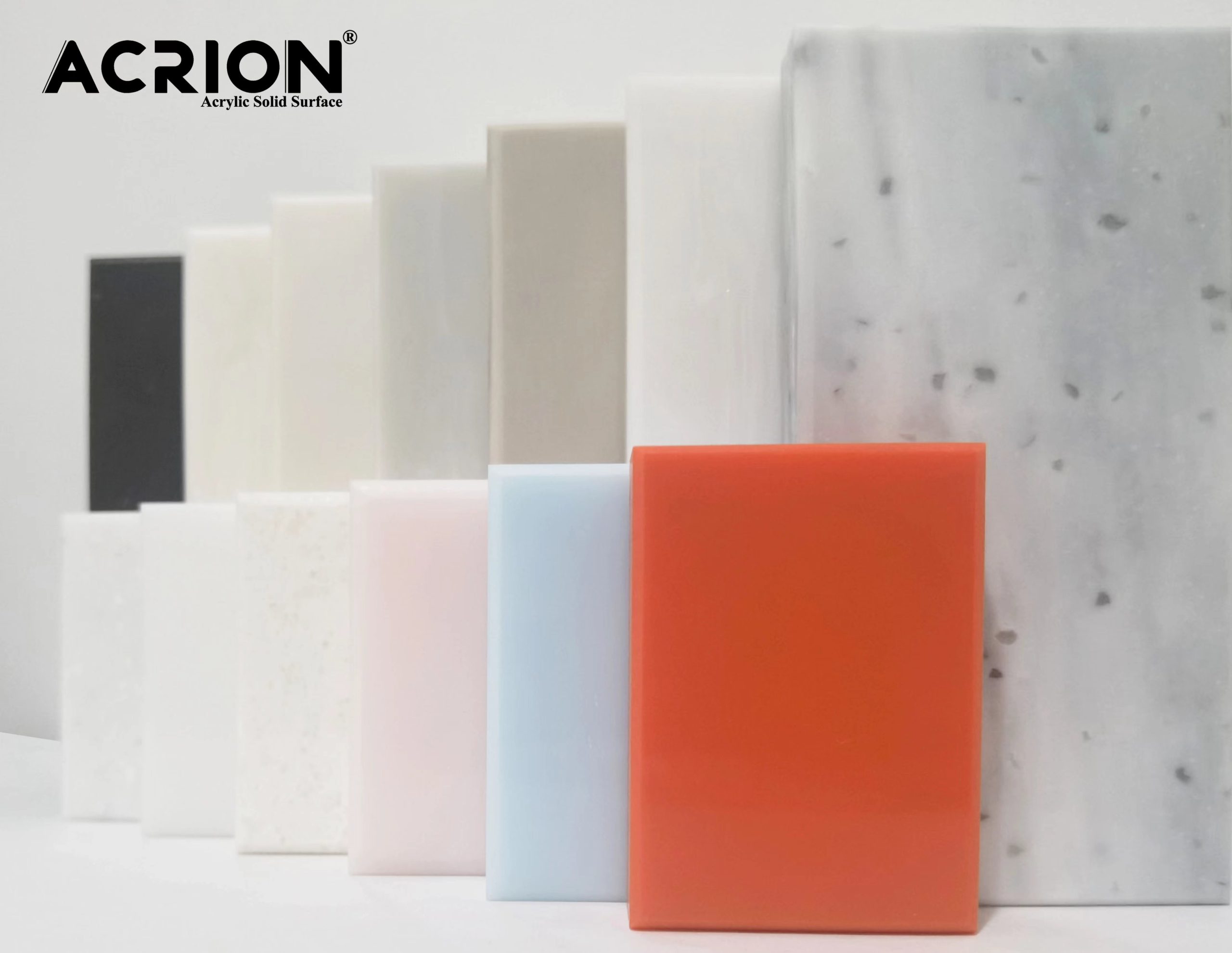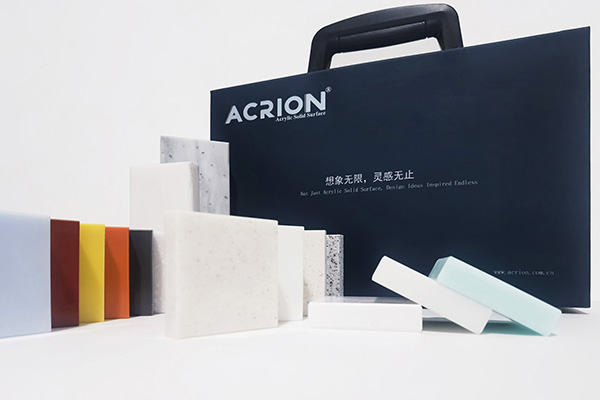
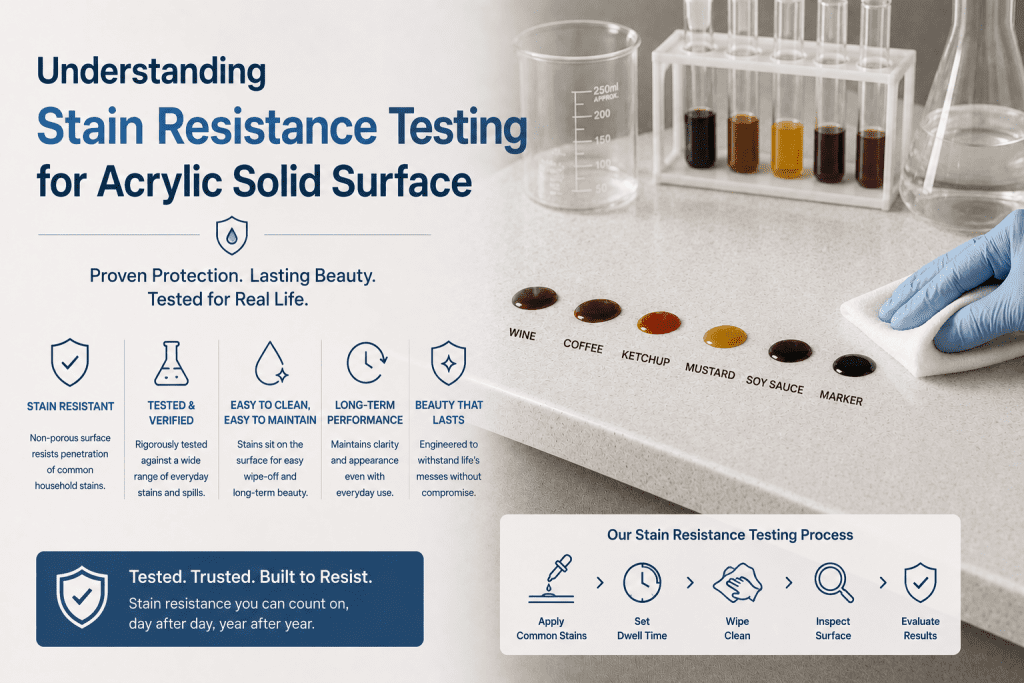
Stain resistance is one of the most important surface performance characteristics of acrylic solid surface materials used in kitchens, healthcare facilities, hospitality interiors, retail environments, and commercial architectural applications.
As a professional acrylic solid surface manufacturer with more than 20 years of fabrication and project experience, ACRION understands that stain resistance is often misunderstood in the market. No surface material is completely stain-proof under all conditions, but properly engineered acrylic solid surface materials can provide strong resistance to common household and commercial contaminants.
This article explains how stain resistance of acrylic solid surface materials is commonly evaluated, including testing procedures, common contaminants, cleaning evaluation methods, and practical maintenance considerations.
What Is Stain Resistance?
Stain resistance refers to a material’s ability to resist visible discoloration or contamination after exposure to liquids, pigments, oils, chemicals, or food substances.
For acrylic solid surface materials, stain resistance is mainly related to:
- Non-porous material structure
- Surface compactness
- Formulación de resina
- Surface finish quality
- Cleaning and maintenance procedures
The non-porous and homogeneous structure of acrylic solid surface helps reduce deep liquid penetration and supports easier surface cleaning under normal use conditions.
Common Stain Resistance Testing Standards
Professional evaluation of stain resistance may involve testing methods and procedures commonly referenced in architectural material evaluation standards.
Depending on project requirements and regional standards, testing references may include:
- ANSI/NSF 51
- Norma ASTM D1308
- EN 438
- ISO 4586
- Manufacturer internal laboratory procedures
Actual testing procedures may vary depending on application requirements, contaminant categories, exposure duration, and evaluation criteria.
Typical Contaminants Used in Testing
Stain resistance testing commonly uses household, food, and commercial contaminants that may appear during daily use.
Typical contaminants may include:
- Café
- Té
- Red wine
- Soy sauce
- Cooking oil
- Food coloring
- Ink and markers
- Iodine solutions
- Cosmetic products
- Cleaning chemicals
Different contaminants may produce different staining behavior depending on pigment concentration, exposure duration, and surface finish.
Typical Stain Resistance Testing Procedure
A typical stain resistance evaluation may include the following steps:
- Preparation of flat and clean material samples
- Application of selected contaminants
- Controlled exposure duration
- Cleaning procedure evaluation
- Visual inspection and stain grading
Exposure duration may vary depending on testing requirements and project standards. Some evaluations may involve short-term exposure, while others may simulate extended contamination conditions.
Cleaning and Evaluation Procedures
After exposure, contaminants are typically removed using standard cleaning procedures appropriate for the material surface.
Common cleaning approaches may include:
- Mild household cleaners
- Non-abrasive cleaning agents
- Soft cloth cleaning
- Warm water and soap
- Manufacturer-recommended maintenance procedures
The surface is then visually evaluated for:
- Residual discoloration
- Surface marks
- Gloss variation
- Pigment penetration
- Dificultad de limpieza
Importance of Non-Porous Material Structure
The stain resistance of acrylic solid surface is primarily related to its non-porous homogeneous material structure.
Because the material does not contain open pores like some natural materials, many common contaminants remain closer to the surface and are generally easier to remove during routine cleaning.
This non-porous characteristic also contributes to:
- Easier maintenance
- Rendimiento higiénico mejorado
- Reduced liquid penetration
- Long-term appearance consistency
Surface Finish and Stain Visibility
Surface finish may influence stain visibility and cleaning performance.
- Glossy finishes may show stains more visibly
- Matte finishes may better hide light contamination
- Darker colors may reveal residue more easily
- Lighter colors may reduce visual stain contrast
Proper finish selection can help optimize long-term maintenance performance for different commercial and residential applications.
Repairability and Renewable Surface Advantage
One major advantage of acrylic solid surface is its renewable surface capability.
If localized staining, scratches, or surface wear occur, the surface can often be restored through:
- Lijado profesional
- Acabado de superficies
- Procedimientos de pulido
- Restauración de mantenimiento
This repairability advantage helps extend the long-term appearance and service life of the material.
Important Clarification About Stain Resistance
It is important to understand that no architectural surface material is completely immune to staining under all exposure conditions.
Factors influencing stain behavior may include:
- Duración de la exposición
- Contaminant type
- Acabado de la superficie
- Cleaning response time
- Maintenance procedures
- Concentración química
Some strong pigments or aggressive chemicals may still cause visible discoloration if left on the surface for extended periods.
Applications Requiring Strong Stain Resistance
Acrylic solid surface is widely used in environments requiring long-term cleanability and stain resistance.
- Instalaciones sanitarias
- Interiores de hostelería
- Cocinas comerciales
- Entornos minoristas
- Cocinas y baños residenciales.
- Interiores arquitectónicos públicos.
Its balance of non-porous structure, seamless fabrication, and renewable surface performance makes it highly suitable for commercial interior applications.
Conclusión
Acrylic solid surface provides strong stain resistance through its non-porous homogeneous structure, easy-to-clean surface characteristics, and renewable maintenance capability.
Professional stain resistance evaluation requires controlled testing procedures, standardized cleaning methods, and proper interpretation of results under realistic application conditions.
Although no material is completely stain-proof, acrylic solid surface remains one of the most practical and maintainable architectural surface materials for healthcare, hospitality, commercial, and residential interior applications.
At ACRION, we continue to develop acrylic solid surface solutions engineered for long-term cleanability, fabrication stability, and commercial durability worldwide.