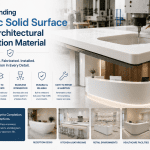
La superficie sólida acrílica sigue siendo uno de los materiales de fabricación más versátiles utilizados en la arquitectura interior comercial moderna, instalaciones sanitarias, proyectos hoteleros, sistemas minoristas y aplicaciones arquitectónicas personalizadas en todo el mundo.
Como fabricante profesional de superficies sólidas acrílicas con más de 20 años de experiencia en fabricación y proyectos, ACRION comprende que el valor real de las superficies sólidas acrílicas se extiende mucho más allá de las aplicaciones tradicionales de encimeras.
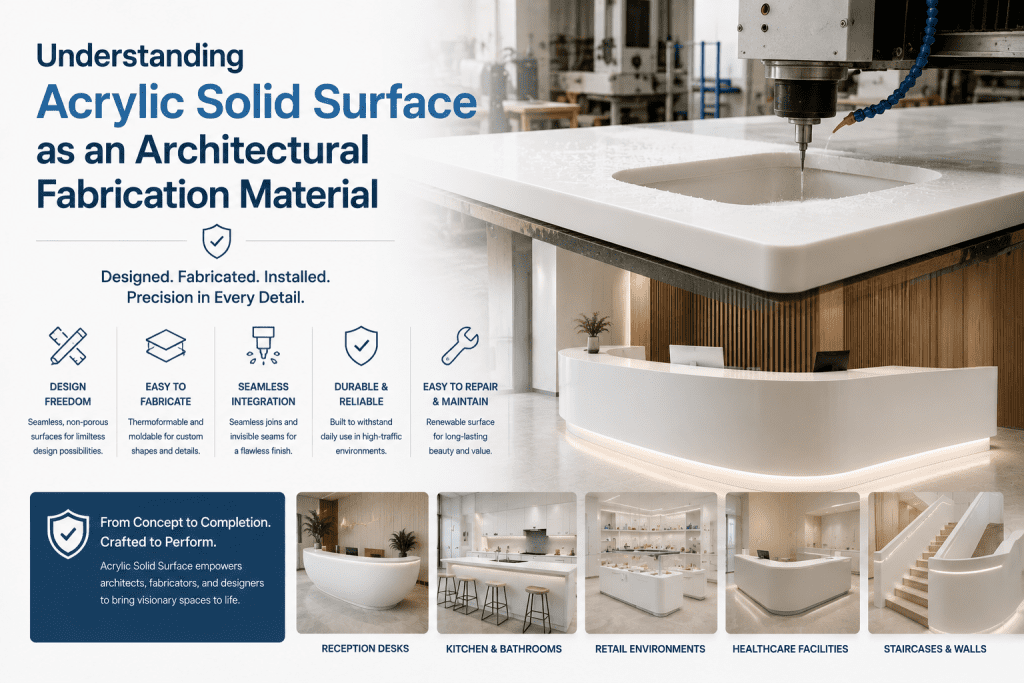
Su importancia en la arquitectura moderna proviene de la combinación de capacidad de fabricación sin costuras, flexibilidad de termoformado, tecnología de superficies renovables y potencial de fabricación personalizada integrada.
Este artículo explica por qué la superficie sólida acrílica sigue siendo muy relevante en el diseño de interiores comerciales y en los sistemas de fabricación arquitectónica.
¿Qué es la superficie sólida acrílica?
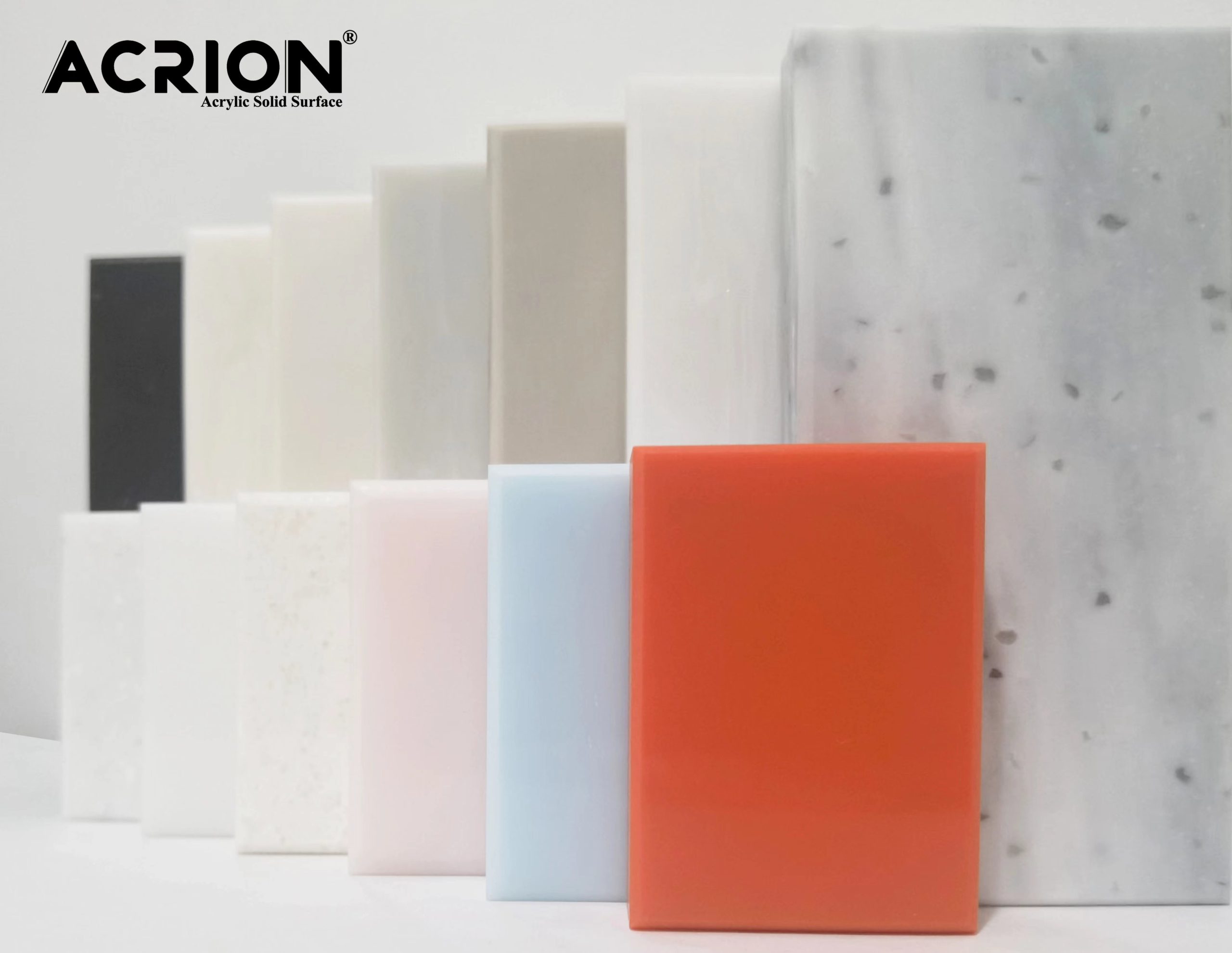
La superficie sólida acrílica es un material de ingeniería homogéneo que generalmente se fabrica utilizando sistemas de resina acrílica combinados con cargas minerales y pigmentos.
A diferencia de los materiales decorativos en capas, la superficie sólida acrílica mantiene una estructura y un color relativamente consistentes en todo el espesor del material.
Esta estructura homogénea soporta:
- fabricación sin costuras
- Renovabilidad superficial
- Capacidad de termoformado
- Soluciones de fabricación integradas
- Flexibilidad de mantenimiento a largo plazo
Por qué la superficie sólida acrílica es diferente del cuarzo y la piedra
Los diferentes materiales arquitectónicos proporcionan diferentes ventajas de rendimiento según la aplicación.
| Material | Fortaleza principal |
|---|---|
| Superficie sólida acrílica | Flexibilidad de fabricación e integración perfecta |
| Superficie de cuarzo | Mayor dureza superficial |
| Piedra sinterizada | Excelente resistencia al calor y a los rayos UV |
| Piedra Natural | Variación visual natural |
| Laminado | Menor costo inicial |
La ventaja única de la superficie sólida acrílica no es su dureza extrema ni su resistencia al calor ultra alta, sino su capacidad para admitir una fabricación personalizada y un diseño arquitectónico integrado.
Capacidad de fabricación perfecta
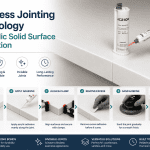
Una de las características que definen la superficie sólida acrílica es su capacidad de fabricación sin costuras.
Utilizando métodos de fabricación profesionales y sistemas adhesivos de colores combinados, se pueden integrar visualmente varias láminas en superficies arquitectónicas continuas con juntas mínimas visibles.
Esta capacidad es especialmente valiosa en:
- Entornos sanitarios
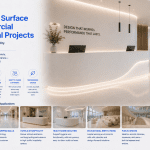
- Mostradores de recepción comerciales
- Interiores de hostelería
- Sistemas de tocador integrados
- Accesorios arquitectónicos para comercio minorista
- Proyectos de interior público.
La fabricación sin costuras mejora la continuidad visual, simplifica la limpieza y respalda la estética arquitectónica minimalista moderna.
Flexibilidad de termoformado y diseño curvo
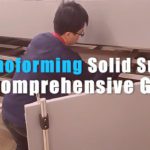
A diferencia de muchos materiales de superficies arquitectónicas rígidas, la superficie sólida acrílica se puede termoformar en curvas personalizadas y geometrías complejas en condiciones de fabricación controladas.
Esto permite a los fabricantes y diseñadores crear:
- Mostradores de recepción curvos
- Mostradores comerciales orgánicos
- Sistemas de pared integrados
- Estaciones de trabajo sanitarias personalizadas
- Sistemas de exhibición minorista
- Elementos arquitectónicos retroiluminados.
La combinación de termoformado y unión sin costuras brinda a la superficie sólida acrílica una flexibilidad de diseño significativa para interiores arquitectónicos personalizados.
Tecnología de superficies renovables
Debido a que la superficie sólida acrílica es un material homogéneo, los daños menores en la superficie a menudo se pueden reparar mediante procedimientos de acabado.
Los métodos típicos de restauración de mantenimiento pueden incluir:
- Lijado profesional
- Acabado de superficies
- Procedimientos de pulido
- Trabajos de reparación localizados.
Esta capacidad de superficie renovable ayuda a extender la vida útil y mantener una apariencia uniforme a largo plazo en entornos comerciales.
Fabricación de fregaderos y lavabos integrados
La superficie sólida acrílica soporta sistemas integrados de fabricación de lavabos y lavabos que crean superficies visualmente continuas sin espacios de transición expuestos.
Este enfoque de fabricación integrada mejora:
- Continuidad visual
- Facilidad de limpieza
- Eficiencia de mantenimiento
- Integración del diseño de interiores.
- Aspecto arquitectónico moderno
La fabricación integrada se utiliza ampliamente en aplicaciones de hostelería, atención sanitaria y baños comerciales.
Características de superficies higiénicas y no porosas
La superficie sólida acrílica es ampliamente reconocida por sus características de superficie no porosa y fácil de limpiar.
Su estructura no porosa ayuda a reducir la penetración de líquidos y facilita el mantenimiento en condiciones normales de uso.
Combinado con la capacidad de fabricación sin costuras, esto hace que la superficie sólida acrílica sea muy adecuada para:
- Hospitales y clínicas
- baños comerciales
- Interiores de hostelería
- Áreas de preparación de alimentos
- Entornos minoristas
Sus ventajas higiénicas están relacionadas principalmente con la facilidad de limpieza y la ingeniería de superficies sin costuras, más que con la química antibacteriana activa.
Aplicaciones más allá de las encimeras tradicionales
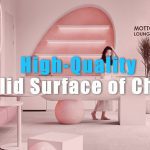
Hoy en día, la superficie sólida acrílica se usa ampliamente en una amplia gama de aplicaciones de fabricación arquitectónica y comercial más allá de las encimeras tradicionales.
- Mostradores de recepción
- Sistemas de revestimiento de paredes
- Accesorios minoristas
- Encimeras sanitarias
- Sistemas de tocador comerciales
- Interiores de restaurantes
- Instalaciones arquitectónicas públicas
- Sistemas decorativos retroiluminados
Su flexibilidad de fabricación permite a los diseñadores crear sistemas interiores personalizados con funcionalidad integrada y geometría compleja.
Consideraciones y limitaciones importantes
Como todos los materiales arquitectónicos, la superficie sólida acrílica también tiene limitaciones de aplicación que deben comprenderse adecuadamente.
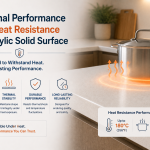
- Los utensilios de cocina calientes directamente no deben colocarse sobre la superficie sin protección.
- Los objetos afilados pueden rayar el material.
- Los colores más oscuros pueden mostrar los rayones más visiblemente.
- La exposición a los rayos UV al aire libre a largo plazo depende de la formulación y las condiciones climáticas.
La fabricación, instalación y mantenimiento adecuados siguen siendo importantes para el rendimiento a largo plazo.
Por qué la superficie sólida acrílica sigue siendo relevante
A pesar de la creciente competencia del cuarzo, la porcelana y otros materiales de ingeniería, la superficie sólida acrílica sigue siendo muy relevante debido a su inigualable versatilidad de fabricación.
Su capacidad para combinar:
- Unión perfecta
- Flexibilidad de termoformado
- Reparabilidad
- Fabricación integrada
- Personalización arquitectónica
lo convierte en uno de los materiales más adaptables para la arquitectura interior comercial moderna.
Conclusión
La superficie sólida acrílica sigue siendo uno de los materiales de fabricación arquitectónica más versátiles porque combina fabricación sin costuras, flexibilidad de termoformado, tecnología de superficie renovable y rendimiento de superficie higiénica dentro de un único sistema de fabricación integrado.
Su valor se extiende mucho más allá de las aplicaciones tradicionales de encimeras y abarca la atención médica, la hotelería, el comercio minorista, los interiores comerciales y los entornos arquitectónicos personalizados.
En ACRION, continuamos desarrollando soluciones de superficies sólidas acrílicas diseñadas para la fabricación arquitectónica, flexibilidad de diseño y durabilidad comercial a largo plazo en todo el mundo.