El rendimiento térmico es una consideración importante para arquitectos, fabricantes, diseñadores y propietarios de viviendas a la hora de seleccionar materiales de superficie para cocinas, instalaciones sanitarias, interiores comerciales y proyectos hoteleros.
Como fabricante profesional de superficies sólidas acrílicas con más de 20 años de experiencia en fabricación y proyectos, ACRION comprende que la conductividad térmica, la resistencia al calor y la capacidad de termoformado a menudo se confunden en el mercado, aunque describen comportamientos de materiales muy diferentes.
Este artículo explica cómo se comporta la superficie sólida acrílica en condiciones térmicas, incluido el comportamiento de transferencia de calor, el confort de la superficie, las limitaciones de resistencia al calor y las características térmicas relacionadas con la fabricación.
¿Qué es la conductividad térmica?
La conductividad térmica mide la rapidez con la que el calor pasa a través de un material.
Los materiales con alta conductividad térmica transfieren calor rápidamente, mientras que los materiales con menor conductividad térmica transfieren calor más lentamente.
La superficie sólida acrílica generalmente tiene una conductividad térmica más baja en comparación con materiales altamente conductores como el acero inoxidable o el aluminio.
Este comportamiento de menor transferencia de calor contribuye a una experiencia táctil más cálida y cómoda durante el uso diario.
Por qué la superficie sólida acrílica se siente más cálida que el metal
Uno de los efectos prácticos de una menor conductividad térmica es que la superficie sólida acrílica generalmente se siente menos fría al tacto en comparación con las superficies metálicas.
| Material | Sensación de superficie típica |
|---|---|
| Acero inoxidable | Frío y altamente conductivo. |
| Aluminio | Rápida transferencia de calor y sensación de tacto fresco. |
| Superficie de cuarzo | Sensación táctil densa y relativamente fría. |
| Superficie sólida acrílica | Experiencia táctil más cálida y suave. |
Esta característica es una de las razones por las que la superficie sólida acrílica se usa ampliamente en entornos sanitarios, hoteleros y residenciales donde la comodidad del usuario es importante.
Resistencia al calor de la superficie sólida acrílica
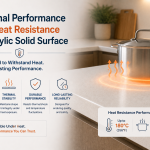
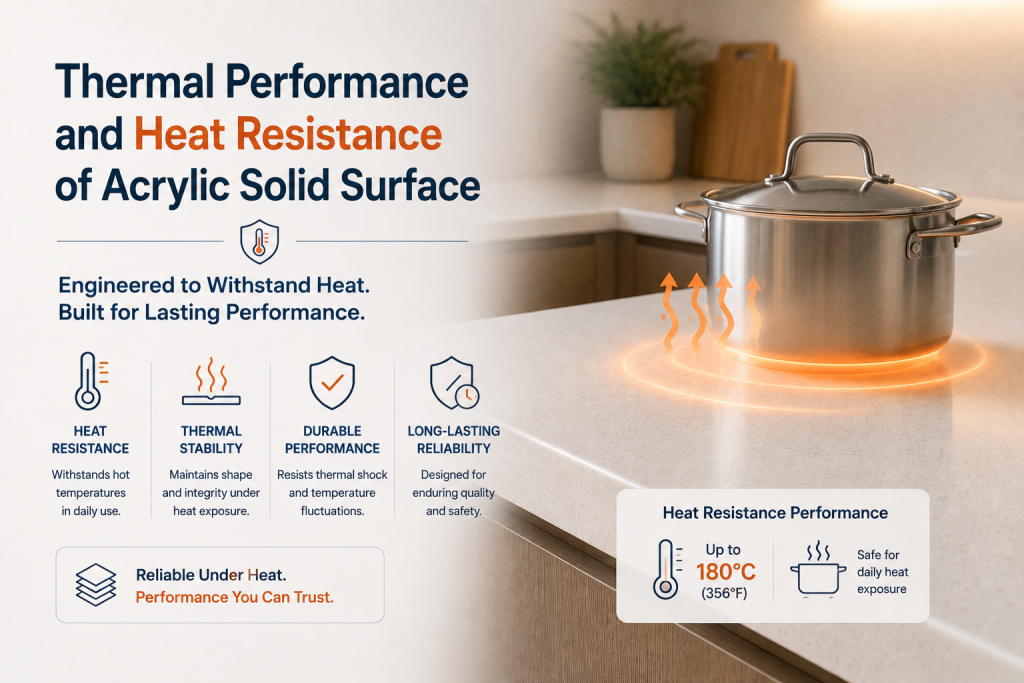
Aunque la superficie sólida acrílica ofrece una resistencia moderada al calor para el uso diario, no está diseñada para una exposición directa prolongada a temperaturas extremas.
Como la mayoría de los materiales arquitectónicos a base de polímeros, la superficie sólida acrílica puede verse afectada por:
- Contacto directo con utensilios de cocina calientes.
- Exposición prolongada a altas temperaturas
- Concentración de calor localizada
- Condiciones de choque térmico
Los efectos potenciales de la exposición excesiva al calor pueden incluir:
- Descoloramiento
- embotamiento de la superficie
- Reblandecimiento
- Pandeo
- Grietas o tensión en las costuras
Por esta razón, los fabricantes profesionales generalmente recomiendan evitar la colocación directa de utensilios de cocina extremadamente calientes sobre la superficie.
Importancia de las almohadillas térmicas y la protección térmica
En cocinas residenciales y áreas de preparación de alimentos comerciales, se recomienda utilizar:
- almohadillas térmicas
- Salvamanteles
- Soportes aislados
- Accesorios protectores para encimeras
Estas precauciones ayudan a reducir el estrés térmico localizado y mejorar la durabilidad de la superficie a largo plazo.
Incluso los materiales con una resistencia moderada al calor pueden resultar dañados por una exposición repentina o prolongada a altas temperaturas.
¿Qué es el choque térmico?
El choque térmico ocurre cuando un material experimenta cambios rápidos de temperatura en un área localizada.
Los ejemplos pueden incluir:
- Colocar utensilios de cocina extremadamente calientes sobre una superficie fría
- Transiciones repentinas de temperatura
- Calefacción concentrada en zonas no soportadas.
En condiciones severas de choque térmico, se puede desarrollar tensión dentro de la estructura del material o en las uniones adhesivas.
La instalación adecuada, la estructura de soporte y el uso diario responsable ayudan a minimizar estos riesgos.
Capacidad de termoformado de la superficie sólida acrílica
Una de las principales ventajas de la superficie sólida acrílica en comparación con muchos materiales de superficie rígida es su capacidad de termoformado.
Bajo condiciones de calentamiento controladas, la superficie sólida acrílica puede volverse lo suficientemente flexible para aplicaciones de fabricación curvas y complejas.
Las aplicaciones termoformadas comunes incluyen:
- Mostradores de recepción curvos
- Protectores contra salpicaduras integrados
- Estaciones de trabajo sanitarias
- Mostradores comerciales personalizados
- Formas arquitectónicas orgánicas
El comportamiento del termoformado está relacionado principalmente con las características de ablandamiento del polímero y el control de la fabricación más que con la conductividad térmica en sí.
Factores que afectan el rendimiento térmico
El comportamiento térmico de la superficie sólida acrílica puede variar dependiendo de:
- Formulación de resina
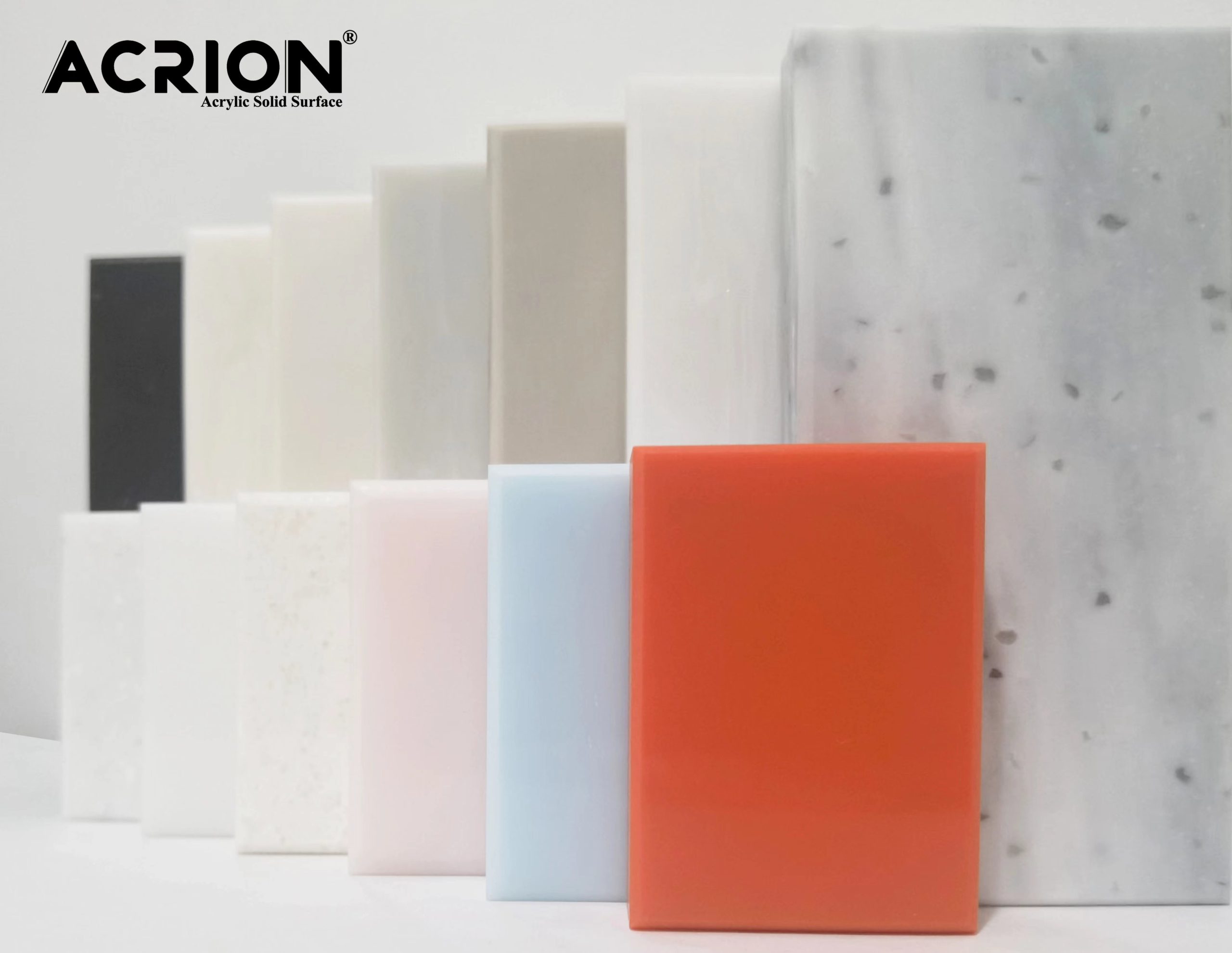
- selección de color
- Espesor de la hoja
- Temperatura ambiental
- Diseño de instalación
- Estructura de soporte
- Calidad de fabricación
Los colores oscuros y los tramos sin soporte a veces pueden mostrar una mayor sensibilidad a la expansión térmica o la acumulación de calor localizada.
Aplicaciones que se benefician del rendimiento térmico equilibrado
La superficie sólida acrílica se usa ampliamente en aplicaciones donde son importantes el comportamiento térmico equilibrado, la comodidad del usuario y la flexibilidad de fabricación.
- Instalaciones sanitarias
- Interiores de hostelería
- Áreas de recepción comercial
- Cocinas y baños residenciales.
- Entornos minoristas
- Instalaciones arquitectónicas personalizadas.
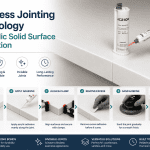
Su combinación de menor conductividad térmica, fabricación sin costuras y capacidad de termoformado lo hace muy versátil para aplicaciones arquitectónicas de interiores.
Aclaración importante sobre el rendimiento térmico
Es importante distinguir entre las diferentes propiedades térmicas de los materiales.
- Una baja conductividad térmica no significa una alta resistencia al calor.
- La capacidad de termoformado no significa durabilidad térmica ilimitada
- Los materiales a base de polímeros aún pueden dañarse por una exposición excesiva al calor.
- La protección térmica adecuada sigue siendo importante en el uso diario
Conclusión
La superficie sólida acrílica proporciona un rendimiento térmico equilibrado para aplicaciones arquitectónicas comerciales y residenciales. Su conductividad térmica relativamente baja contribuye a una experiencia táctil más cálida, mientras que su capacidad de termoformado permite una flexibilidad de fabricación avanzada.
Sin embargo, la superficie sólida acrílica no debe considerarse un material industrial de alta temperatura. La protección térmica adecuada y el uso diario responsable siguen siendo esenciales para mantener la apariencia y el rendimiento estructural a largo plazo.
En ACRION, continuamos desarrollando soluciones de superficies sólidas acrílicas diseñadas para la fabricación arquitectónica, la comodidad del usuario y la durabilidad comercial a largo plazo en todo el mundo.