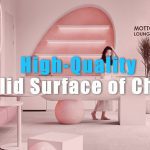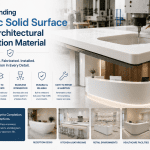
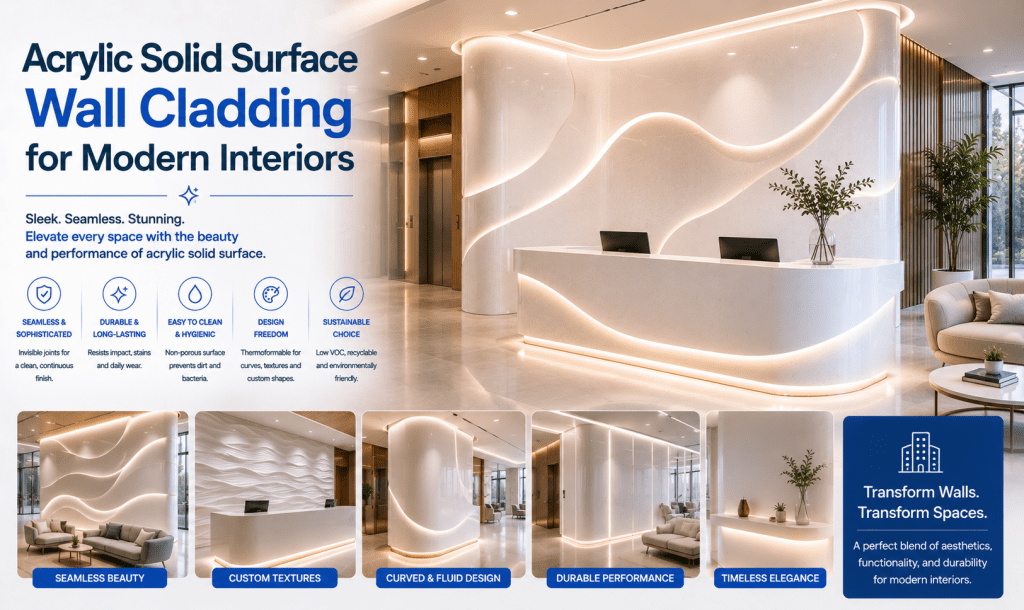
Modern interior architecture increasingly emphasizes seamless surfaces, integrated material systems, and continuous visual transitions across walls, counters, ceilings, and furniture elements. Acrylic solid surface wall cladding has become widely used in commercial and architectural interiors because of its seamless fabrication capability, thermoforming flexibility, and refined material appearance.
From hospitality feature walls and healthcare interiors to reception backdrops and commercial public spaces, acrylic solid surface supports a wide range of interior wall applications that require both architectural consistency and long-term performance.
Why Modern Interiors Use Seamless Wall Systems
Contemporary interior design increasingly favors continuous material systems with lower visual noise and cleaner architectural transitions. Seamless wall cladding helps create more integrated interior environments compared with fragmented decorative wall systems.
Acrylic solid surface supports this design approach because the material can be fabricated into large-format continuous surfaces with minimal visible joints.
Its smooth matte appearance also aligns well with modern minimalist and architectural interior design concepts.
Solid Surface Wall Cladding Applications
Acrylic solid surface wall systems are widely used across commercial, hospitality, healthcare, retail, and residential architectural interiors.
Common wall cladding applications include:
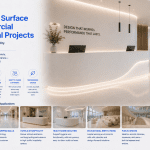
- Reception backdrop walls
- Paredes características de hospitalidad
- Healthcare vertical surfaces
- Commercial lobby walls
- Bathroom wall cladding
- Retail display walls
- Integrated architectural surfaces
- Elevator surround systems
- Public washroom wall systems
- Backlit feature installations
The fabrication flexibility of acrylic solid surface allows designers and fabricators to create customized architectural wall systems for modern interior environments.
Thermoformed and Curved Wall Systems
One of the major advantages of acrylic solid surface is thermoforming capability. The material can be heated and formed into curved geometry, allowing architects and fabricators to create more sculptural interior wall systems.
Curved transitions, rounded corners, flowing wall geometry, and integrated architectural forms are difficult to achieve using many traditional wall materials.
Thermoformed wall systems are increasingly used in hospitality interiors, healthcare projects, commercial reception areas, and public architectural spaces.
Integrated Lighting and Feature Wall Design
Acrylic solid surface wall systems can also be integrated with lighting features to create backlit installations and illuminated architectural surfaces.
Integrated lighting systems are commonly used for:
- Paredes características de hospitalidad
- Reception branding walls
- Commercial display systems
- Wayfinding elements
- Instalaciones de elementos arquitectónicos.
- Retail experience environments
Continuous surface transitions and integrated lighting help create stronger architectural identity within commercial interiors.
Healthcare and Hygienic Vertical Surface Applications
Healthcare environments often require hygienic wall systems that support simplified cleaning procedures and integrated surface continuity.
Acrylic solid surface is widely used for healthcare wall cladding, wash station surrounds, laboratory wall systems, and hygienic vertical applications because of its non-porous surface structure and seamless fabrication possibilities.
Integrated corners, coved transitions, and seamless wall systems help reduce moisture-prone joints while supporting cleaner institutional interiors.
Reception and Hospitality Wall Applications
Reception areas and hospitality interiors increasingly use acrylic solid surface for feature walls, integrated counters, branding installations, and continuous material systems.
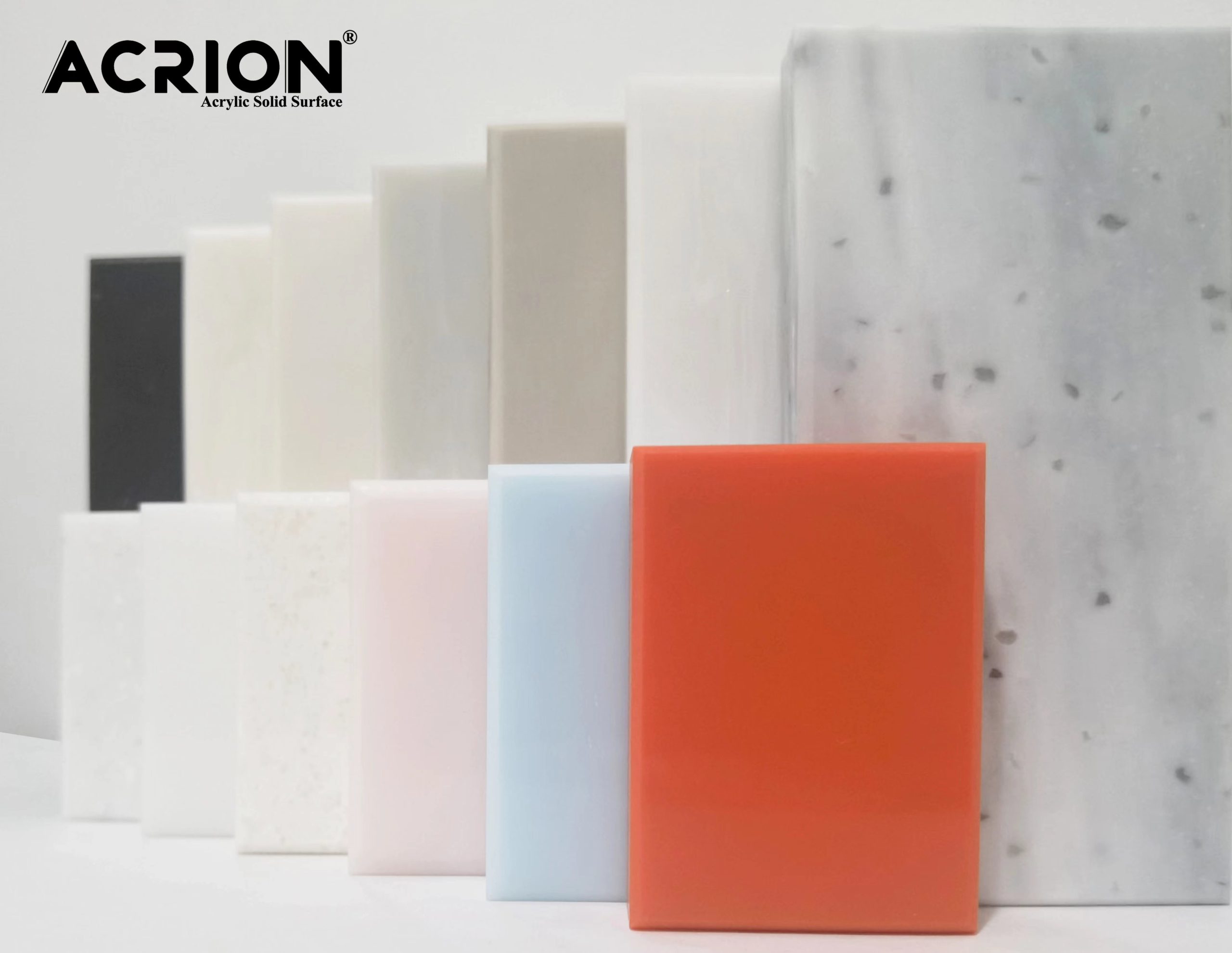
The material’s matte finish options, seamless fabrication capability, and custom edge detailing help support minimalist hospitality interiors with stronger architectural consistency.
Large-format wall systems also help create more refined and visually continuous commercial interiors.
Fabrication and Installation Considerations
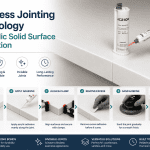
Professional solid surface wall systems typically involve CNC processing, thermoforming, seamless joint fabrication, substructure installation, and precision edge finishing.
Wall installation systems should consider project conditions, panel dimensions, expansion allowance, substructure design, and long-term maintenance requirements.
Proper fabrication and installation procedures help maintain surface consistency and long-term architectural performance.
Why Designers and Fabricators Choose Acrylic Solid Surface Wall Systems
Compared with many traditional decorative wall materials, acrylic solid surface offers greater fabrication flexibility for customized architectural interiors.
The material can be seamlessly joined, thermoformed, CNC processed, integrated with lighting systems, and fabricated into curved wall geometry and continuous architectural surfaces.
This flexibility allows designers and fabricators to create more integrated, visually consistent, and architecturally refined interior environments.
Preguntas frecuentes
What is acrylic solid surface wall cladding?
Acrylic solid surface wall cladding is a seamless architectural wall system fabricated using acrylic solid surface materials for commercial and interior applications.
Can acrylic solid surface be used for interior walls?
Yes. Acrylic solid surface is widely used for hospitality feature walls, healthcare vertical surfaces, reception backdrops, and integrated architectural interiors.
Can acrylic solid surface wall systems be thermoformed?
Yes. Acrylic solid surface can be thermoformed into curved wall geometry and sculptural architectural forms.
Can lighting be integrated into solid surface walls?
Yes. Backlit feature walls and integrated lighting systems are common applications for acrylic solid surface wall cladding.
Is acrylic solid surface suitable for healthcare wall systems?
Yes. Its seamless fabrication capability and non-porous structure make it suitable for many hygienic vertical surface applications.
Conclusión
Acrylic solid surface wall cladding combines seamless fabrication, thermoforming flexibility, integrated lighting capability, hygienic performance, and architectural continuity, making it highly suitable for modern commercial and interior wall systems.
From healthcare interiors and hospitality feature walls to reception backdrops and sculptural commercial installations, acrylic solid surface continues to support architectural environments that prioritize seamless integration, material consistency, and customized fabrication possibilities.