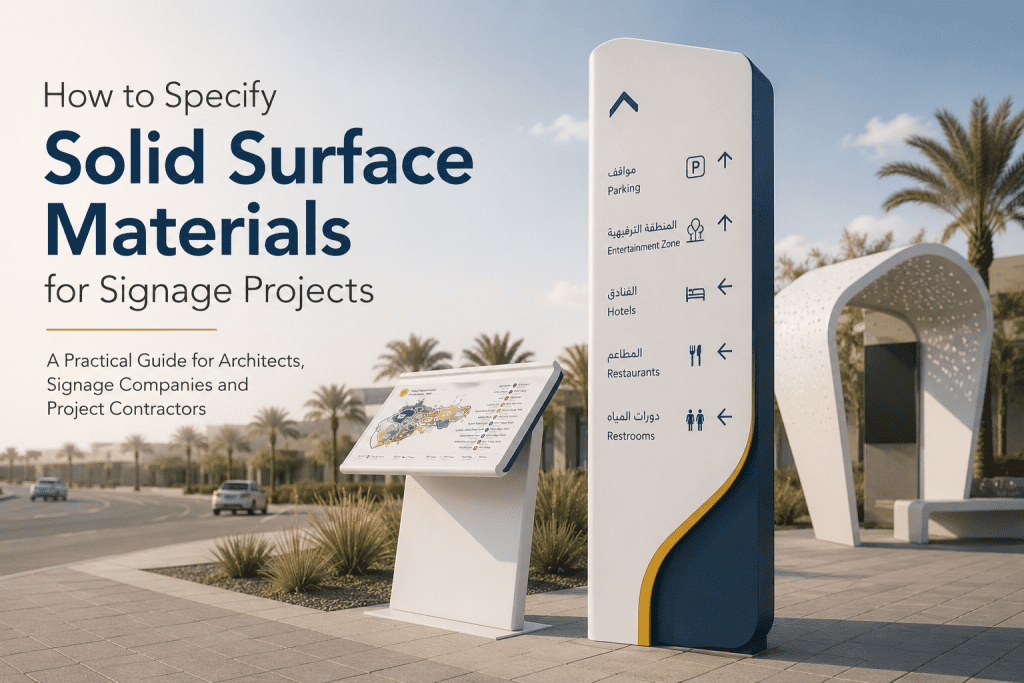
A Practical Guide for Architects, Signage Companies and Project Contractors
Introducción
Commercial signage has become more than simply displaying a company name or logo. In modern architecture, signage often forms part of the overall design concept, contributing to branding, wayfinding and the visual identity of a space.
From hotels and corporate offices to shopping centres, healthcare facilities, public spaces and large-scale developments, project teams are increasingly looking for signage solutions that combine design flexibility with practical performance.
Architectural solid surface materials have become a practical option for many signage applications because they can be fabricated into custom forms, used as cladding panels, integrated with lighting systems and incorporated into both interior and exterior environments.
However, specifying a material for a signage project involves more than selecting a colour or finish. Project objectives, installation conditions, fabrication requirements, structural coordination and long-term maintenance should all be considered during the planning process.
This guide explores practical considerations for signage projects and provides a structured approach that can help architects, signage companies and project contractors make informed decisions.
Understanding Signage Projects
Every signage project has its own objectives and challenges. Some projects focus on creating a strong brand identity, while others provide navigation, information or architectural features within a building or public realm.
Rather than treating signage as a separate component, many modern commercial and public projects integrate signage into the overall architectural, landscape and wayfinding strategy.
Las aplicaciones comunes incluyen:
- Hotel reception logos
- Corporate branding walls
- Retail feature installations
- Healthcare wayfinding systems
- University information displays
- Public building identification
- Freestanding directional signs
- Public realm wayfinding systems
- Decorative architectural features
Architectural solid surface materials are often considered for these applications because they offer a combination of visual quality, fabrication flexibility and design integration.
Apariencia perfecta
Large installations can be designed with smooth visual transitions that complement contemporary architecture and reduce visual interruptions.
Flexibilidad de diseño
Custom shapes, curved forms, integrated lettering and decorative elements can be incorporated into project designs.
Illuminated Features
Many projects combine signage with lighting to create visual impact, improve visibility and support user navigation.
Cladding Panels
For freestanding or structural signage systems, solid surface can be used as external cladding panels over an internal frame, helping combine architectural appearance with practical construction.
Reparabilidad
Minor surface damage can often be addressed as part of long-term maintenance planning, which is useful for public and high-traffic environments.
Practical Takeaway
A successful signage project starts with understanding the project’s purpose, environment and construction logic rather than focusing only on a specific material.
Planning a Successful Signage Project
Successful signage projects are often the result of careful planning rather than last-minute material selection.
Before discussing products or fabrication methods, it can be helpful to review several basic project considerations.
What is the purpose of the signage?
Will it provide information, support wayfinding, strengthen brand identity or become part of the architectural design?
Where will the signage be installed?
Installation location influences project planning, maintenance expectations, structural requirements and overall design decisions.
Will the project include illuminated features?
Lighting concepts are often easier to coordinate during the planning stage than after fabrication has started.
Does the design include custom shapes?
Curved forms, sculptural profiles, integrated lettering and decorative elements may require additional planning.
How will the signage be installed and maintained?
Understanding fixing methods, site access, electrical routing, cleaning requirements and maintenance access can support better project decisions.
Are there project-specific requirements?
Architectural specifications, colour schedules, structural drawings, electrical requirements and technical standards should be reviewed as part of the planning process.
Practical Takeaway
Asking the right project questions early can simplify later design, fabrication, structural coordination and installation decisions.
Real Project Perspective: Large-Scale Wayfinding Signage
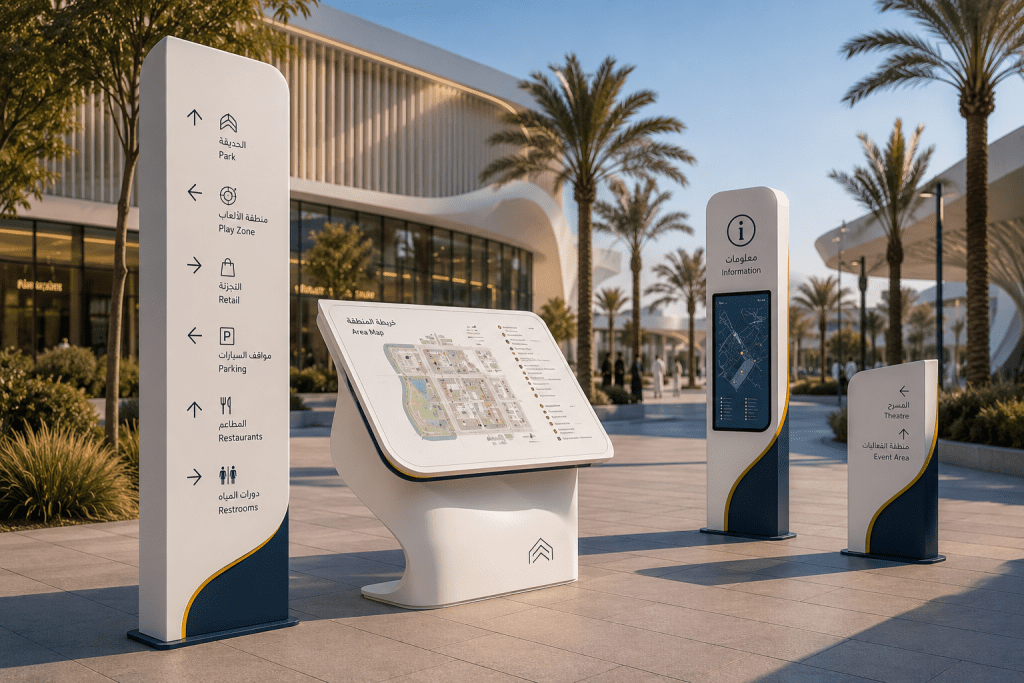
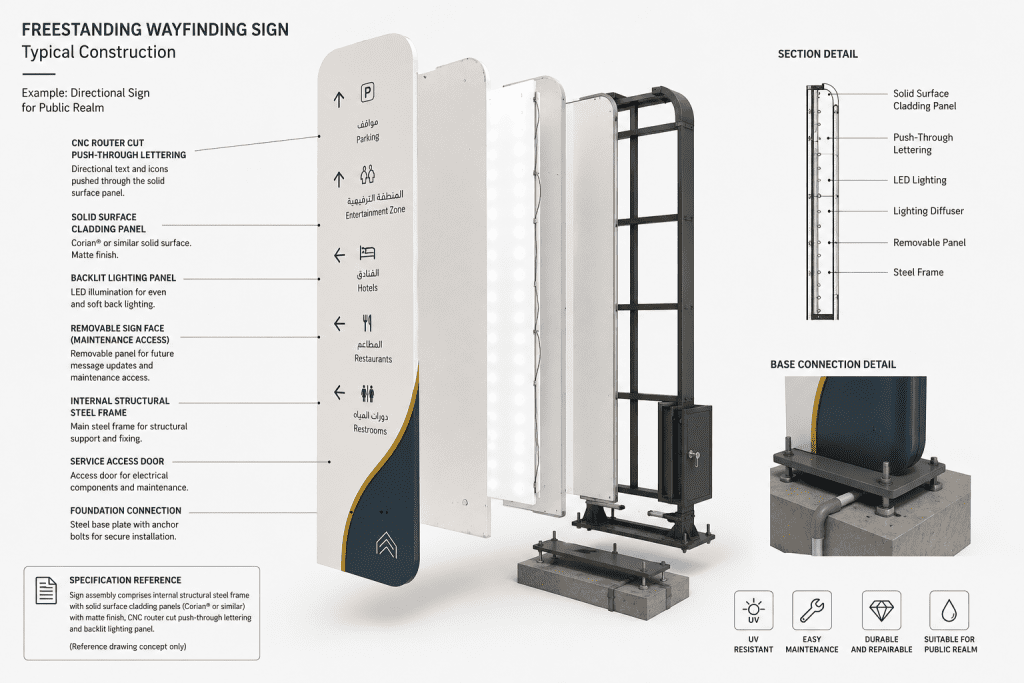
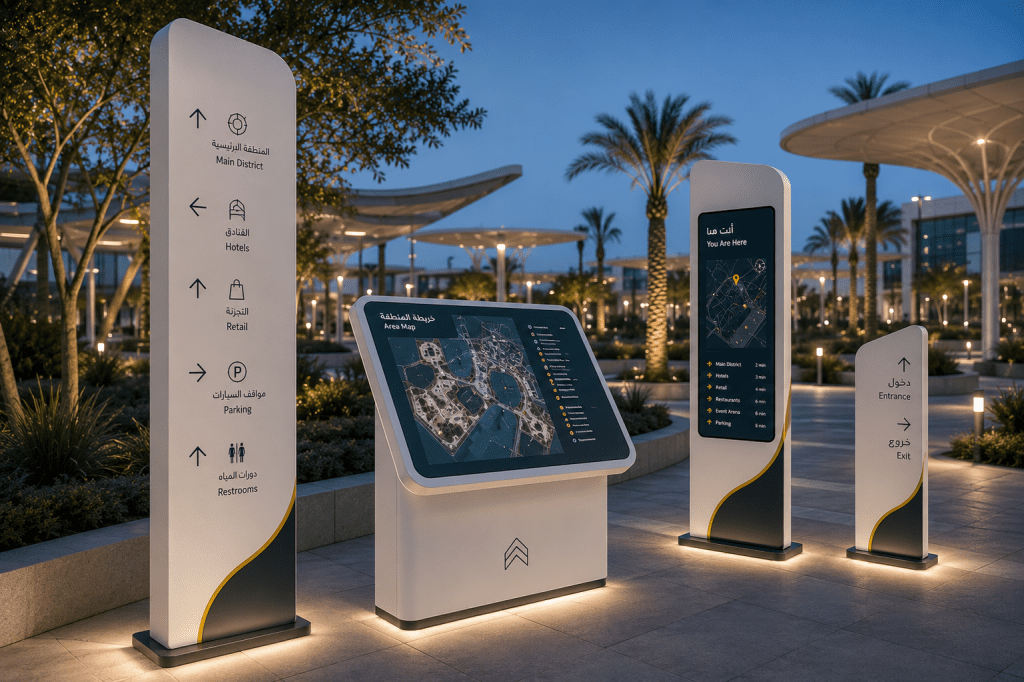
In large public realm, entertainment, hospitality and mixed-use developments, signage is often more than a graphic panel. It may become part of a complete wayfinding system that includes freestanding directional signs, information kiosks, illuminated features and architectural elements.
For these types of projects, solid surface materials may be specified not only for appearance but also as part of a wider construction system.
A typical freestanding wayfinding sign may include:
- Internal structural steel frame
- Solid surface cladding panels
- Matte finish or project-specific colour finish
- CNC-routed lettering or pictogram areas
- Push-through lettering details
- Backlit lighting panels
- Removable sign face panels for future message updates
- Foundation and electrical conduit coordination
This type of signage requires coordination between designers, signage contractors, structural engineers, electrical engineers, fabricators and installers.
For this reason, material selection should not be separated from the overall project system. The cladding material, frame structure, lighting method, message update strategy and installation conditions should be reviewed together.
Practical Takeaway
For large-scale wayfinding projects, solid surface is often part of a complete signage assembly, not just a decorative face material.
Preparing for Supplier Discussions
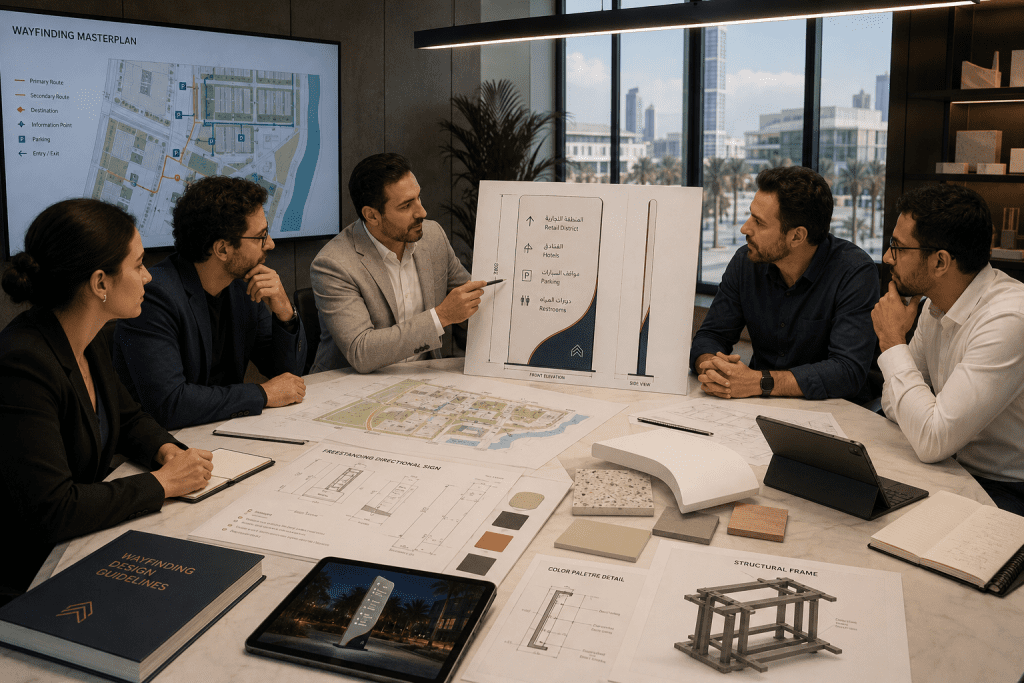
Successful signage projects often depend on clear communication between architects, signage companies, fabricators and project contractors.
Once the project’s objectives have been established, preparing basic project information can help simplify technical discussions and improve coordination throughout the development process.
Project Drawings
Concept sketches, layouts, architectural drawings, signage drawings and section details help communicate the intended design and overall project direction. Even preliminary drawings can provide valuable context during early discussions.
Basic Dimensions
Providing approximate dimensions for the installation and major components helps establish project scope and planning requirements.
Installation Location
Understanding whether the signage will be installed indoors, outdoors, in a public realm area, beside a road, in a pedestrian zone or inside a building provides useful information for design development and project coordination.
Lighting Concepts
If illuminated elements are planned, identifying these during the early stages of the project can support later design and fabrication decisions.
Structural and Electrical Requirements
Freestanding signage may require coordination with structural frames, foundations, fixing systems and electrical conduit routing. These requirements should be reviewed before fabrication begins.
Design References
Photographs, renderings and reference projects can help communicate visual expectations and architectural style.
Project Schedule
A general understanding of project timing supports planning and coordination between different project participants.
Special Requirements
Architectural standards, colour schedules, message schedules, project specifications and other technical considerations can be identified during the planning process.
Practical Takeaway
Clear project information often leads to clearer technical discussions and more efficient project development.
Common Challenges in Signage Projects and How to Avoid Them
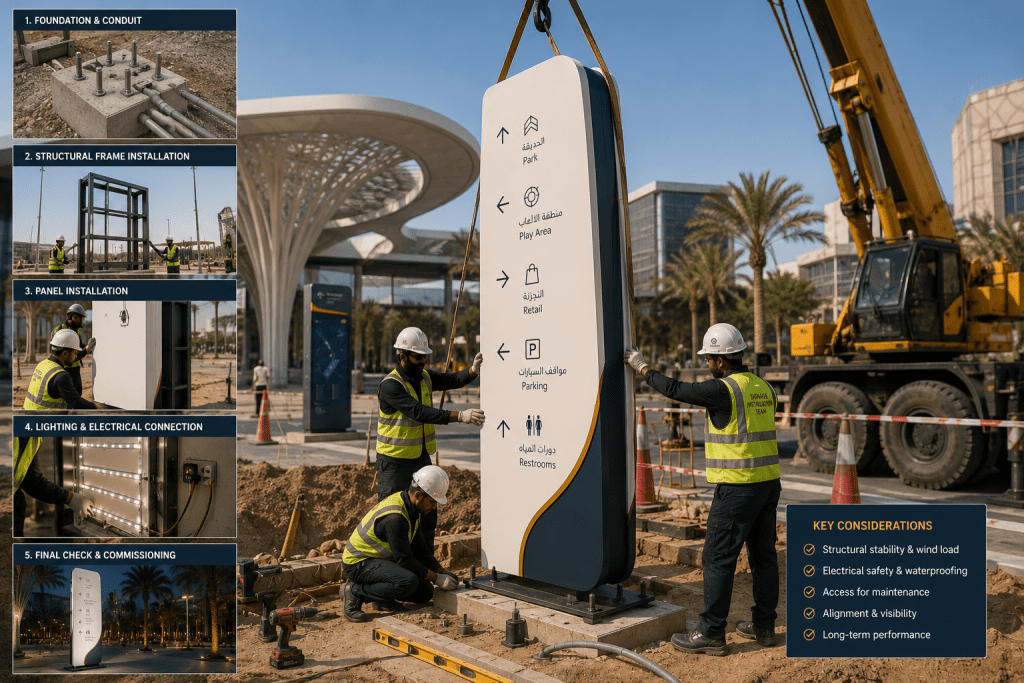
Even well-planned projects can encounter unexpected challenges during design, fabrication and installation. In many cases, these issues are not caused by the material itself but by incomplete planning or communication.
Understanding common project challenges can help improve coordination and reduce unnecessary revisions.
Starting with a Material Instead of a Project
One common challenge is selecting a material before fully understanding the project’s objectives, environment and construction requirements. Beginning with the project itself often supports better long-term decisions.
Incomplete Project Information
Limited drawings, unclear dimensions, missing message schedules or insufficient design references can make technical discussions more difficult. Preparing project information early can improve communication.
Delaying Lighting Decisions
When illuminated features are part of the design concept, discussing lighting requirements during project planning can simplify later stages of development.
Underestimating Fabrication Complexity
Custom shapes, curved profiles, push-through lettering, ventilation patterns and decorative architectural elements may require additional coordination during production. Early planning can help reduce unnecessary design changes.
Overlooking Installation Conditions
Transportation, access, support structures, foundations, electrical routing and site conditions can all influence project planning and execution. Considering these factors early may help avoid delays during installation.
Ignoring Maintenance and Message Updates
Some signage systems may require removable panels or replaceable message areas for future updates. These requirements should be considered during the design and fabrication stage.
Practical Takeaway
Many project challenges can be reduced through early planning, clear communication and realistic project expectations.”
A Simple Project Checklist Before Requesting a Quotation
Before beginning technical discussions or requesting project information, it can be helpful to review some basic planning items. A simple project checklist can improve communication and support more efficient project development.
- Define the Project Objective
Understand the role of the signage within the overall architectural concept. - Prepare Basic Drawings
Concept sketches, layouts, signage drawings or architectural drawings help communicate design intent. - Confirm Basic Dimensions
Approximate dimensions provide useful information for project planning. - Review Installation Conditions
Consider where the signage will be installed and any practical site requirements. - Clarify Lighting Requirements
Identify whether illuminated features are included in the project. - Check Structural Requirements
Review whether internal frames, foundations, fixing systems or electrical routing need to be considered. - Collect Design References
Reference images and previous projects can help communicate visual expectations. - Prepare Colour and Message Requirements
Colour schedules, typography requirements and message layouts can help clarify project expectations. - Consider Project Timing
A general schedule supports planning and coordination. - Review Special Requirements
Identify any architectural standards or project-specific expectations.
Practical Takeaway
Well-prepared project information can simplify communication and support better project coordination.”
Quick Project Summary
If you are planning a signage project, these practical points may be helpful:
- Start with the project rather than the material.
- Define the purpose of the signage.
- Understand whether the project is for branding, wayfinding, public realm or information display.
- Consider installation conditions early.
- Review lighting requirements during planning.
- Prepare clear project information.
- Coordinate design, structure, electrical and fabrication activities.
- Think about long-term maintenance and message updates.
- Focus on the overall signage system rather than a single product.
Pensamientos finales
Successful signage projects involve more than selecting a material.
A well-planned project often begins with understanding the purpose of the signage, reviewing the overall design concept and preparing the information needed for effective communication between project participants.
Considering installation conditions, lighting concepts, fabrication requirements, structural coordination and long-term maintenance expectations during the planning stage can help simplify later project decisions.
Whether the application involves a hotel, office building, retail environment, healthcare facility, public space or large-scale wayfinding system, taking a structured approach can support better project outcomes and reduce unnecessary revisions.
Rather than focusing on a single product, many successful projects consider the relationship between architecture, branding, wayfinding, fabrication, structure and installation as part of an integrated design process.
Practical Takeaway
A successful signage project is often the result of good planning, clear communication and practical decision-making.”
Frequently Asked Questions About Signage Projects
Can architectural solid surface materials be used for exterior signage?
Depending on project requirements and installation conditions, architectural solid surface materials may be considered for a variety of exterior applications. Environmental conditions, structural requirements and project specifications are useful factors to review during planning.
Can illuminated signage be incorporated into a project?
Many commercial and public realm projects include illuminated branding features, directional signs and decorative lighting elements. Considering lighting concepts during the early stages of project development can simplify design and fabrication discussions.
Can custom shapes and curved forms be fabricated?
Architectural signage projects often include integrated lettering, curved panels, decorative elements and custom forms. Reviewing these design features during project planning can support more efficient development.
What information is useful before discussing a project with a supplier?
Basic drawings, approximate dimensions, installation location, lighting concepts, reference images, colour schedules, message schedules and project timelines can all help improve technical discussions.
Why is structural coordination important for freestanding signage?
Freestanding signage may involve internal frames, foundations, fixing systems, wind load considerations and electrical routing. Coordinating these items early can help reduce installation risks and avoid later design changes.
How can project risks be reduced?
Early planning, clear communication and coordination between architects, signage companies, fabricators, structural engineers, electrical engineers and project contractors can often improve project outcomes.
Need Support for Your Signage Project?
Planning a hospitality, retail, healthcare, public realm or commercial signage project often involves balancing design objectives, fabrication requirements and practical project considerations.
Early technical discussions can help simplify planning and improve communication between project participants.
The ACRION team can assist with reviewing project information, discussing fabrication considerations and exploring architectural solid surface solutions for commercial signage and wayfinding applications.