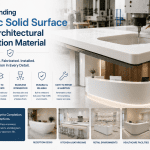
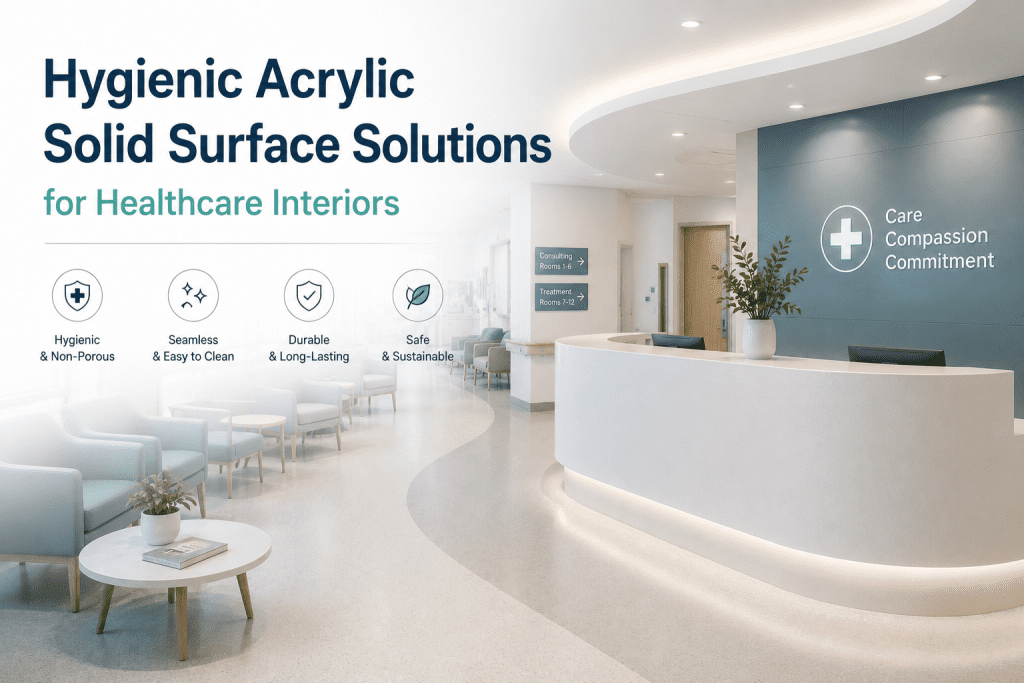
Los entornos sanitarios requieren materiales de superficie que combinen rendimiento higiénico, integración perfecta, durabilidad, eficiencia de mantenimiento y confiabilidad comercial a largo plazo. Los hospitales, clínicas, laboratorios, estaciones de enfermería e instalaciones médicas están expuestos a estrictos procedimientos de limpieza y condiciones de uso diario intensivo, lo que hace que la selección de materiales sea especialmente importante para el diseño de interiores de atención médica.
La superficie sólida acrílica se usa ampliamente en interiores de atención médica debido a su estructura no porosa, capacidad de fabricación sin costuras, aplicaciones de fregadero integrado y rendimiento de superficie renovable. En comparación con muchos materiales tradicionales, los sistemas de superficie sólida ayudan a crear entornos sanitarios más limpios, más fáciles de mantener y más higiénicos.
Por qué los entornos sanitarios requieren sistemas de superficie higiénicos
Las instalaciones sanitarias operan bajo exigentes requisitos de higiene y mantenimiento. Los materiales de superficie en estos entornos deben soportar una limpieza frecuente, minimizar los riesgos de contaminación y mantener el rendimiento a largo plazo bajo un uso operativo continuo.
Las consideraciones importantes sobre el material sanitario suelen incluir:
- Rendimiento de superficie no porosa
- Sistemas de fabricación sin costuras
- Facilidad de limpieza y mantenimiento.
- Resistencia a las manchas y la humedad
- Durabilidad a largo plazo
- Compatibilidad con fregadero integrado
- Superficies renovables y reparables
Estas características son especialmente importantes en hospitales e instalaciones médicas donde la gestión de la higiene y la eficiencia del mantenimiento afectan directamente el rendimiento operativo.
Ventajas de superficies no porosas y sin costuras
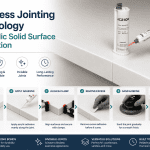
La superficie sólida acrílica proporciona una estructura de material densa y no porosa que ayuda a reducir la penetración de líquidos y simplifica los procedimientos de limpieza de superficies. A diferencia de los materiales con líneas de lechada expuestas o uniones unidas mecánicamente, la fabricación de superficies sólidas sin costuras crea sistemas de superficie continua con menos áreas donde se pueden acumular humedad o contaminantes.
A través de una fabricación profesional y una unión adhesiva del mismo color, los paneles de superficie sólida se pueden unir en superficies de atención médica visualmente perfectas, adecuadas para entornos comerciales exigentes.
Estos sistemas sin costura se utilizan ampliamente en:
- Mostradores de recepción de hospitales
- Estaciones de enfermería
- Sistemas de lavabo integrados
- Encimeras médicas
- Superficies de laboratorio
- Sistemas de tocador para baños sanitarios
Sistemas integrados de fregadero y lavabo
La fabricación de lavabos integrados es una de las ventajas más importantes de la superficie sólida acrílica en interiores de atención sanitaria. Los fregaderos y encimeras se pueden conectar perfectamente en sistemas de superficie continua sin juntas expuestas alrededor de las aberturas del fregadero.
Esta perfecta integración ayuda a simplificar los procedimientos de limpieza y reducir las áreas donde se pueden acumular humedad, residuos de jabón o contaminantes con el tiempo.
Los sistemas de fregadero integrados se utilizan comúnmente en:
- Áreas de pacientes hospitalarios
- Estaciones de lavado clínico
- Laboratorios sanitarios
- Salas de preparación médica
- Baños sanitarios públicos
Eficiencia de limpieza y mantenimiento a largo plazo
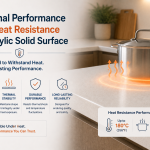
Los entornos sanitarios requieren materiales que respalden un mantenimiento eficiente a largo plazo. La superficie sólida acrílica se valora por su facilidad de limpieza, capacidad de superficie renovable y reparabilidad.
Los rayones menores o el desgaste de la superficie a menudo se pueden reparar mediante procesos de lijado y acabado en lugar de un reemplazo completo. Esto ayuda a mantener la uniformidad de la apariencia a largo plazo y reducir los costos de mantenimiento operativo en entornos comerciales de atención médica.
Su estructura no porosa también soporta los procedimientos de limpieza diarios comúnmente requeridos en hospitales e instalaciones de atención médica.
Aplicaciones en hospitales, clínicas e instalaciones médicas
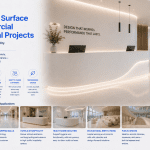
La superficie sólida acrílica se usa ampliamente en entornos interiores médicos y de atención médica porque combina rendimiento higiénico, fabricación perfecta, durabilidad y flexibilidad arquitectónica.
- Hospitales y clínicas
- laboratorios medicos
- Estaciones de enfermería
- Mostradores de recepción sanitaria
- Sistemas integrados de tocador para el cuidado de la salud
- Estaciones de lavado público
- Encimeras de preparación médica.
- Instalaciones de educación sanitaria.
Estándares de materiales sanitarios y consideraciones de rendimiento
Los proyectos de atención médica a menudo evalúan los materiales interiores según su higiene, facilidad de limpieza, durabilidad y desempeño de mantenimiento a largo plazo. Dependiendo de los requisitos del proyecto y el alcance de la certificación, los materiales acrílicos de superficie sólida pueden evaluarse de acuerdo con estándares relacionados con la resistencia a las manchas, el rendimiento no poroso, la seguridad ambiental y la idoneidad del material para el cuidado de la salud.
La calidad de fabricación profesional y la instalación adecuada también desempeñan un papel importante a la hora de lograr un rendimiento fiable a largo plazo de las superficies sanitarias.
Soluciones de superficies para el cuidado de la salud de ACRION
ACRION proporciona materiales arquitectónicos de superficie sólida para entornos sanitarios, interiores de hostelería, proyectos minoristas, instalaciones educativas y aplicaciones de fabricación comercial. Nuestros sistemas de superficie sólida acrílica están diseñados para una fabricación sin costuras, un rendimiento higiénico, aplicaciones de fregadero integrado y una durabilidad comercial a largo plazo.
Trabajamos con arquitectos, fabricantes, contratistas, distribuidores y equipos de proyectos de atención médica en todo el mundo para respaldar entornos interiores médicos modernos y sistemas de fabricación orientados a proyectos.