Hygienic performance is one of the most important functional characteristics of acrylic solid surface materials used in healthcare, hospitality, commercial interiors, food preparation areas, and public architectural environments.
As a professional acrylic solid surface manufacturer with more than 20 years of fabrication and project experience, ACRION understands that hygienic surface performance is often misunderstood in the market. It is important to distinguish between “hygienic surface properties” and “active antibacterial materials.”
Standard acrylic solid surface materials are generally valued because they are non-porous, seamless, and easy to clean — not because the material itself actively kills bacteria.
This article explains how acrylic solid surface supports hygienic environments through material structure, seamless fabrication, easy maintenance, and surface renewability.
What Makes Acrylic Solid Surface Hygienic?
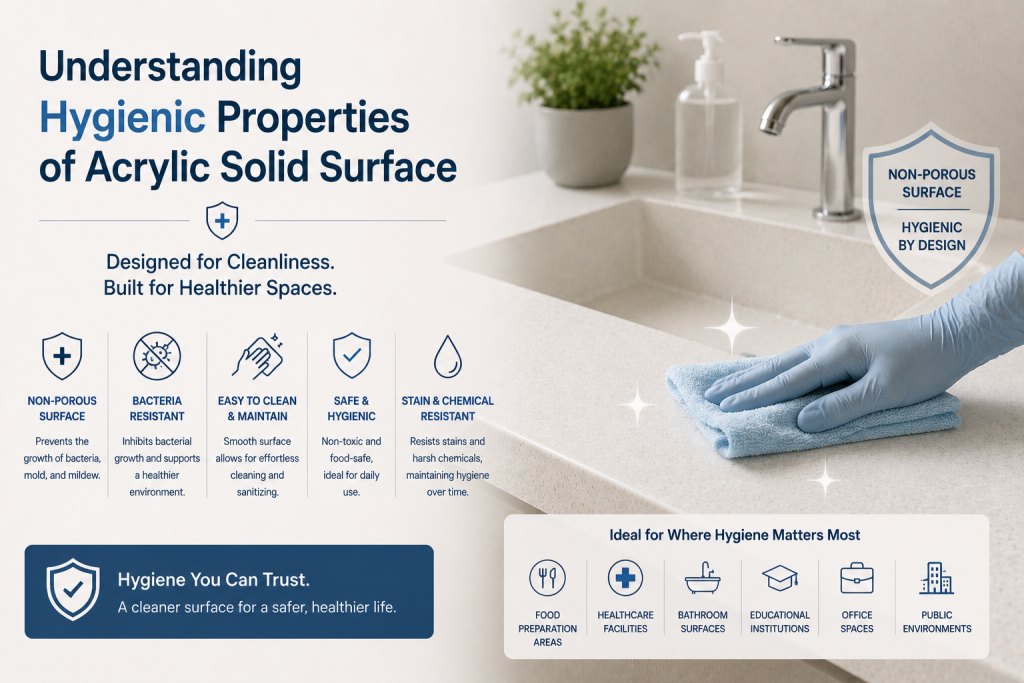
The hygienic performance of acrylic solid surface mainly comes from its material structure and fabrication characteristics.
Key hygienic advantages include:
- Estructura superficial no porosa
- Capacidad de fabricación perfecta
- Fácil limpieza y mantenimiento
- Resistance to moisture penetration
- Renewable surface repairability
These characteristics help create surfaces that are easier to maintain and sanitize in commercial and residential environments.
Non-Porous Surface Structure
Acrylic solid surface is manufactured as a dense, non-porous material structure designed to reduce liquid penetration into the surface.
This non-porous characteristic helps improve:
- Surface cleanability
- Moisture resistance
- Resistencia a las manchas
- Daily maintenance efficiency
- Long-term hygienic appearance
Because liquids and contaminants are less likely to penetrate deeply into the material, the surface can generally be cleaned more effectively under normal maintenance conditions.
Seamless Fabrication Advantage
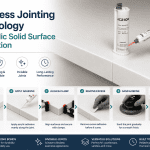
One major advantage of acrylic solid surface is its seamless fabrication capability.
Unlike many segmented surface materials, acrylic solid surface can be fabricated with visually integrated seams, reducing visible joints and difficult-to-clean transition areas.
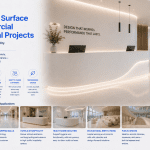
This fabrication capability is especially valuable in:
- Instalaciones sanitarias
- Laboratorios
- baños comerciales
- Interiores de hostelería
- Food preparation environments
- Proyectos arquitectónicos de interiores públicos.
Fewer exposed joints may help simplify cleaning and improve overall hygienic maintenance.
Fácil limpieza y mantenimiento
Acrylic solid surface is widely recognized for its ease of maintenance and cleaning performance.
Under normal use conditions, routine cleaning can generally be performed using:
- Mild soap and water
- Non-abrasive household cleaners
- Soft cleaning cloths
- Standard commercial maintenance procedures
Proper cleaning procedures help maintain both the appearance and hygienic condition of the surface over time.
Mold Resistance and Surface Performance
In humid environments, resistance to fungal and mold growth may be an important consideration for interior surface materials.
Certain acrylic solid surface materials may be evaluated using testing methods such as ASTM G21, which assesses resistance to fungal growth under laboratory conditions.
It is important to clarify that ASTM G21 is a fungal resistance test and should not be interpreted as an antibacterial certification.
Resistance to fungal growth may help support cleaner long-term appearance performance in humid interior environments.
Tecnología de superficies renovables
Another important hygienic advantage of acrylic solid surface is its renewable surface capability.
Minor scratches, localized wear, and surface damage can often be repaired through:
- Lijado profesional
- Acabado de superficies
- Procedimientos de pulido
- Restauración de mantenimiento
This repairability helps restore surface smoothness and maintain long-term visual and hygienic consistency.
Important Clarification About “Antibacterial” Claims
It is important to distinguish between hygienic surface performance and active antibacterial functionality.
Standard acrylic solid surface materials are generally considered hygienic because they are:
- No poroso
- Easy to clean
- Seamlessly fabricated
- Moisture resistant
- Renewable and repairable
However, this does not automatically mean the material itself actively kills bacteria or functions as a medical-grade antimicrobial surface unless additional certified antimicrobial technologies are specifically incorporated and independently tested.
Healthcare and Commercial Applications
Because of its hygienic and easy-to-maintain characteristics, acrylic solid surface is widely used in:
- Hospitales y clínicas
- Laboratorios
- Hotel bathrooms and vanities
- baños comerciales
- Entornos minoristas
- Food preparation counters
- Public interior spaces
Its combination of seamless fabrication, low porosity, and renewable surface performance makes it highly suitable for commercial interior applications requiring long-term cleanliness and maintainability.
Comparison with Other Surface Materials
Compared with some porous or heavily jointed surface materials, acrylic solid surface may provide advantages in:
- Surface continuity
- Facilidad de limpieza
- Maintenance simplicity
- Reparabilidad
- Long-term appearance consistency
These characteristics are particularly valuable in environments requiring frequent cleaning and long-term hygienic maintenance.
Conclusión
Acrylic solid surface provides hygienic surface performance through its non-porous structure, seamless fabrication capability, renewable surface technology, and ease of maintenance.
Its hygienic advantages are primarily related to cleanability and surface engineering rather than active antibacterial chemistry.
Because of its balance of fabrication flexibility, easy maintenance, and long-term appearance performance, acrylic solid surface remains a preferred material for healthcare, hospitality, commercial, and architectural interior applications worldwide.
At ACRION, we continue to develop acrylic solid surface solutions engineered for hygienic performance, fabrication stability, and long-term commercial durability.