Los materiales arquitectónicos se juzgan no sólo por su aspecto en la instalación, sino también por su rendimiento después de años de uso en el mundo real.
Para arquitectos, fabricantes, distribuidores y compradores de proyectos comerciales, la durabilidad de la apariencia es una preocupación importante en materia de especificaciones. Una superficie que luce impresionante el primer día pero que con el tiempo se vuelve amarillenta, decolorada, con brillo inconsistente o envejecimiento visible puede comprometer tanto la calidad del proyecto como la percepción de la marca.
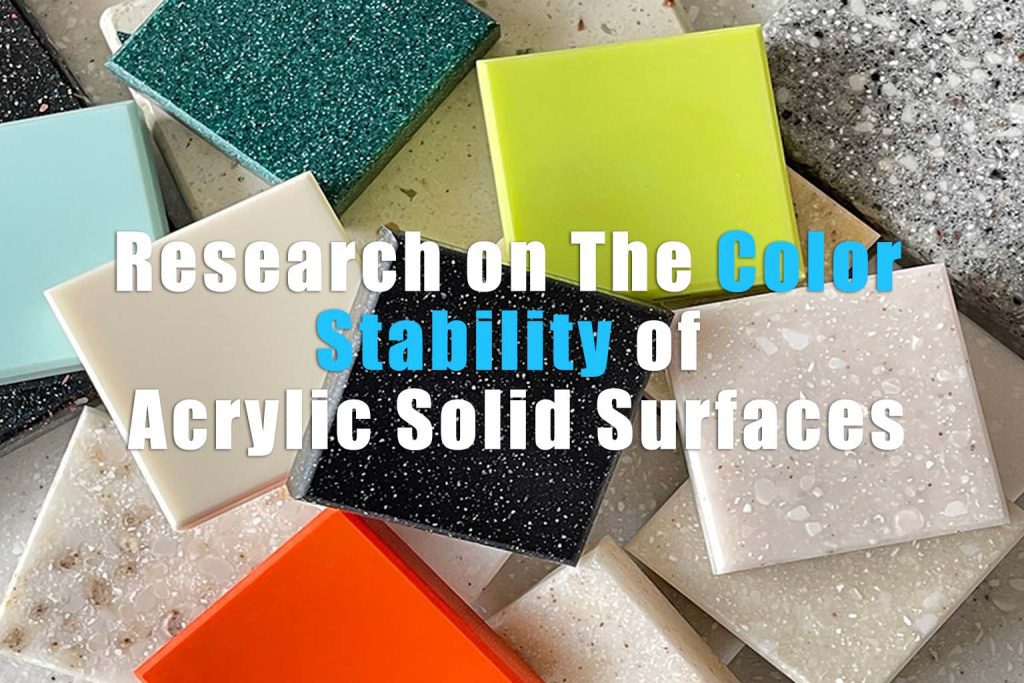
Esta es la razón por la que es importante la estabilidad del color de la superficie sólida acrílica.
En esta guía, examinamos cómo se comporta la superficie sólida acrílica a lo largo del tiempo, qué afecta la apariencia a largo plazo y por qué la formulación del material es importante en las aplicaciones arquitectónicas profesionales.
¿Qué significa la estabilidad del color en una superficie sólida acrílica?
La estabilidad del color se refiere a la capacidad de un material para mantener una apariencia visual consistente durante toda su vida útil.
Para una superficie sólida acrílica, esto incluye mucho más que una simple resistencia a la decoloración.
- Resistencia al amarillamiento
- Consistencia del color a lo largo del tiempo.
- Retención de brillo
- Resistencia al envejecimiento visible
- Estabilidad del pigmento
- Consistencia de la apariencia después del mantenimiento o reparación.
- Rendimiento de la superficie bajo exposición ambiental.
En entornos comerciales, estos factores afectan directamente el rendimiento del ciclo de vida y la percepción del usuario.
Por qué es importante el rendimiento de la apariencia a largo plazo
La selección de materiales en proyectos arquitectónicos está cada vez más impulsada por el ciclo de vida en lugar de puramente por la apariencia.
Se puede esperar que un mostrador de recepción, una encimera de atención médica, un tocador de hospitalidad o un mostrador de servicio minorista mantengan su apariencia durante años con un uso diario continuo.
El fracaso en la apariencia a largo plazo puede llevar a:
- Costos de reemplazo prematuro
- Quejas de mantenimiento
- Daño a la imagen de marca
- Resultados de remodelación inconsistentes
- Desconfianza en las especificaciones en futuros proyectos.
¿Qué afecta la estabilidad del color de la superficie sólida acrílica?
1. Química de la resina
El sistema de resina base influye fuertemente en el rendimiento visual a largo plazo.
La superficie sólida acrílica pura basada en la química de PMMA de alta calidad generalmente ofrece una mayor estabilidad de apariencia a largo plazo en comparación con formulaciones modificadas de menor costo.
Esta es una de las razones por las que se prefiere el acrílico puro en aplicaciones arquitectónicas y comerciales exigentes.
2. Calidad del sistema pigmentario
No todos los colores se comportan de forma idéntica con el tiempo.
El rendimiento del color depende en gran medida de la ingeniería de pigmentos, la consistencia de la dispersión y la estabilidad de la formulación.
Los tonos más oscuros, los sistemas decorativos especiales y los colores que absorben el calor pueden requerir una evaluación adicional según las condiciones del proyecto.
3. Exposición a los rayos UV
La exposición a los rayos ultravioleta es uno de los factores de apariencia más comúnmente discutidos para los materiales a base de polímeros.
El PMMA es ampliamente reconocido por su fuerte resistencia a los rayos UV y a la intemperie, pero las condiciones de exposición siguen siendo importantes. El estrés ultravioleta prolongado puede contribuir a cambios de apariencia según la formulación y el entorno.
Para obtener orientación técnica específica sobre la luz solar, consulte nuestro artículo dedicado al rendimiento UV.
Lea la guía de resistencia a los rayos UV
4. Exposición al calor
El estrés térmico repetido, el sobrecalentamiento localizado o un diseño de aplicación deficiente pueden influir en la apariencia con el tiempo.
Esto es especialmente relevante cerca de equipos que generan calor o zonas de acumulación de luz solar directa.
5. Prácticas de mantenimiento
Una limpieza inadecuada puede acelerar el deterioro de la apariencia.
Los disolventes agresivos, los productos químicos inadecuados o las prácticas de mantenimiento abrasivas pueden dañar el acabado de la superficie o alterar la consistencia visual.
Acrílico puro versus acrílico modificado: comparación de rendimiento a largo plazo
| Propiedad | Superficie sólida de acrílico puro | Superficie sólida acrílica modificada |
|---|---|---|
| Estabilidad del color | Más alto | Moderado |
| Resistencia al amarilleamiento | mas fuerte | Más variables |
| Reparabilidad | Excelente | Más limitado |
| Idoneidad arquitectónica | Alto | Dependiente de la aplicación |
¿Puede la superficie sólida acrílica volverse amarilla con el tiempo?
Esta es una de las preguntas más frecuentes de los compradores.
En aplicaciones interiores correctamente especificadas, se elige una superficie sólida acrílica de alta calidad para lograr un rendimiento de apariencia estable a largo plazo.
Sin embargo, los resultados reales dependen de:
- Formulación de materiales
- Exposición ambiental
- Condiciones de calor
- Prácticas de limpieza
- diseño de proyecto
Como todos los materiales de ingeniería, el rendimiento debe evaluarse según las condiciones de aplicación y no según las suposiciones de marketing.
Una ventaja importante del ciclo de vida: la renovabilidad
A diferencia de muchos materiales de superficies decorativas, la superficie sólida acrílica ofrece un beneficio significativo en el ciclo de vida.
Debido a que el material es homogéneo en todo su espesor, el desgaste visual superficial a menudo puede restaurarse profesionalmente mediante un nuevo acabado.
Esta renovabilidad hace que la superficie sólida acrílica sea muy atractiva para entornos arquitectónicos comerciales donde el ciclo de vida del mantenimiento es importante.
Aplicaciones arquitectónicas recomendadas
- Encimeras sanitarias
- Sistemas de tocador para hostelería
- Mostradores de recepción comerciales
- Mostradores de servicio al por menor
- Sistemas de revestimiento de paredes
- Aplicaciones de baño
- Interiores arquitectónicos fabricados a medida
Por qué la superficie sólida acrílica sigue siendo el material arquitectónico preferido
- Fuerte rendimiento de apariencia a largo plazo
- Capacidad de fabricación perfecta
- Flexibilidad de termoformado
- Reparabilidad
- Superficie higiénica no porosa
- Idoneidad del ciclo de vida comercial
Preguntas más frecuentes
¿Se desvanece la superficie sólida acrílica?
La superficie sólida acrílica de alta calidad está diseñada para brindar una apariencia sólida y estable a largo plazo, aunque el rendimiento depende del entorno y las condiciones de aplicación.
¿Es el acrílico puro más estable que el acrílico modificado?
En aplicaciones comerciales exigentes, el acrílico puro generalmente proporciona una consistencia visual más fuerte a largo plazo.
¿Se pueden reparar los problemas de apariencia?
Muchos problemas visuales superficiales se pueden mejorar profesionalmente mediante el repintado debido a la estructura homogénea del material.
Hable con ACRION sobre proyectos arquitectónicos de superficie sólida
ACRION apoya a arquitectos, fabricantes, distribuidores y compradores de proyectos con soluciones arquitectónicas de superficie sólida acrílica diseñadas para aplicaciones comerciales exigentes.