En la arquitectura comercial, el mantenimiento no es una ocurrencia tardía. Es parte de la estrategia de especificación de materiales.
Una superficie que luce impresionante el día de la instalación pero que se vuelve difícil de mantener, costosa de reparar o visualmente degradada después de unos años genera costos operativos ocultos para los propietarios, administradores de instalaciones y partes interesadas del proyecto.
Esta es una de las razones por las que las superficies sólidas acrílicas siguen estando ampliamente especificadas en atención médica, hotelería, comercio minorista, sistemas de baños, interiores públicos y otras aplicaciones comerciales exigentes.
Su ventaja de mantenimiento no se limita simplemente a una fácil limpieza. Se trata de la mantenibilidad del ciclo de vida.
Por qué es importante el rendimiento del mantenimiento en la selección de materiales comerciales
Los materiales arquitectónicos se seleccionan no sólo por su estética, sino también por su practicidad operativa a largo plazo.
En entornos comerciales reales, las superficies se enfrentan a tensiones continuas debido a:
- contacto de usuario de alta frecuencia
- ciclos de limpieza diarios
- derrames de alimentos y bebidas
- residuos de jabones y cosméticos
- rutinas desinfectantes comerciales
- abrasión por uso repetido
- impacto accidental ocasional
Si el mantenimiento es difícil, los costos del ciclo de vida aumentan rápidamente.
¿Qué hace que la superficie sólida acrílica sea más fácil de mantener?
1. Estructura de superficie no porosa
La superficie sólida acrílica está diseñada como un material denso y no poroso.
A diferencia de las superficies decorativas porosas que pueden atrapar humedad, residuos o contaminantes, la superficie sólida acrílica mantenida adecuadamente admite una limpieza sencilla y un mantenimiento higiénico.
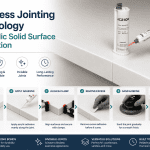
2. Capacidad de fabricación perfecta
El mantenimiento no se trata sólo de química, sino también de detalles de construcción.
Debido a que la superficie sólida acrílica se puede fabricar con costuras discretas, existen menos juntas donde se acumula suciedad, humedad y residuos.
Esto es especialmente valioso en:
- mostradores de atención médica
- sistemas de tocador para hostelería
- baños comerciales
- mostradores de servicio minorista
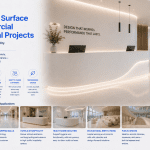
- mostradores de recepción
3. Construcción renovable de cuerpo completo
Una de las ventajas más importantes del ciclo de vida de la superficie sólida acrílica es la renovabilidad.
Debido a que el material es homogéneo en todo su espesor en lugar de depender de una fina capa superior decorativa, muchos daños superficiales pueden restaurarse profesionalmente en lugar de requerir un reemplazo completo.
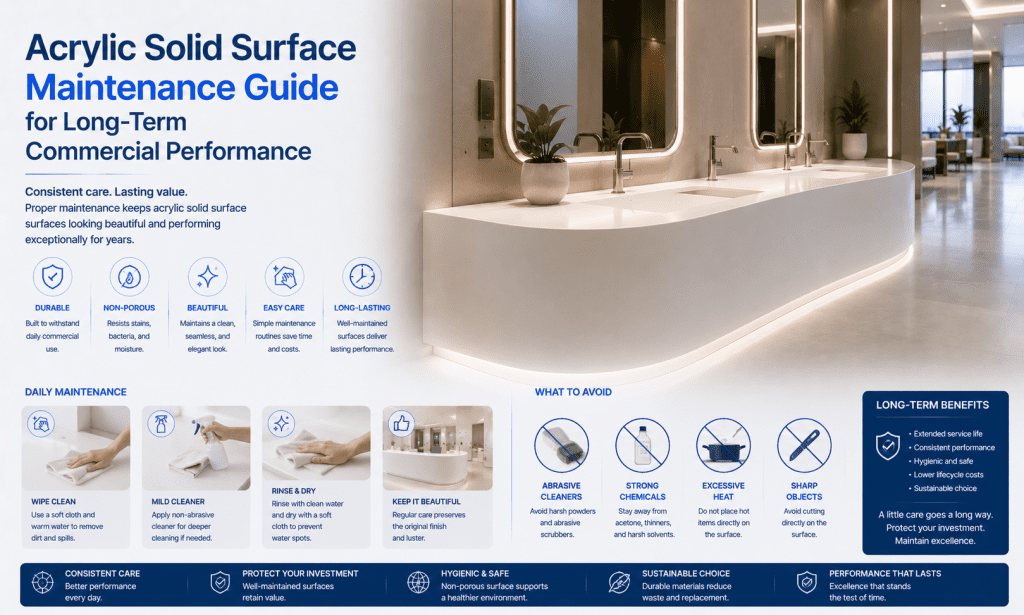
Mejores prácticas de limpieza diaria
La limpieza rutinaria es la base de un buen mantenimiento.
Para aplicaciones interiores comerciales típicas:
- limpiar los derrames rápidamente
- use paños suaves o microfibra
- aplicar agentes de limpieza suaves adecuados
- seguir procedimientos consistentes de limpieza de las instalaciones
La frecuencia de limpieza debe reflejar la intensidad de uso real.
Estrategia de mantenimiento preventivo
El mantenimiento más eficaz es el preventivo, no el reactivo.
Las prácticas preventivas recomendadas incluyen:
- usar salvamanteles debajo de objetos calientes
- evitando cortes directos en la superficie
- evitando la carga puntual concentrada
- proteger las esquinas expuestas propensas a impactos
- Capacitar al personal de limpieza sobre los procedimientos de cuidado adecuados.
Errores comunes de mantenimiento
Los daños cosméticos prematuros a menudo provienen de un cuidado inadecuado y no de fallas inherentes del material.
- almohadillas de limpieza abrasivas agresivas
- mal uso de productos químicos agresivos
- herramientas para raspar metales
- colocar calor excesivo directamente sobre la superficie
- reparaciones de bricolaje inadecuadas
Manejo de manchas y apariencia de superficies
Las superficies comerciales pueden contener café, té, residuos de comida, acumulación de jabón, cosméticos y agentes de limpieza de instalaciones.
Una limpieza rutinaria inmediata mejora significativamente la conservación de la apariencia a largo plazo.
Los problemas cosméticos persistentes deben abordarse mediante un mantenimiento controlado en lugar de un tratamiento ad hoc agresivo.
Reparabilidad: una importante ventaja del ciclo de vida
Muchas superficies decorativas se convierten en problemas de reemplazo una vez dañadas.
La superficie sólida acrílica es diferente.
Debido a que el material tiene cuerpo completo y es renovable, muchos problemas superficiales pueden repararse profesionalmente, entre ellos:
- rayones ligeros
- embotamiento localizado
- desgaste cosmético menor
- pequeño daño superficial
Esto puede mejorar significativamente la economía del ciclo de vida en proyectos comerciales.
Mantenimiento versus restauración del ciclo de vida
La limpieza diaria y el cuidado preventivo son sólo una parte de la estrategia de desempeño a largo plazo.
Para una restauración más profunda del ciclo de vida, una estrategia de repavimentación y una planificación de renovación a largo plazo, consulte nuestra guía dedicada al mantenimiento del ciclo de vida.
Aplicaciones comerciales típicas
- encimeras sanitarias
- tocadores de hospitalidad
- mostradores minoristas
- baños comerciales
- interiores del aeropuerto
- mostradores de recepción
- interiores comerciales orientados al público
Preguntas más frecuentes
¿Cómo se limpia una superficie sólida acrílica?
La limpieza de rutina con métodos no abrasivos apropiados y un manejo rápido de derrames generalmente es suficiente para el mantenimiento diario.
¿Se puede reparar la superficie sólida acrílica?
Sí. Muchos daños estéticos superficiales pueden restaurarse profesionalmente porque el material es homogéneo en todo su espesor.
¿Por qué el mantenimiento es más fácil que algunas alternativas decorativas?
Porque la superficie sólida acrílica combina una capacidad de limpieza no porosa, una fabricación sin costuras y una construcción renovable de cuerpo completo.
Hable con ACRION sobre soluciones arquitectónicas de superficie sólida
ACRION apoya a arquitectos, distribuidores, fabricantes y compradores de proyectos con soluciones arquitectónicas de superficie sólida acrílica diseñadas para un rendimiento comercial a largo plazo.